A small port city on the Piscataqua
Portsmouth sits on the Piscataqua River, on New Hampshire’s short stretch of Atlantic coastline — roughly 15 kilometers (about 18 miles) of it, squeezed between Massachusetts to the south and Maine to the north. It’s easy to underestimate how small that coastline is: New Hampshire is mostly known for its mountains and lakes, and Portsmouth is essentially the state’s one significant seaport. That compactness is part of the appeal. Unlike Boston Harbor or the sprawl of the Maine coast, Portsmouth’s downtown, waterfront, and historic district are all within a 15-minute walk of each other.
The city’s identity runs on two tracks that work well together for a day visitor: a genuinely old working port, with brick warehouses and a river still used by tugboats and the occasional naval vessel from the nearby Portsmouth Naval Shipyard (technically across the river in Kittery, Maine), and a restaurant, brewery, and boutique scene that has grown into the same brick buildings over the past few decades. You can spend a morning in a 17th-century kitchen garden and an afternoon at a bar with a river view, without changing neighborhoods.
Strawbery Banke Museum
The anchor of a Portsmouth visit is Strawbery Banke Museum, an outdoor museum built on the site of the city’s original waterfront settlement, first founded in the 1630s. Rather than one building, it’s a cluster of restored historic houses — around ten are typically open to visitors at a given time — furnished and interpreted to represent different periods of the neighborhood’s history, from colonial households through to 20th-century immigrant families who lived on the same streets. Costumed interpreters and working period gardens fill out the picture between houses.
The museum sits at reduced hours or closes for stretches of the winter; this guide won’t publish a specific reopening date, because that schedule shifts year to year. Check strawberybanke.org before visiting outside the late spring to fall window — a trip planned for January around the assumption that Strawbery Banke runs full hours is the single most common way to be disappointed here.
Strawbery Banke is a short, flat walk from the rest of downtown Portsmouth, so it’s realistic to pair a couple of hours there with lunch and a waterfront walk in the same day, without needing to drive between stops.
The waterfront: restaurants, brewery tasting rooms, and the river
Portsmouth’s downtown waterfront, centered on Ceres Street and the streets running down to the Piscataqua, is where most visitors spend the rest of their time. Old ship chandleries and warehouses now hold restaurants, brewery tasting rooms, and small shops; the state’s modest brewing scene is well represented here, though this guide won’t name specific breweries, since openings and closures move faster than an annual review can track — ask locally or check current listings for what’s pouring that week.
In summer the waterfront has a genuinely festive feel: outdoor seating along the river, a mix of visitors and locals, and boats moving past on the Piscataqua’s strong tidal current (it’s one of the fastest-flowing navigable rivers in the country, which is part of why the old port worked so well). A short walk covers the historic Market Square, the brick commercial core, and the river frontage, so an afternoon here rarely feels rushed even without a fixed itinerary.
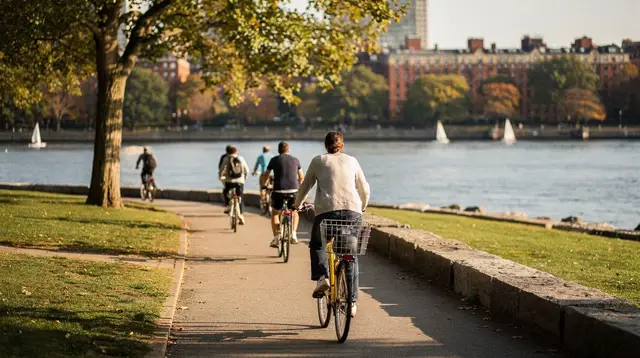
For a different angle on the same waterfront and the small islands offshore, a guided bicycle route covers more ground than walking allows in a similar amount of time:
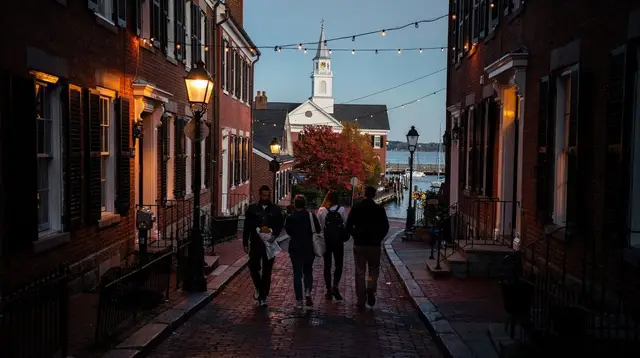
a guided bike route along Portsmouth’s harbor and out to the nearby islandsPortsmouth also leans into its older, stranger side after dark, with walking tours built around the port’s history of shipwrecks, disease, and 18th-century crime:
an evening ghost walk through Portsmouth’s historic waterfront streetsGetting there from Boston: car or bus beats the train here
This is one destination on the day trip list where the Amtrak Downeaster — the same train that runs a fairly direct route up to Portland, Maine — is not the most convenient option. The Downeaster’s closest stop to Portsmouth is Durham/UNH, a college town roughly 20 minutes inland, which means a taxi, rideshare, or local bus connection rather than a station in the middle of downtown. It’s workable, but it adds a step that the train doesn’t add for a Portland day trip.
For Portsmouth specifically, driving or taking a long-distance bus on I-95 is usually simpler: a bit over an hour from central Boston in normal traffic, and it drops you (or a rented car) within walking distance of the historic downtown. If you don’t want to drive, check current long-distance bus schedules from Boston’s South Station — several operators run this corridor, and travel time is comparable to driving once you account for the Downeaster’s transfer at Durham.
If a car is part of the plan, Portsmouth combines naturally with other stops on the same I-95 corridor — Portland and Kennebunkport, Maine to the north, or a loop back through southern New Hampshire toward the White Mountains if you have more than a single day. Advice on renting a car for this kind of trip, along with the tradeoffs against public transit, is covered in the guide to getting around without a car from Boston and the separate car rental guide.
Where Portsmouth fits against Boston’s other day trips
| Destination | Distance from Boston | How to get there | What it’s known for |
|---|---|---|---|
| Portsmouth, NH | ~1 to 1.25 hours | Car or bus (I-95); train via Durham/UNH is indirect | Strawbery Banke Museum, waterfront restaurants |
| Portland, Maine | ~2 hours | Amtrak Downeaster (fairly direct), car, or bus | Old Port, working harbor, larger restaurant scene |
| Kennebunkport, Maine | ~1.5 to 2 hours | Car (limited train/bus access) | Beaches, historic shingle-style summer estates |
| Newport, Rhode Island | ~1.25 to 1.75 hours | Car or bus | Gilded Age mansions, coastal cliff walk |
| Salem | ~30 to 45 minutes | Commuter Rail from North Station | Witch trial history, working fishing port |
Of this group, Portsmouth is the smallest and most walkable, and it’s the one where a car genuinely changes the experience rather than just being a convenience — without one, the museum, the waterfront, and lunch are still all reachable, but reaching Portsmouth in the first place takes more planning than a straight Commuter Rail hop to Salem or a direct Downeaster run to Portland.
A day budget for Portsmouth
Rough figures, in US dollars, for a single adult spending a day in Portsmouth. Treat these as planning ranges, not quotes — check current admission and menu prices before you go.
| Item | Typical range (USD) |
|---|---|
| Strawbery Banke Museum admission | 20 to 25 |
| Lunch at a waterfront restaurant | 20 to 35 |
| Coffee or a brewery tasting flight | 6 to 15 |
| Round-trip bus fare from Boston (if not driving) | 30 to 50 |
| Gas and parking (if driving) | 15 to 30 |
A half day focused on the museum and a walk along Ceres Street can stay well under USD 60; add a sit-down dinner or a brewery stop and USD 100 to 130 is a realistic ceiling for a full day.
Season and timing
Portsmouth’s waterfront works best from late spring through fall, roughly May through October, when outdoor seating is open, Strawbery Banke runs full hours, and the harbor is active with recreational boats alongside the working traffic. Summer weekends draw a genuine crowd to Market Square and the riverfront restaurants; it’s busy without being overwhelmed in the way Salem gets in October or Newport gets in midsummer.
Winter is quieter and, for some visitors, more appealing precisely because of that — the brick downtown and waterfront still hold up as a walk — but treat the museum’s winter hours as reduced or closed rather than assuming a normal visit, and confirm before making the trip specifically for Strawbery Banke.
Fall brings the same New England foliage that draws visitors north from Boston generally, and Portsmouth’s brick streets photograph well against turning leaves in the surrounding countryside, though the coastal town itself is more about architecture and water than dense foliage.
If a coastal sail is part of the plan rather than just a walk, day-sail options are available further north along the same stretch of Maine coast:
a private day sail along the coastal Maine waterfrontAnd for travelers extending north or west from Portsmouth into New Hampshire’s mountains rather than continuing up the coast, a seasonal day trip covers one of the state’s best-known gorges:
a fall day trip from Boston into the White Mountains and Lost River GorgePractical notes
Portsmouth is in New Hampshire, which has no state sales tax and no general income tax — a genuine, if minor, contrast with Massachusetts’ 6.25% sales tax. It doesn’t change much for a single day trip, but it’s worth knowing if a purchase is part of the plan.
The city is small enough that parking, not distance, is the main logistical question for drivers: downtown has metered street parking and several municipal garages within a short walk of both the waterfront and Strawbery Banke. If arriving by bus, most stops put you within walking distance of Market Square.
For travelers building a longer coastal itinerary rather than a single day trip, Portsmouth pairs naturally as a stop between Boston and Portland, Maine — see the Portland and Kennebunkport day trip guide for how the two towns fit together on the same I-95 and Downeaster corridor, and the general Boston day trips overview for how Portsmouth compares to the Rhode Island, Cape Cod, and North Shore options closer to the city itself. Rail-specific planning, including where the Commuter Rail and Downeaster diverge, is covered in the Commuter Rail day trips guide and the general MBTA and the T guide — useful background even though Portsmouth itself sits outside the MBTA network entirely.
Portsmouth, New Hampshire: frequently asked questions
How do I get from Boston to Portsmouth, New Hampshire?
Driving or taking a long-distance bus on I-95 is usually the most practical option, at a bit over an hour each way. The Amtrak Downeaster does serve the area, but its closest stop is Durham/UNH, which means a connection rather than a direct link, unlike the train’s more straightforward run up to Portland, Maine.
Is Strawbery Banke Museum open year-round?
The museum operates on a reduced schedule or closes for parts of the winter; check strawberybanke.org for the current calendar before planning a visit, especially outside the late spring to fall stretch.
What is Strawbery Banke Museum?
It’s an outdoor museum built around a cluster of restored historic houses on Portsmouth’s original waterfront settlement site, with rooms and gardens interpreted across different periods of the neighborhood’s history.
Is Portsmouth, New Hampshire the same as Portsmouth, England or Portsmouth, Virginia?
No. This is the small coastal city in New Hampshire, on the Piscataqua River, part of the roughly 15-mile stretch of New Hampshire coastline between Massachusetts and Maine.
Can I visit Portsmouth without a car?
It’s possible by long-distance bus, but a car gives far more flexibility for combining Portsmouth with nearby coastal towns or the White Mountains in the same trip, and the train connection through Durham/UNH adds time rather than saving it.
Is Portsmouth expensive?
Waterfront restaurants and brewery tasting rooms run on the higher end for a small city, but a day of walking the downtown, the museum, and a casual lunch is affordable relative to Boston or Newport.
How does Portsmouth compare to Portland, Maine for a day trip?
Portsmouth is smaller and more compact, built around a single historic waterfront and museum district, while Portland has a larger working harbor, more restaurants, and a more established train connection from Boston.