Martha's Vineyard and Nantucket by ferry: the practical guide
Can you take a ferry to Martha's Vineyard or Nantucket directly from Boston?
No. Both islands are reached by ferry from Cape Cod, mainly Hyannis, with Woods Hole as an additional option for Martha's Vineyard. Getting from Boston to the port takes 1 to 1.5 hours by car or bus before the boat even leaves, so a same-day trip to either island is a long day, not a quick outing.
Why there’s no direct boat from Boston
Martha’s Vineyard and Nantucket sit off the southern coast of Cape Cod, not off Boston itself, and no ferry connects downtown Boston directly to either island. The trip happens in two stages: an overland leg from Boston to a Cape Cod port, then the ferry crossing itself. Skipping this fact is the single most common planning mistake for a Boston-based visitor, and it’s the reason a “quick island day” ends up needing an early alarm.
The overland leg runs to one of two ports. Hyannis, on Cape Cod, serves both Martha’s Vineyard and Nantucket. Woods Hole, also on Cape Cod but closer to the Bourne and Sagamore bridges, serves Martha’s Vineyard only. From central Boston, figure roughly 1 to 1.5 hours by car to either port before traffic, longer on a summer Friday when Cape-bound weekend traffic backs up on Route 3 and the bridges. Bus and shuttle services also run from Boston to both ports; check current routes and timings directly with the carrier, since schedules shift by season.
Once you’re at the port, the ferry itself is a separate ticket, a separate line, and in summer, a separate reservation to think about in advance, especially if you’re bringing a car.
Hyannis or Woods Hole: which port for which island
| Port | Serves | Notes |
|---|---|---|
| Hyannis | Martha’s Vineyard and Nantucket | Farther from Boston; the only port with direct service to Nantucket |
| Woods Hole | Martha’s Vineyard only | Shorter crossing; the only port that carries vehicles to Martha’s Vineyard |
If Nantucket is on the list at all, Hyannis is the port, full stop. If you’re set on Martha’s Vineyard and want the shortest possible crossing, or you’re bringing a car, Woods Hole is usually the better choice. If you haven’t decided between the two islands, Hyannis keeps both options open.
Two companies run these routes: the Steamship Authority and Hy-Line Cruises, each with its own schedule, its own pricing, and its own mix of passenger-only and vehicle ferries. Fares and departure times change by season and by route, so this guide won’t quote a specific number or a specific sailing time — check the operator’s own site for the day you’re traveling. As a general rule, the high-speed passenger ferries run faster and more often than the traditional ferries that also carry cars.
How long the crossing actually takes
Crossing times vary by route, by boat type, and by operator, and they are exactly the kind of detail that changes between seasons — this guide won’t pin down an exact number that could be wrong by the time you read it. The pattern that holds across the operators: a high-speed passenger ferry is faster than a traditional ferry carrying vehicles, and Woods Hole to Martha’s Vineyard is a shorter run than anything out of Hyannis. Confirm the schedule for your specific date directly with the Steamship Authority or Hy-Line Cruises before you build the rest of the day around it.
What matters more for planning than the exact minutes on the water is the total picture: Boston to the port, the crossing, time on the island, the crossing back, and the port to Boston again. Stacked together, that’s most of a day, which is why this trip rewards a full day on the calendar rather than a half-day add-on.
Martha’s Vineyard and Nantucket aren’t the same trip
The two islands get lumped together in a lot of travel writing, but they’re different destinations with different characters, and picking the right one matters more than picking the right ferry.
Martha’s Vineyard is the larger island, with several distinct villages instead of one town center. Oak Bluffs is the liveliest, known for its cluster of Victorian gingerbread cottages painted in bright colors. Edgartown is quieter and more formal, with white clapboard captains’ houses and a harbor lined with sailboats. Between the villages, the island has open farmland, ponds, and the red-clay Aquinnah Cliffs at its western tip. A guided tour of Edgartown or a full-island loop is the practical way to see more than one village in a single day, since the villages are spread out enough that walking between them isn’t realistic.
Nantucket is farther out to sea, smaller, and more uniform in character: a single historic town built almost entirely from 18th- and 19th-century whaling money, with cobblestone streets and gray-shingled buildings that weather to the same silvery color across the whole island. It reads as more isolated than Martha’s Vineyard, and it is — the crossing takes longer and the town itself is the main draw, with beaches and lighthouses a bike ride or short drive away.
Neither island is “the real one” or a lesser version of the other. If village-hopping and variety within a single visit matter more, Martha’s Vineyard fits better. If a single, tightly preserved historic town with a strong maritime identity is the draw, Nantucket fits better. For a side-by-side comparison built around exactly this decision, see the dedicated comparison guide.
Planning the day: what a realistic itinerary looks like
Because neither island connects directly to Boston, and because the round trip involves two overland legs and two ferry crossings, a day trip to either island needs the whole day, not a morning or afternoon slot. A workable shape:
- Leave Boston early, allowing for weekend and summer traffic on the way to the Cape.
- Catch a mid-morning ferry from Hyannis or Woods Hole.
- Spend the bulk of the day on the island — a single village on Martha’s Vineyard, or Nantucket town plus a short excursion, is realistic in one day; trying to cover the whole island rarely is.
- Catch a ferry back with real margin before the last sailing, since missing it means an unplanned overnight.
- Drive or bus back to Boston.
If the idea of doing all of this solo, with transfers and timing to manage, sounds like more logistics than vacation, an organized day trip that bundles the transfer, the ferry ticket, and a guided island tour removes most of that planning. The Classic Martha’s Vineyard day escape from Boston handles the transportation end to end, which is often worth the premium for a single-day visit.
For travelers who’d rather drive themselves to the port and just want the island portion organized, a 3-hour guided tour of the full island covers Oak Bluffs, Edgartown, and the Aquinnah Cliffs in one loop — useful if the day trip window is tight and self-driving between villages isn’t appealing. The 3-hour full-island guided tour and the GPS-guided audio tour of Oak Bluffs are both built for exactly that constraint.
On Nantucket, the town center rewards walking, but the beaches, lighthouses, and moors are spread further out. A guided bike tour of Nantucket or a scenic driving tour of the island covers more ground than walking alone in the time available.
Do you need a car?
For most day-trip visitors, no. Both islands run local bus service between the main villages, both have bike rental shops near the ferry docks, and both town centers are walkable. Vehicle ferry tickets cost noticeably more than passenger tickets and require earlier reservations in peak season, so bringing a car mainly pays off for longer stays or if the itinerary depends on reaching more remote corners of Martha’s Vineyard, like Aquinnah, on your own schedule.
Passenger-only ferries also tend to run more frequently than vehicle ferries and are easier to book last-minute, which matters if plans shift during the day.
Visiting both islands in one day
A seasonal inter-island ferry connects Martha’s Vineyard and Nantucket directly, generally running from late May to early October, without a return to the Cape Cod mainland in between. It’s the only way to link both islands without doubling back through Hyannis or Woods Hole, but it compresses an already full day into something tighter still — realistic mainly for visitors staying overnight on the Cape or on one of the islands, rather than a single day trip out of Boston. For a standard one-day visit from the city, picking one island is the more comfortable plan.
Season matters more here than almost anywhere else on this site
Ferry frequency to both islands drops outside the summer season, and some routes reduce service further or pause in the depth of winter. A visit planned for July or August can assume frequent departures throughout the day; a visit planned for November or February needs the operator’s current schedule checked well in advance, since a missed last boat back means an unplanned night on the island. This seasonality also shapes the islands themselves — both are noticeably quieter, with many shops and restaurants closed, outside the roughly Memorial Day to Columbus Day stretch.
Combining the islands with the rest of Cape Cod
Since the ferry to both islands departs from Cape Cod, it’s worth considering whether the trip fits alongside a broader look at the Cape itself, including the Cape Cod National Seashore around Provincetown, rather than treating the port town purely as a transit point. The Cape Cod and Provincetown day trip guide covers that side of the region in more detail, and the Cape Cod getaway itinerary lays out a version of the day that treats the Cape as the destination rather than a stopover.
For a shorter, closer-to-Boston alternative that doesn’t involve a ferry at all, the Boston Harbor Islands are reachable by ferry directly from downtown Boston in under an hour, with no overland leg first — a genuinely different kind of trip, but worth knowing about if the Martha’s Vineyard or Nantucket logistics feel like too much for the time available.
If island time isn’t the priority and a different day trip out of the region is more appealing, Newport, Rhode Island and its Gilded Age mansions are a fully overland alternative with no ferry involved at all.
Practical notes before you book
- No same-island return guarantee in bad weather. Ferry service on both routes can be delayed or canceled in high wind or fog, more often in the shoulder seasons than in summer. Build in a buffer if you have a flight or other commitment the same evening.
- Reserve vehicle space in advance during summer. Passenger tickets are generally easier to get same-day; vehicle reservations for the Steamship Authority routes fill up well ahead of peak weekends.
- Both islands charge more, and get busier, in July and August. Shoulder-season visits (late spring, September, early October) mean thinner crowds and lower prices, at the cost of reduced ferry frequency and some shops or restaurants operating limited hours.
- Getting to the port matters as much as the crossing itself. Traffic to Hyannis and Woods Hole on summer weekends can add significant time to the trip; leaving Boston early is worth more than saving a few minutes on ferry choice.
- For getting between Boston neighborhoods before or after the trip, see the guide to the T and getting around Boston without a car; it’s unrelated to island ferries but useful for the Boston half of the day.
Martha’s Vineyard and Nantucket ferry FAQ
Can I get to Martha’s Vineyard or Nantucket directly from Boston?
No. No ferry runs from downtown Boston to either island. You travel overland to a Cape Cod port — mainly Hyannis for both islands, or Woods Hole for Martha’s Vineyard only — and board the ferry there.
Which port should I use for Martha’s Vineyard?
Both Woods Hole and Hyannis serve Martha’s Vineyard. Woods Hole is the shorter crossing and the only option that carries vehicles to the island; Hyannis is farther from Boston but also connects to Nantucket.
Which port should I use for Nantucket?
Hyannis. There is no Woods Hole service to Nantucket.
How long does the ferry crossing take?
It depends on the route and the type of boat — high-speed passenger ferries run faster than traditional vehicle ferries. Check the current schedule with the Steamship Authority or Hy-Line Cruises for your travel date, since times and frequency change by season.
Can I visit both islands in one day from Boston?
Only in peak season, when a seasonal inter-island ferry links Martha’s Vineyard and Nantucket directly, and only with an early start. For most visitors coming from Boston, one island per day trip is the realistic plan.
Do I need a car on the islands?
Not necessarily. Both islands have local bus service and bike rentals, and their main village centers are walkable. A car helps on Martha’s Vineyard’s more spread-out sights but adds cost and reservation hassle for a single day trip.
Is it cheaper to leave the car on the mainland?
Usually. Vehicle ferry fares run well above passenger fares, and both islands are compact enough to cover on foot, by bike, or by local bus for a one-day visit.
Do ferries run year-round?
Yes, but at reduced frequency outside the summer season, with some routes cutting back further in winter. Confirm the season’s timetable directly with the operator before planning an off-season visit.
Day trips from Boston to Salem, Plymouth and Cape Cod on GetYourGuide
Verified deep-linked GetYourGuide tours. Book through these links and we earn a small commission at no cost to you.
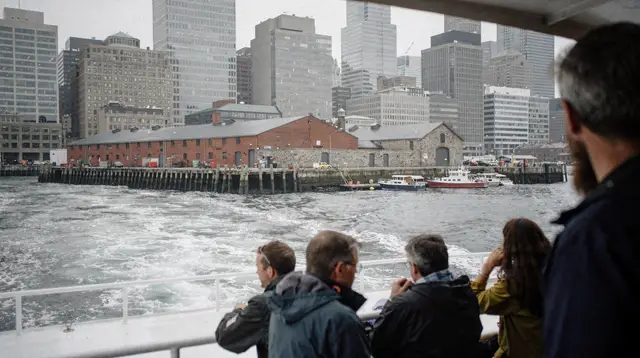
GetYourGuide does not provide a product photo for this activity — the image shows the meeting point, photographed by us.