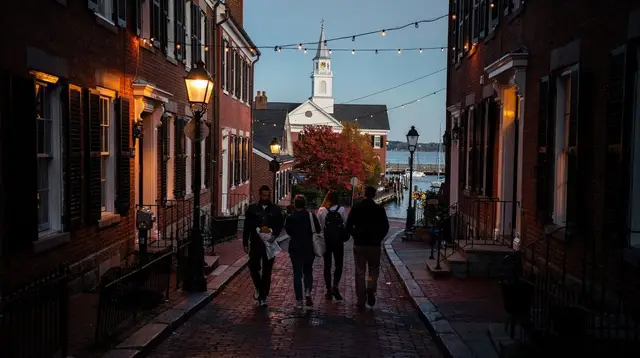
Plymouth is where the Pilgrims came ashore from the Mayflower in December 1620, and the town has spent four centuries turning that landing into its identity. The historic core sits directly on the harbor: Plymouth Rock, a small commemorative stone on the waterfront, the Mayflower II replica docked a short walk away, and the Plimoth Patuxet Museums, a living-history site a few miles out of town. None of this is a quick photo stop — Plymouth rewards a full day, and it works best as a planned leg of a trip rather than an afterthought squeezed between other day trips from Boston.
Getting from Boston to Plymouth
The drive from downtown Boston to Plymouth takes about an hour on Route 3, depending on traffic, and a car is genuinely the most practical way to see the town, because Plymouth Rock, the Mayflower II, and Plimoth Patuxet are spread across several miles rather than clustered in one walkable center.
Without a car, the MBTA Commuter Rail runs the Kingston/Plymouth line from South Station to Cordage Park in Plymouth, a trip of roughly 45 minutes to an hour, followed by a local shuttle (the Plymouth Area Link, run by GATRA) into the downtown waterfront. The Commuter Rail is a separate ticketing system from the T subway — a CharlieCard does not work on it — and schedules thin out on weekends, so check mbta.com before planning a car-free day. A handful of organized bus tours also run direct from Boston and bundle transportation with entry to the main sites; that removes the shuttle transfer but locks you into a fixed schedule. For a broader look at reaching this and other excursions without renting a car, see getting around Boston without a car and Commuter Rail day trips.
Plymouth Rock and the waterfront
Plymouth Rock sits under a small granite portico on the harbor, and most first-time visitors are surprised by how modest it is — a boulder roughly the size of a large armchair, marked with the year 1620. Its status as the actual landing spot is symbolic rather than historically documented; the rock became a tourist attraction long after the fact, and the town is upfront about that in its own signage. It’s free to view, always open, and takes about ten minutes — treat it as a stop on a longer walk along the Boston Harbor-style waterfront rather than a destination in itself.
Immediately nearby, Mayflower II is a full-scale, seaworthy replica of the original ship, built in England in the 1950s and sailed across the Atlantic to Plymouth. It’s operated as part of the Plimoth Patuxet Museums and is usually open for boarding on a paid ticket, with costumed interpreters aboard in season; the ship occasionally leaves for maintenance or sailing events, so check current status before visiting. Walking the waterfront between the Rock, the ship, and the harbor takes an easy hour or two, and it’s a good spot to compare notes with a Boston Tea Party Ships & Museum visit if history-ship recreations are your thing.
Plimoth Patuxet Museums
A few miles south of downtown, the Plimoth Patuxet Museums are the reason most visitors give Plymouth a full day rather than a quick stop. The site reconstructs a 1627 English colonial village with costumed interpreters staying in character, alongside a separate Wampanoag Homesite staffed by Native historians and educators presenting their own history in their own terms — a deliberate two-sided approach rather than a single colonial narrative. We don’t publish specific opening hours or ticket prices here, since both change seasonally and by year; confirm the current schedule and admission on the museum’s own site before you go, and budget more time than you’d expect — most visitors spend two to three hours here alone.
The museums sit a short drive from the waterfront, not within walking distance, which is another reason a car (or an organized tour that includes transport) is the practical choice. Combined with the Rock and Mayflower II, this is comfortably a full day rather than a half-day stop.
a skip-the-line ticket for the Plimoth Patuxet living-history museums covers both the colonial village and the Wampanoag Homesite and is worth booking ahead in peak season, when the site can sell out.
On the water: cruises and whale watching
Plymouth is a working harbor town, and its waterfront activities lean toward short cruises rather than the larger-scale whale watching fleet out of Boston. Options include a straightforward sightseeing run on the harbor and, seasonally, trips out toward Stellwagen Bank for whale sightings — April through October is the realistic window, and nothing is guaranteed outside that range.
A narrated cruise around Plymouth Harbor aboard the Pilgrim Belle is a relaxed way to see the waterfront, the Mayflower II, and the town from the water in under an hour. For a longer outing, a whale watching cruise departing Plymouth runs several hours and depends on the season and recent sightings, so check the operator’s current conditions before booking.
Compared with Boston, Plymouth’s bookable activity list is modest — around ten tours in total, mostly cruises, museum tickets, and a couple of walking and ghost tours. If you’re weighing whether to book ahead or show up and decide locally, our general take on that trade-off is in book in advance vs. on the spot.
Evening Plymouth: history with a different tone
Plymouth leans into its older, stranger stories after dark. The Scuttlebutt walking tour covers the town’s ghost stories, pirate history, and local political scandal on foot through the historic downtown — a lighter, more theatrical counterpoint to the daytime museum programming, and a reasonable way to fill an evening if you’re staying overnight rather than making it a single-day trip from Boston.
Downtown Plymouth: walking, shopping, and eating
Away from the Rock and the museums, downtown Plymouth is a small, walkable waterfront town in its own right, built around Main Street and Water Street a few blocks from where Mayflower II is docked. It’s a reasonable place to base a meal between the morning at the harbor and an afternoon at Plimoth Patuxet, or to fill the hour before an evening walking tour. Seafood is the obvious draw this close to a working harbor — expect chowder, fried clams, and lobster rolls on most menus, in the same New England tradition covered in our clam chowder and lobster roll guide.
As anywhere in Massachusetts, the state’s general sales tax of 6.25% applies to shopping (clothing under USD 175 is exempt), and restaurant meals carry a separate meals tax of roughly 7% — the 6.25% state rate plus a local option many Massachusetts towns, Plymouth included, have adopted. Neither shows up on a printed menu price; both are added at checkout, so it’s worth budgeting a little above the sticker price for a sit-down meal.
Plymouth is small enough to cover on foot once you’re downtown, but the town’s real sights — the waterfront, Plimoth Patuxet, and the harbor departure points for cruises — are spread across a few miles, which is why most visitors still rely on a car or an organized tour to move between them rather than walking the whole day.
Combining Plymouth with a longer trip
Plymouth sits on Route 3, on the direct route south toward Cape Cod, which makes it a natural stop rather than a dedicated round trip for most Boston-based visitors. A common pattern: leave Boston in the morning, spend the day in Plymouth, then continue on to the Cape for the rest of a multi-day trip, or reverse the order on the way back. If you’re building a longer itinerary around this, see Cape Cod and Provincetown for what’s on the peninsula itself, and our one-week Boston day trips plan for how Plymouth fits alongside Salem, Lexington and Concord, and the rest.
A guided day tour of Plymouth and the South Shore from Boston bundles transportation with entry to the main sites, which removes the Commuter Rail transfer and the need for a car — a reasonable option if you’d rather not drive and don’t want to build the day yourself.
Best time to visit
Late spring through fall is the practical window: Plimoth Patuxet runs its fullest interpreter schedule, harbor cruises and whale watching operate, and the outdoor sites are comfortable to walk. Several attractions reduce hours or close parts of the site in winter, so a January visit means confirming what’s actually open before you drive down.
Thanksgiving week, in late November, carries unusual weight in Plymouth given the town’s place in the holiday’s popular origin story, and it draws heavier visitor interest than the surrounding weeks. We won’t promise a specific event or program here — check the town’s own tourism office and the museum’s calendar for what’s actually scheduled that year — but expect a livelier, more crowded town than a typical November weekend.
Fall foliage season (late September into late October) overlaps with the Massachusetts foliage window described in our fall colors guide, and Plymouth’s harbor and surrounding woodland make a decent, less crowded alternative to the busier foliage routes further inland.
Practical details
| What | Detail |
|---|---|
| Distance from Boston | About 40 miles (65 km) south |
| Driving time | Roughly 1 hour, more in weekend traffic |
| Commuter Rail | Kingston/Plymouth line, South Station to Cordage Park, about 45 to 60 minutes, plus a local shuttle to the waterfront |
| Plymouth Rock | Free, open year-round, viewable in about 10 minutes |
| Mayflower II | Paid ticket through Plimoth Patuxet Museums; occasionally closed for maintenance or sailing events |
| Plimoth Patuxet Museums | Paid admission; hours and pricing set by the museum and change seasonally — confirm before visiting |
| Best season | Late spring through fall; reduced hours at some sites in winter |
| Recommended time on-site | A full day; a half-day if only the waterfront and Rock are on the plan |
Frequently asked questions about visiting Plymouth
Is Plymouth Rock worth seeing?
It’s worth ten minutes if you’re already in Plymouth for the museums or the harbor. On its own, expect a small, unremarkable boulder under a portico — the historical significance is symbolic more than physical, and most visitors are candid that it’s smaller than they expected.
How do I get from Boston to Plymouth without a car?
Take the MBTA Commuter Rail’s Kingston/Plymouth line from South Station to Cordage Park, then a local GATRA shuttle into downtown Plymouth. It’s a separate ticket system from the T subway, and weekend schedules run less frequently, so check mbta.com ahead of time. An organized day tour from Boston is the other car-free option, and it bundles transport with entry to the main sites.
Is Plymouth part of Boston or the Massachusetts coast trip?
Plymouth is its own town in Plymouth County, about 40 miles (65 km) south of Boston — not a Boston neighborhood. It’s grouped on this site with Cape Cod and the islands because it sits on the direct route south toward the peninsula, not because it’s administratively part of either.
How much time do I need in Plymouth?
Plan on a full day if you want to see Plymouth Rock, board Mayflower II, and spend real time at the Plimoth Patuxet Museums, since the museum site alone typically takes two to three hours. A half-day covers the waterfront and Rock only.
Is Plymouth crowded during Thanksgiving?
Late November draws noticeably more visitors than a typical fall weekend, given the town’s connection to the Thanksgiving story. We don’t list a specific event schedule here — check the museum’s and town’s own calendars for what’s planned in a given year — but expect heavier crowds and possibly higher lodging rates that week.
What’s the best way to combine Plymouth with Cape Cod?
Route 3 runs directly from Plymouth south to the Cape Cod Canal bridges, so most visitors treat Plymouth as a stop on the way down or back rather than a separate round trip from Boston. Budget a full day in Plymouth before continuing on.
Are the Plimoth Patuxet Museums open in winter?
Some parts of the site reduce hours or close seasonally in winter; we don’t publish specific dates here because they change year to year. Confirm current hours directly with the museum before planning a cold-weather visit.
Can I see whales from Plymouth?
Seasonally, yes — roughly April through October, weather and recent sightings permitting. Plymouth’s whale watching trips are smaller in scale than the dedicated fleet operating out of Boston Harbor, but they depart closer to the historic waterfront.
Do I need a car to see everything in Plymouth?
Not strictly, but it makes the day much easier. Plymouth Rock, Mayflower II, and downtown restaurants sit within an easy walk of each other on the waterfront, but Plimoth Patuxet Museums is a few miles out of town and isn’t walkable from the harbor. Without a car, the Commuter Rail plus GATRA shuttle gets you into downtown Plymouth, and a guided day tour or taxi is the practical way to reach the museums from there.
Is there sales tax on food and shopping in Plymouth?
Yes, and it works the same as everywhere else in Massachusetts. The state’s general sales tax is 6.25%, with clothing under USD 175 exempt. Restaurant meals carry a separate meals tax of around 7% (the 6.25% state rate plus a local option many towns, including Plymouth, have adopted). Neither is included in a menu or shelf price — both are added at checkout.