Book in advance or wing it: Boston's real rule
Do I need to book everything in Boston in advance?
No. Activities with a fixed schedule and limited capacity — harbor cruises, whale watching, ferries to the islands, some museums — get tight during summer, fall foliage, marathon weekend and school breaks, so booking ahead helps then. Freedom Trail walking, neighborhood strolls and most parks never require a reservation at any time of year.
Capacity and schedule, not the city itself, decide the answer
Ask ten people whether Boston needs advance booking and you’ll get ten different answers, because the honest answer depends on what you’re actually doing, not on the city as a whole. The useful question isn’t “should I book ahead in Boston” — it’s “does this specific activity have a fixed departure time and a capped number of seats, and does my date fall in a busy stretch of the calendar.” Answer those two questions and the booking decision mostly makes itself.
Some activities in Boston run on a schedule with a hard ceiling on how many people can join: a boat leaves the dock at a set time with a fixed number of seats, a timed museum ticket admits a set number of visitors per slot, a ferry has a set number of spaces for people and vehicles. These are the activities where advance booking earns its keep, and where it earns it more in some seasons than others. Other activities in Boston have no ceiling at all: a sidewalk, a park, a self-guided walk. Nobody turns you away from Boston Common on the busiest Saturday of the year. That distinction is the whole framework this page works from, and it holds regardless of what a booking platform’s marketing copy implies about urgency.
What tends to fill up
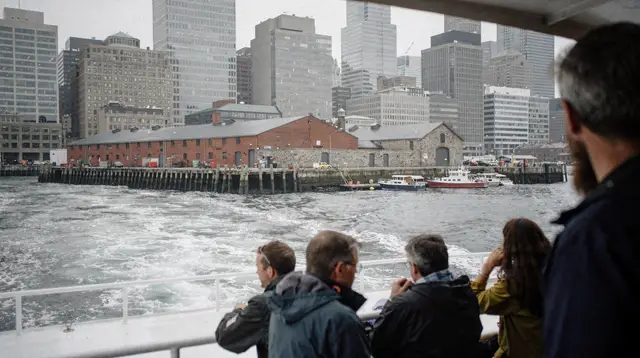
Harbor cruises are the clearest example of fixed-schedule, capped-capacity travel in Boston. A sunset cruise or dinner cruise departs at a specific hour with a specific number of seats, and once those seats are gone for that departure, they’re gone until the next one. The same logic applies to a Charles River cruise and to most guided harbor cruises generally — see the fuller comparison at harbor cruise vs. whale watching for how these formats differ in practice.
a guided architecture and history cruise along the harbor and Charles River is a good example of the format: one departure, a fixed guide, a boat that only holds so many people. On a quiet weekday afternoon in early spring, arriving without a reservation might work out fine. On a Saturday evening in July, it’s a different calculation entirely.
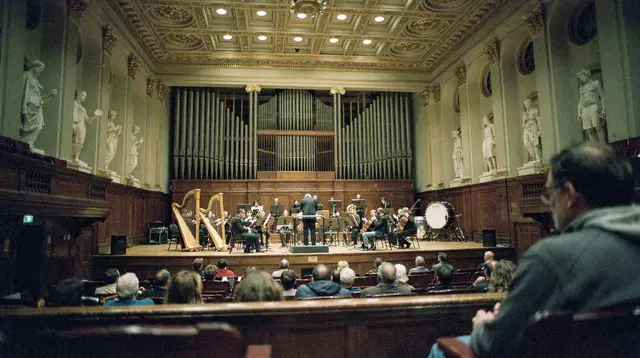
Whale watching toward Stellwagen Bank works the same way, with an added variable: it’s seasonal (roughly April through October) and weather-dependent, which the next section covers in more detail. Certain museums — the Museum of Fine Arts, the Isabella Stewart Gardner Museum, the Museum of Science — sell timed tickets that cap how many people enter per hour, and those windows can fill on the museums’ own busiest days: rainy weekends, school vacation weeks, and the deep cold of a Boston winter when an indoor attraction is the obvious plan for half the city at once. A guided Freedom Trail walking tour with a set group size and departure time falls into the same category, even though the trail itself does not — more on that distinction below.
Island ferries to Martha’s Vineyard and Nantucket, run by the Steamship Authority and Hy-Line Cruises out of Woods Hole and Hyannis, are capped in a way that combines both pressures: a fixed number of seats (and an even more limited number of vehicle spaces) on a schedule that shrinks sharply outside the summer season. See the ferry guide for how sailings thin out once the season turns. A Guided Fenway Park ballpark tour is another fixed-departure product worth planning around on a game day or a busy weekend, distinct from an actual game ticket.
What never needs booking, in any season
Walking the Freedom Trail’s red line costs nothing and requires no reservation, ever. It is not a single attraction with an entrance and a headcount — it’s a 2.5-mile (4-kilometer) route on public sidewalks linking 16 sites from Boston Common to Bunker Hill, and nobody controls how many people are on that route at once. See the self-guided walk for how to follow it independently, and guided vs. self-guided if you’re weighing whether a guide changes anything about the booking question — it does, since a guided version has a fixed group and departure time, while the walk itself does not.
The same open-access logic covers most of what fills a Boston itinerary day to day: wandering Beacon Hill’s brick sidewalks, eating your way through the North End, sitting in Boston Common or the Public Garden, browsing Harvard Square’s bookstores in Cambridge, or just walking the Back Bay brownstone streets. None of this has a ceiling. A neighborhood doesn’t sell out. Boarding the USS Constitution itself is free with ID and has no advance-booking mechanism either — it’s a walk-up experience subject only to standard security screening, not a capacity-limited ticketed product.
This matters because it’s easy to import a booking-everything mindset from a different kind of trip and apply it to Boston wholesale, when in fact a large share of what makes the city worth visiting doesn’t behave that way at all.
Weather-dependent activities deserve a different kind of planning
Outdoor, schedule-fixed activities that also depend on weather — whale watching chief among them, island ferries to a lesser degree — reward a specific kind of advance booking: one that allows changes or cancellation, rather than one locked in for a specific date months out. The risk with these activities isn’t only that a departure sells out; it’s that conditions on the day make the trip unpleasant or cause an outright cancellation. Booking early and rigidly just moves the risk from “can’t get a seat” to “locked into a seat on a bad-weather day.” Booking early with flexibility solves both problems at once, and it’s a meaningfully different decision than the flat “book it now” advice generic itineraries tend to give.
During slower periods — a weekday in shoulder season, a quiet stretch outside summer — the opposite approach can make more sense for weather-dependent outings: checking conditions closer to the date and booking once the forecast looks reasonable, rather than committing to a fixed departure weeks ahead and hoping for good weather. There’s no universal rule here beyond matching the booking style to the actual risk: fixed-and-early when demand is the threat, flexible-and-late when weather is the threat, and sometimes both risks stack in high season, which is when flexible-but-early becomes the more sensible middle path.
Guided Freedom Trail walks: a booking decision layered on a free one
The trail itself never needs a reservation, but a guided version of it is a different product entirely, and it’s worth separating the two clearly. A guide adds a fixed departure time, a capped group size, and often a language or theme the self-guided walk can’t offer — which moves it firmly into the “book ahead in busy periods” column even though the ground it covers costs nothing to walk alone.
For visitors who’d rather follow a live guide in French than read plaques and a paper map, a Freedom Trail walking tour guided in French covers the same route with a fixed group and schedule, which is exactly the kind of product that fills up on a summer weekend and has room to spare on a quiet weekday. A themed variant, a guided walk covering the trail’s ten essential stops plus the Cheers bar, works the same way: a set departure, a capped headcount, and the same seasonal pressure as any other fixed-schedule product in this guide. Neither tour changes the free status of the painted line itself — they simply wrap a scheduled, capacity-limited experience around it. See guided vs. self-guided for a fuller comparison of when paying for a guide is worth it in the first place, and the guided walking tour page for what a typical guided departure looks like on the ground.
Cambridge: a separate city with its own booking logic
Cambridge sits across the Charles River from Boston proper and is its own city, not a Boston neighborhood — a distinction that matters here because Harvard and MIT run their own campus access rules, separate from anything downtown. Walking through Harvard Yard or browsing Harvard Square’s bookstores needs no reservation at all, the same open-access logic that covers Boston Common or the North End.
A structured campus tour is the fixed-schedule exception: a guided tour through Harvard and MIT’s campuses and nearby historical sites runs on its own departure times with a capped group, which puts it in the same booking category as a harbor cruise or a guided Freedom Trail walk rather than in the “never needs booking” category that covers simply walking around. For a self-directed alternative, the Harvard Yard student-guided tour and the Cambridge and Harvard Square neighborhood guide lay out what’s worth seeing without a fixed departure time, while the Harvard museums and the MIT Museum both sell timed tickets that can fill on the same busy weekends and school-vacation weeks that pressure downtown museums.
Getting there doesn’t need booking, even when the activity does
It’s worth separating how you get to an activity from the activity itself, since the two follow completely different rules in Boston. The MBTA’s subway system, known locally as the T, sells no advance tickets — a CharlieCard or a tap-to-pay works the same at 8 a.m. on a Tuesday as it does on marathon weekend, though the trains themselves don’t run all night, so late departures deserve a look at the schedule rather than a reservation.
The separate Commuter Rail network, which reaches day-trip towns like Salem and Plymouth, works the same walk-up way. Bluebikes, the city’s bike-share system, has no relationship to the T at all and likewise needs no advance booking for casual use. None of this transportation layer competes for the same limited seats as a harbor cruise or a timed museum ticket — it’s simply available or it isn’t, on a fixed public schedule, which is one more reason the booking-everything instinct from other trips doesn’t map cleanly onto getting around Boston.
Reading the calendar: when pressure actually builds
Demand for fixed-capacity activities in Boston isn’t constant across the year — it clusters around a few identifiable stretches. Summer brings the highest overall volume of visitors and the fullest ferry schedules to the islands. Fall foliage season, roughly late September through late October, adds pressure specifically around anything scenic — cruises, countryside day trips, the fall foliage guide covers the pattern in more depth. Patriots’ Day weekend, the third Monday in April, brings the Boston Marathon and a surge of visitors timed tightly around race weekend — see the marathon and spring guide. School vacation weeks pack museums specifically, since indoor, kid-friendly attractions absorb the demand that summer spreads across the outdoors. For the full seasonal picture across all of these, the best time to visit guide lays out how the calendar behaves month by month.
Salem in October is worth calling out on its own, since it doesn’t follow the “book ahead in high season” pattern so much as “expect a crowd, full stop” — the entire month runs at or near capacity for the Haunted Happenings festival, and that’s a crowding problem more than a booking-slot problem; see the Salem day trip guide for how to plan around it.
Outside these windows — a weekday in January, a Tuesday in early June before the season fully turns, the stretch after Labor Day but before foliage peaks — the same fixed-capacity activities that felt urgent in July often have room to spare on short notice. The framework isn’t “book everything early” or “nothing needs booking” — it’s matching the booking effort to the actual date on the calendar, activity by activity.
Multi-attraction passes: a separate decision
A city pass bundling several paid attractions — covered in detail in the CityPass and Go City guide — solves a payment question, not a scheduling one. Holding a pass doesn’t exempt an attraction from its own timed-entry system; several of the museums and tours that passes typically include still require booking a specific entry window once the pass is in hand, especially during the same busy periods described above. Treat the pass purchase and each attraction’s individual reservation as two separate decisions, made at two different points in the planning process — the pass early if it makes financial sense for the mix of attractions on the itinerary, each attraction’s time slot closer to the actual visit once the day’s plan firms up.
A simple decision framework
Putting the pieces together, a workable approach looks less like a checklist of specific days or weeks and more like a set of questions to ask about each activity individually:
| Activity type | Fixed schedule? | Capacity-limited? | Weather-dependent? | Booking approach |
|---|---|---|---|---|
| Harbor or river cruise | Yes | Yes | Mildly | Book ahead in high season; flexible in slow season |
| Whale watching | Yes | Yes | Strongly | Book ahead with flexible/cancellable terms |
| Island ferry (summer) | Yes | Yes | Somewhat | Book ahead, especially with a vehicle |
| Island ferry (off-season) | Yes, reduced | Less pressure | Somewhat | Confirm schedule runs; booking less urgent |
| Timed museum ticket | Yes | Yes | No | Book ahead on weekends, vacation weeks, winter |
| Guided walking tour | Yes | Yes | Mild | Book ahead in peak season |
| Freedom Trail (self-guided) | No | No | No | Never required |
| Neighborhood walking (Beacon Hill, North End) | No | No | No | Never required |
| USS Constitution (ship itself) | Limited hours | No | No | Walk up, no booking mechanism |
| Multi-attraction pass | N/A (payment) | Depends per attraction | No | Buy pass anytime; book each entry window separately |
None of this requires knowing an exact number of days or weeks ahead of time, and any figure claiming to know one for every activity and every season is guessing — availability shifts week to week with weather, group bookings, and each operator’s own scheduling. What holds steady is the shape of the decision: fixed schedule plus capped seats plus a busy stretch of the calendar equals a reservation worth making early; anything without those three factors together can reasonably wait, sometimes right up to the day itself.
For deeper context on any one piece of this — the seasonal calendar in full, a side-by-side on cruises versus whale watching, or whether a multi-attraction pass is worth the cost for a specific itinerary — the linked guides above go further than a general framework can on its own. First-time visitors sorting out a whole itinerary from scratch may also want the first time in Boston guide or how many days to work out before deciding what, exactly, is worth planning around in the first place.
Boston tours worth comparing on GetYourGuide
Verified deep-linked GetYourGuide tours. Book through these links and we earn a small commission at no cost to you.
GetYourGuide does not provide a product photo for this activity — the image shows the meeting point, photographed by us.