New England clam chowder and seafood tours in Boston
What does a Boston clam chowder and seafood tour actually cover?
A guided walk of 90 minutes to about 3 hours that stops at several restaurants or seafood counters, usually downtown or near the waterfront, with a taste of New England clam chowder and other seafood at each stop plus some historical commentary along the way. Exact stops, tasting portions, and duration vary by operator, so check the listing before booking.
What a clam chowder and seafood tour in Boston actually is
New England clam chowder is a thick, cream-based soup built on clams, potatoes, onions, and salt pork, and it is treated locally as close to an identity dish. It shows up on menus from casual counters to white-tablecloth dining rooms, and a small industry of guided tasting tours has grown around it. These tours are not a single museum visit or a single restaurant meal. They are a walking route with several stops, usually three to five, where a guide leads a small group from one restaurant or seafood counter to the next, and each stop serves a tasting portion rather than a full meal.
The chowder is almost always the anchor, but “seafood tour” is the more accurate label for most of these itineraries, because operators typically mix in other regional seafood at some stops: fried clams, oysters, chowder variations, or other local plates depending on what a given restaurant is known for. Expect the guide to talk through the history of the dish and the neighborhood between stops — how immigrant communities shaped Boston’s food scene, why chowder became regional shorthand, and what separates a Boston-style bowl from a Manhattan-style tomato-based version (the two are genuinely different soups, not just a regional preference).
None of this is a fixed, single “authentic” recipe. Chowder recipes vary restaurant to restaurant, and operators change tour stops as restaurants open, close, or drop in and out of partnership agreements. Treat any tour’s stop list as current at booking time, not guaranteed for months out.
How it differs from a lobster tour
Boston also runs a separate category of food tour built around lobster and the lobster roll specifically — split-top buns, warm butter or cold mayonnaise preparations, and the debate between the two. That is a distinct product from a clam chowder and seafood tour, even though the two overlap in spirit and sometimes in neighborhood. A chowder-focused tour samples a range of seafood dishes across several restaurants with chowder as the throughline; a lobster tour narrows in on lobster preparations specifically, often with fewer but larger tastings. If lobster is your main interest, the dedicated guide covers that ground in more depth: lobster and lobster roll tours.
Where these tours run
Route details vary by operator, but most clam chowder and seafood tours in Boston are built around one of two general areas.
Downtown, near Quincy Market and Faneuil Hall. This cluster of historic marketplace buildings has one of the densest concentrations of food stalls and seafood counters in the city, which makes it a natural starting or ending point for a walking tasting tour. It also overlaps heavily with Quincy Market and Faneuil Hall food tours more broadly, so if chowder is only one interest among several, that guide covers the wider food scene in the same few blocks.
The Seaport and the waterfront near Boston Harbor. Several operators route at least one stop through the Seaport district or along the harbor, since fresh seafood restaurants cluster there and the water views add to the pitch. If you’re combining a chowder tour with harbor sightseeing more broadly — cruises, the harbor islands, or whale watching — the harbor guide has the fuller picture: Boston Harbor Islands.
A smaller number of tours run through the North End, Boston’s Italian neighborhood, where the food focus tends to be Italian rather than seafood-first — worth checking the stop list carefully if chowder is the priority, since a North End-labeled food tour may lean more heavily toward pastry and pasta. See the North End Italian food tour guide for that distinction.
Booking one: what to check before you commit
Because “seafood tour” covers a range of formats, it’s worth reading the actual stop list and inclusions rather than assuming based on the title.
| What to check | Why it matters |
|---|---|
| Number of stops | Three stops with generous tastings differs a lot from six stops with small bites — affects both cost-per-stop value and how full you’ll be |
| Whether chowder is guaranteed at every stop | Some tours sample chowder at one or two stops only, with other seafood dishes filling the rest |
| Dietary accommodations | Shellfish allergies and vegetarian diets need advance notice; most operators can substitute but only if told ahead |
| Group size | Small-group tours (8–12 people) move through restaurants more easily than larger groups, and tend to get better attention from staff |
| Duration | Ranges from roughly 90 minutes to about 3 hours; confirm with the operator, since published durations vary |
| Walking distance | Downtown routes are compact; Seaport-inclusive routes can involve more walking between stops |
One example built specifically around tastings paired with local history is the Boston: Seafood Tasting Historical Walking Tour, which pairs chowder and seafood stops with commentary on the neighborhoods it passes through. A broader downtown food sampler that includes chowder among a wider range of Boston specialties is the Classic Bites of Boston Tour. And for a route that leans into the North End’s Italian food scene while still including a chowder stop, there’s the Boston: North End Express Food Tour with Chowder and Pizza, which is a useful option if you want to pair the two neighborhoods’ food identities in one outing rather than booking separately.
None of these listings should be read as a ranking or a recommendation of one operator over another — check current stop lists, tasting sizes, and reviews on the listing itself before booking, since these details change.
Seasonality: the dish versus the ingredients
Clam chowder itself is a year-round menu item at the vast majority of restaurants that serve it — this is not a seasonal specialty dish the way, say, whale watching or a summer clambake might be. You can book a chowder tour in January and expect the same core product as in July.
Where seasonality does matter is in some of the other seafood that a broader tour might feature alongside the chowder. Certain shellfish and fin fish have regional fishing seasons, and a restaurant’s menu can shift with what’s locally available. This is a reasonable thing to ask an operator about if a specific seafood dish beyond chowder is your main draw, but it should not affect whether the tour itself runs — these are indoor, restaurant-based tours, not weather-dependent outdoor activities, so they operate through the winter without the seasonal closures that affect, for instance, harbor cruises or island ferries.
Getting there by MBTA
If your tour starts downtown near Faneuil Hall and Quincy Market, the nearest T stops are Government Center (Green Line and Blue Line) and State (Orange Line and Blue Line), both a short walk from the marketplace buildings.
If the route includes a Seaport or harbor-facing stop, the Blue Line’s Aquarium station puts you within easy walking distance of the waterfront and Boston Harbor. The Silver Line SL1 and SL2 also serve the Seaport district directly from South Station, which is useful if you’re coming from the Red Line or from the Commuter Rail, a separate network that runs on its own ticket rather than a CharlieCard. Standard T fare applies — CharlieCard fares run around 2.40 USD per ride in 2026 with transfers included in a two-hour window, though it’s worth checking mbta.com for the current rate before you travel, since fares change periodically.
None of these routes require a car, and parking downtown or in the Seaport is expensive and often scarce, so the T is the practical option for reaching any of these tour starting points.
What to expect once the tour starts
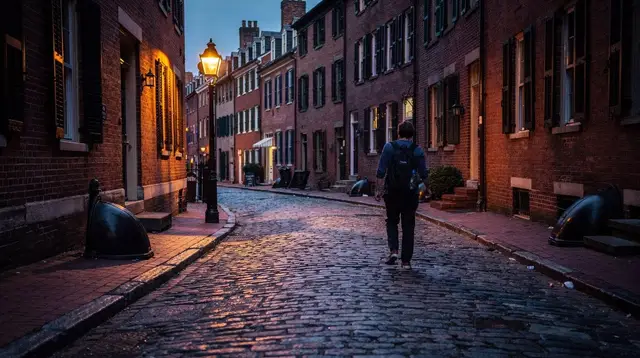
Tastings are portioned for sampling, not for a full meal — plan to eat a light breakfast or lunch beforehand if the tour runs at a mealtime, since three to five tasting-sized stops generally won’t leave you full the way a sit-down meal would. Guides typically walk the group between stops at a relaxed pace, narrating neighborhood history, the origin of specific dishes, or the story behind a particular restaurant along the way. Comfortable walking shoes are worth it even for a downtown-only route, since Boston’s older streets are often brick or cobblestone and uneven in places.
Weather is rarely a reason to cancel, since most of the tour time is spent inside restaurants, but the walking portions between stops happen outdoors, so dress for the season — Boston winters run close to freezing during the day, and summers can be humid.
Combining a chowder tour with the rest of downtown Boston
Because most chowder and seafood tours start or pass through the Quincy Market and Faneuil Hall area, it pairs naturally with a Freedom Trail walk on the same day — the historic marketplace sits close to several Freedom Trail stops, and a food tour can bookend a morning of sightseeing without requiring a second trip downtown. If you want a guide that ties history and neighborhoods together on foot, the Best of Boston Walking Tour covers similar downtown ground with a broader historical focus rather than a food focus, which is a reasonable complement if you’re spending a full day in the area.
For travelers building out a longer downtown itinerary, the Quincy Market and Faneuil Hall food tour guide and the North End Italian food tour guide both cover adjacent ground, so it’s worth reading through all three before deciding which single tour — or which combination — fits your time in the city. If your interest in seafood extends beyond tasting tours to actually getting out on the water, see the guides on whale watching and Boston Harbor cruises, both of which run on their own seasonal schedules distinct from a restaurant-based food tour.
A note on authenticity claims
Be skeptical of any tour or restaurant that markets itself as serving “the” authentic Boston clam chowder recipe. Chowder recipes vary by household and by restaurant, and there is no single certified version. What a good tour offers isn’t a definitive recipe — it’s a sampling across several kitchens so you can compare approaches yourself and form your own opinion about what you like. That comparative structure is really the point of doing a tasting tour instead of eating at one restaurant: you get variation, not a verdict.
Practical planning notes
Prices for these tours are not fixed and change by operator, season, and group size, so check the current rate on the individual listing rather than relying on a number here. The same goes for exact duration — some operators list 90 minutes, others closer to 3 hours, depending on the number of stops and pace.
If you’re combining a chowder tour with other downtown activities, the Boston walking tour guide and the general neighborhood guide to the Seaport district are both useful for filling out the rest of the day. And if you’re weighing whether a guided tasting tour is worth it compared to simply picking a few restaurants yourself, the guided versus self-guided comparison covers the same trade-off in a different context — paying for a guide’s curation and commentary versus doing the legwork yourself — and the logic largely carries over to food tours.
Frequently asked questions about Boston’s clam chowder and seafood tours
Is a clam chowder tour the same as a lobster tour in Boston?
No. Clam chowder and seafood tasting tours focus on the chowder itself plus a broader seafood sampling, while lobster-focused tours are built around lobster rolls and whole lobster specifically. Some itineraries touch both, but they are marketed and run separately.
Where in Boston do these tours run?
Most start downtown, often near Faneuil Hall or Quincy Market, and several route through the Seaport or along Boston Harbor for at least one stop. The exact route depends on the operator and can change with restaurant availability.
Is clam chowder available year-round in Boston?
Yes, clam chowder is a year-round menu staple at most restaurants that serve it, unlike some seasonal seafood catches. That said, always confirm with the operator whether the specific tour runs on a seasonal schedule.
How do I get to the waterfront stops by public transit?
The Blue Line stop at Aquarium puts you within walking distance of Boston Harbor and the Seaport-adjacent waterfront. Downtown stops near Faneuil Hall are closer to the Orange Line and Green Line at State or Government Center.
How long does a chowder and seafood tour last?
Typically 90 minutes to about 3 hours depending on the number of stops. Always confirm the exact duration with the operator before booking, since listings can round differently.
Do these tours include alcohol pairings?
Some do, some don’t. It depends entirely on the operator and the specific tour, so check the inclusions on the individual listing rather than assuming.
Should I book in advance?
Small-group food tours with restaurant reservations tend to sell out on weekends and during peak season, so booking a few days ahead is reasonable, though not always strictly necessary.
North End food tours and tastings on GetYourGuide
Verified deep-linked GetYourGuide tours. Book through these links and we earn a small commission at no cost to you.
GetYourGuide does not provide a product photo for this activity — the image shows the meeting point, photographed by us.