Guided walking tours of downtown Boston: what to expect
What does a guided walking tour of downtown Boston actually cover?
Most guided walking tours follow all or part of the Freedom Trail between Boston Common and the North End, passing the Massachusetts State House, King's Chapel, the Old South Meeting House, and Faneuil Hall. Typical duration runs 1.5 to 2.5 hours, but always confirm the exact length with the operator before booking.
What a downtown Boston walking tour actually covers
A guided walking tour of downtown Boston, in practice, means one thing: a walk along all or part of the Freedom Trail, the red line embedded in the sidewalk that connects sixteen historic sites across the oldest part of the city. Most operators don’t attempt the full 2.5-mile route in a single guided session. Instead they cover the dense, walkable core between Boston Common and the North End, which is where the bulk of the Revolutionary-era sites sit close enough together to visit on foot without a long march.
A typical route moves from the Common past the Massachusetts State House on Beacon Hill, down through King’s Chapel and its burying ground, past the Old South Meeting House, and on to Faneuil Hall before continuing into the North End. Along the way a guide points out the Old State House, the site of the Boston Massacre, and the narrow colonial-era streets that survived the city’s later development. This is not a comprehensive stop-by-stop breakdown — for that level of detail on each of the sixteen official sites, see the dedicated Freedom Trail guide, which covers admission, what’s free, and what to expect at each stop.
What a walking tour adds on top of simply following the line yourself is narration: context on why a given building mattered, how the sites connect to each other, and stories that don’t come across from a plaque alone. Whether that’s worth paying for versus walking it yourself is a real question, and one this site answers directly in a self-guided versus guided comparison.
The formats operators sell
Downtown Boston walking tours come in a handful of recognizable formats, and it’s worth understanding the difference before booking, since the same basic route gets sold in very different styles.
Costumed guide tours put a performer in period dress — often playing a specific historical figure — who narrates the walk in character. This format tends to work well for families and visitors who want the history delivered as a story rather than a lecture. A children’s-focused version of this format runs specifically with younger visitors in mind:
a costumed, family-paced walking tour built for kidsHistorian-led tours trade the theater for depth. A trained guide walks the same ground but spends more time on primary sources, dates, and the messier parts of the history that don’t fit into a costumed monologue. This is the format to look for if you’ve already read a book or two about the Revolution and want more than the highlight reel.
Small-group tours cap the number of people walking together, usually somewhere in the range of ten to twenty. They cost less per person than a private tour and still avoid the bottlenecks that come with a large bus-tour group trying to squeeze onto a narrow colonial sidewalk. A well-reviewed general-interest option covering the core sites is:
a small-group walk through the historic downtown corePrivate tours let one party set the pace, skip stops that don’t interest them, and linger where they want. They cost more but remove the friction of syncing with a larger group’s schedule. For visitors focused on a specific thread of the city’s history rather than the general overview, private options exist for narrower angles too, such as:
a private walk focused on Boston’s Jewish history and landmarksSome operators also run themed variations on the same physical ground — pub-crawl formats, “Cheers”-branded walks tied to the sitcom, or language-specific tours for non-English speakers. A French-language version of the Freedom Trail walk exists for visitors who’d rather not follow English-only narration:
a French-language guided walk of the Freedom TrailNone of this is a ranking of which company does it best — this page isn’t set up to compare operators against each other, and pricing changes often enough that it’s not listed here either. Check the operator’s own page for the current rate and the exact stops included before booking.
Duration, timing, and what “1.5 to 2.5 hours” actually means
Operators generally advertise a duration somewhere between 1.5 and 2.5 hours for a downtown core walk, but that range hides real variation. A costumed tour aimed at families tends to run shorter and move at a slower physical pace with more stops for questions. A historian-led or private tour can run longer if the group wants to linger. Group size also affects pace — a party of twenty moves more slowly through narrow sidewalks and crosswalks than a private group of two.
Always treat the advertised duration as an estimate and confirm the specifics with the operator before you book, especially if you have a tight connection afterward — a lunch reservation in the North End or a train to catch from South Station.
Where these tours start and how to get there
The overwhelming majority of downtown walking tours start at or near Boston Common, which sits at the western edge of the historic core and doubles as the traditional starting point of the Freedom Trail itself. The nearest T station is Park Street, served by both the Red Line and the Green Line, which makes the starting point straightforward to reach from almost anywhere else on the MBTA network.
Downtown Crossing is the other common reference point — it’s a flat, five-to-ten-minute walk from the Common and serves as a landmark for visitors staying in hotels closer to the Financial District. If you’re arriving by Silver Line from Logan Airport, connecting to the Red Line at South Station gets you to Park Street in a few stops.
Because the route stays almost entirely on paved city sidewalks with no significant elevation change beyond a gentle rise on Beacon Hill, it’s one of the more accessible historic walks in the city — though cobblestones and narrow colonial-era sidewalks do appear in stretches, which is worth knowing if mobility is a concern.
Seasonality: when to book, and when to avoid the crowds
Late May through October is high season for every version of this walk. Good weather, long daylight, and the overlap with cruise ship passengers and summer visitors mean the sidewalks around Faneuil Hall and the Old State House get genuinely crowded at midday, particularly on weekends. If you’re booking a tour in this window, an earlier morning slot or a smaller group format will make a real difference to how much you actually see versus how much you spend dodging other tour groups.
Winter thins the crowds substantially and the walk itself is entirely doable — none of the outdoor stops close for cold weather — but the days are shorter, meaning tours scheduled later in the afternoon can end close to dusk between November and February. Layer up: exposed hilltop stretches near the State House catch wind that the narrower streets below don’t.
Two other dates worth knowing about. New England’s fall foliage generally peaks from late September through late October, which stacks on top of the already-busy autumn tourist season downtown — the fall foliage guide covers timing for day trips further out, but even downtown sidewalks get noticeably fuller during peak-leaf weekends. And Patriots’ Day, the third Monday in April, closes streets along the Boston Marathon route and draws large crowds into the city center; it’s not directly on the Freedom Trail route, but it’s worth checking the date against your visit if you’re planning a walking tour that week, as covered in the marathon and spring guide.
Combining a walking tour with other ways to see the city
A guided walking tour isn’t the only way to get an overview of downtown Boston, and it’s not mutually exclusive with the others either. Hop-on-hop-off trolleys cover more ground in less time and let riders get off at any stop along a loop, which suits visitors who want to see Boston beyond the Freedom Trail core in a single day — the hop-on-hop-off bus guide breaks down how the loops work. Duck tours take a different approach entirely, combining a narrated city loop with a splash into the Charles River in an amphibious vehicle; the duck tours guide covers what that actually involves.
For visitors trying to decide between a trolley and a walking tour specifically, the trolley versus walking comparison lays out the trade-offs directly: a trolley covers more distance and requires less physical effort, while walking (guided or not) gets closer to the sites and allows for the narrow colonial streets a bus can’t enter. Some visitors do both on the same trip — a trolley loop on arrival day for orientation, then a focused walking tour of the historic core once they know the layout. If you’re weighing multiple paid attractions against each other, it’s also worth checking whether a city pass makes sense for your itinerary before booking anything individually.
Getting there without a car, and accessibility notes
None of the downtown walking tour formats require a car, and driving downtown is generally a disadvantage given limited and expensive parking near Boston Common. The MBTA subway, known locally as the T, is the simplest way in: a CharlieCard covers the Red and Green lines that serve Park Street, with fares in the range of a few dollars per ride and transfers included within a set window — check current fares on mbta.com before you travel, since they change periodically. The T doesn’t run 24 hours a day, so an early-morning tour start is never a problem, but a very late finish in an unfamiliar part of downtown is worth planning around. For a broader look at getting around the city without renting a car at all, see the car-free Boston guide and the dedicated MBTA and the T guide.
On accessibility: the downtown core described above stays on paved sidewalks for nearly its entire length, with the one meaningful grade being the rise up to the State House on Beacon Hill. That said, some stretches include cobblestones and narrow colonial-era sidewalks that predate modern accessibility standards, and not every operator’s version of the tour is designed with mobility limitations in mind. Visitors who need a route confirmed for wheelchair access should check directly with the operator rather than assume, and the site’s Freedom Trail accessibility guide and general wheelchair-accessible Boston guide go into more detail on which stretches and sites are genuinely step-free.
The North End and Beacon Hill: where the walk leads next
A downtown walking tour that ends at or near Faneuil Hall sets you up naturally for the North End, Boston’s Italian neighborhood and the traditional finish line for people following the trail on foot. It’s worth treating this as a deliberate next stop rather than an afterthought — the North End neighborhood guide and the dedicated Italian food tour guide both cover what to eat once the history-focused walking is done for the day.
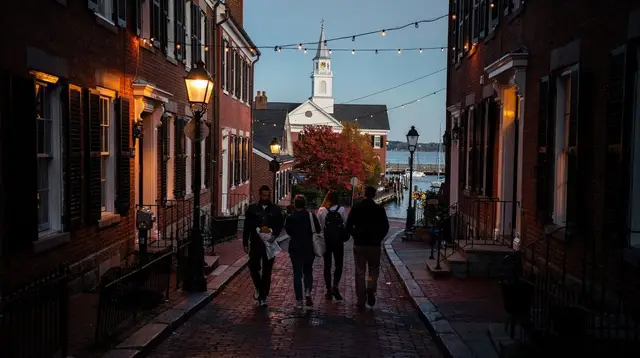
Going the other direction from Boston Common, Beacon Hill rewards a slower, separate look. Its brick sidewalks, gas lamps, and the narrow residential lanes around Acorn Street are more about architecture than Revolutionary history, and most downtown walking tours only skirt its edge on the way past the State House. If that’s the part of the city that interests you most, the Beacon Hill neighborhood guide and the Acorn Street walking guide go into more depth than a general downtown tour will.
What these tours don’t cover
It’s worth being direct about the limits. A downtown walking tour, in whatever format, typically does not extend out to Charlestown, the Bunker Hill Monument, or the USS Constitution — that stretch of the trail sits across the water and usually requires a separate walk or a ferry connection, and it’s covered on its own terms in the full Freedom Trail guide. Nor do these downtown walks typically include ticketed admission to sites like the Old North Church or the burying grounds near Faneuil Hall — following the red line and joining a guided narration is generally free to do, but individual buildings along the route set their own admission or suggested-donation policies, and a guide walking you past a site isn’t the same as a ticket to go inside it.
If your goal is specifically to walk the entire trail end to end in one outing, rather than the downtown core covered here, the guided-versus-self-guided comparison and the standalone Freedom Trail tour guide are the more useful starting points.
FAQ: guided walking tours of downtown Boston
Where do most downtown Boston walking tours start?
Nearly all of them start at or near Boston Common, usually close to the Park Street T station (Red and Green lines). Downtown Crossing is also a short, flat walk away, so it works as a starting point too.
How long does a guided walking tour of the historic core take?
Operators generally advertise somewhere between 1.5 and 2.5 hours, but exact timing varies by group size, route, and how many stops are covered. Always check the listed duration with the operator before you book.
Do these tours cover the whole Freedom Trail?
Not usually. Most guided walks cover the downtown core between Boston Common and the North End, which is roughly the first half of the trail. Finishing the full 2.5-mile route out to Charlestown and Bunker Hill is typically a separate, longer undertaking.
What’s the difference between a costumed guide and a historian guide?
A costumed guide performs a character from Revolutionary Boston and narrates in that voice, which tends to suit families and first-time visitors. A historian-led tour leans more on context, dates, and source material, which suits visitors who want depth over theater.
Is a private tour worth it over a small group?
It depends on pace and flexibility. A private tour lets you set the speed and skip or linger on stops as you like, while a small group is usually cheaper per person and still avoids the crowding of a large bus-tour group.
When is the best time of year to walk this route?
Late May through October brings the heaviest foot traffic on the trail, especially around midday. Winter is quieter and the walk is entirely doable, but days are shorter and the weather can turn sharply, so dress for it.
Can I just follow the red line myself instead of booking a guide?
Yes. The red brick or paint line on the sidewalk is free to follow on your own, and several of the sites along it have their own admission or suggested donation. A guide adds narrative and context rather than access you couldn’t otherwise get.
Walking tours of downtown Boston and Beacon Hill on GetYourGuide
Verified deep-linked GetYourGuide tours. Book through these links and we earn a small commission at no cost to you.
GetYourGuide does not provide a product photo for this activity — the image shows the meeting point, photographed by us.