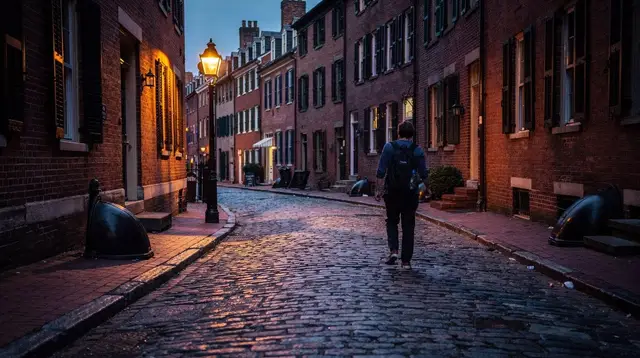
North End Italian food tour guide
What does a North End Italian food tour actually include?
A small-group guide leads you to several independent North End businesses — typically a mix of bakeries, salumerias, and a restaurant or two — for tastings along and around Hanover Street and Salem Street. Stops vary by operator and by day, and tours usually run 2 to 3 hours; confirm the exact route and duration with the operator before booking.
What a North End food tour actually covers
The North End is Boston’s Italian-American neighborhood, not the adjacent Financial District, a tight grid of narrow streets between the waterfront and that business district where Italian immigrants settled from the late 19th century onward. Hanover Street is its main commercial spine, lined with bakeries, cafes, and restaurants; Salem Street runs roughly parallel a block or two over and carries a heavier concentration of salumerias, produce stands, and family-run kitchens. Food tours in this neighborhood string together several of these small, independent businesses into a single guided walk, with a short tasting at each stop.
Operators differ in how many stops they include and what kind of businesses they favor. A given tour might combine a bakery, a salumeria, a cheese shop, and a sit-down restaurant course; another might lean more heavily on quick bites from counter-service spots. None of the North End’s bakeries or restaurants is interchangeable with another, and this guide does not rank or compare specific businesses by name — that’s a judgment best left to the tour operator’s own routing and to your own wandering afterward. What’s consistent across most tours is the format: a local guide, a small group, several stops within easy walking distance of each other, and some historical or cultural narration about the neighborhood between bites.
Typical duration runs about 2 to 3 hours, though this is a general range, not a fixed rule — always check the specific listing for the exact length before booking, since some tours run shorter or longer depending on the number of stops and whether a sit-down course is included.
Where the North End is and how to reach it
The North End sits at the northeastern edge of downtown Boston, bordered by the Rose Kennedy Greenway to the west and Boston Harbor to the east, with the Charlestown Navy Yard visible across the water. It is one of the oldest residential neighborhoods in the city and one of the most walkable.
By T: the closest station is Haymarket, served by both the Orange Line and the Green Line. From Haymarket it’s a short walk of a few minutes into the neighborhood, crossing over or under the Greenway depending on the route you take.
On foot from the Freedom Trail: the North End is directly on the Freedom Trail’s route. The red line running along the sidewalk passes through the neighborhood on its way toward the Charlestown Navy Yard and the USS Constitution, so walking the trail from downtown naturally brings you into the North End. See the walking tour guide for how the neighborhood fits into a broader Freedom Trail day, and the Freedom Trail guide for the full 2.5-mile (4 km) route and its 16 sites.
Because the neighborhood is compact, most food tours start and end within a short walk of Haymarket station or the edge of downtown, so you rarely need more than a few minutes of transit before or after.
If you’re coming from elsewhere in the city, the T (operated by the MBTA) runs on a CharlieCard, with a single ride costing roughly $2.40 as of 2026 and transfers included within a two-hour window — confirm the current fare on mbta.com before you travel, since it changes from time to time. Note that the T doesn’t run around the clock: lines stop overnight and start again in the morning, so a late-evening food tour that runs past the last train means budgeting for a rideshare or a walk back rather than counting on the subway. The MBTA and the T guide covers the Red, Green, Orange, Blue, and Silver lines in more detail if you’re new to the system.
Group size and how tastings work
Most North End food tours are run as small groups, generally under 15 to 20 people, which keeps the pace manageable as the group moves between shops. A guide typically leads the walk, gives some background on the neighborhood’s Italian immigrant history at each stop, and coordinates with the shop or restaurant so a tasting-sized portion is ready when the group arrives.
Some tours are structured entirely around walking tastings — a few bites standing at the counter or just outside — while others build in one seated course partway through, often at a restaurant. A handful of operators, including private and small-party formats, will customize the stop list to some degree; a private walking tour can be worth considering if you want more flexibility on timing or dietary needs than a scheduled group departure allows.
Pacing matters more on a food tour than it does on a typical walking tour, since the point isn’t just to see the neighborhood but to arrive at each stop with room left to eat. Most guides build in a few minutes of walking and narration between tastings specifically so the group doesn’t sit down to a restaurant course still full from the last bakery stop. If you know you eat slowly, or you’re traveling with someone who does, it’s worth asking the operator how much time is built in at each stop before you book, since a fixed-schedule group tour won’t wait on one guest the way a private tour can.
Fitting a food tour into your Boston day
A North End food tour works well as an anchor for a broader day on foot rather than a standalone outing. Because the neighborhood sits directly on the Freedom Trail’s route, many visitors pair a morning or early-afternoon walk of the trail’s downtown sites with a food tour timed for lunch or early evening, once appetite has had time to build. The Freedom Trail one-day walking itinerary lays out one version of that pairing, moving from Boston Common through downtown before reaching the North End.
For a first visit to Boston, deciding how much of a single day to give to the North End versus the rest of downtown is a common planning question; the three-day first-visit itinerary and the shorter two-day highlights itinerary both work a North End stop into a larger schedule rather than treating it as a half-day commitment on its own. If your trip is built around car-free travel, the five-day car-free Boston itinerary also threads a North End visit in alongside T and walking connections to other neighborhoods.
For a more critical look at what “authentic” means for a neighborhood built partly around food tourism, the blog piece on the North End and the question of authenticity is worth reading before or after your visit — it’s commentary rather than a planning guide, but it’s directly about the same streets a food tour walks.
Seasonality: summer evenings and the saints’ feasts
The North End is busy year-round, but it gets noticeably more crowded on summer evenings, when outdoor seating fills up and Hanover Street sees heavy foot traffic after work hours. If you’re booking a tour for a summer evening, expect a livelier, more crowded version of the neighborhood than you’d find on a weekday afternoon.
The North End also hosts a series of Italian saints’ feasts (feste) through the summer, organized by local Italian-American societies that trace back generations. During a feast, streets close to traffic, processions move through the neighborhood, food vendors set up alongside the regular restaurants, and the area draws large crowds from across the city. Feast dates shift from year to year and are set by the individual societies, so if visiting during a feast is part of your plan, check current-year dates closer to your trip rather than assuming a fixed calendar slot. A food tour booked during a feast weekend will feel different — louder, more crowded, and slower to move through — than the same tour on a quiet weekday.
Comparing tour formats
| Format | Typical group size | What it adds |
|---|---|---|
| Small-group walking tour | Roughly 10–20 people | Multiple stops, guide narration, fixed schedule |
| Private walking tour | Your own party | More flexibility on stops, pace, and timing |
| Combined history-and-food tour | Small group | Pairs North End tastings with Freedom Trail or waterfront context |
| Broader street-food tour | Small group | Covers North End alongside other downtown food stops rather than the neighborhood alone |
This table is a general guide to format differences, not a price or duration comparison — check each listing for current details, since operators update their routes and offerings over time.
Booking a North End food tour
a small-group walking tour through North End bakeries, salumerias, and pasta shops is one way to structure a first visit to the neighborhood. For a private, more flexible pace, a private walking tour of Boston’s food scene lets you set your own timing with the guide. If you’d rather cover more of downtown Boston’s food options alongside the North End, a local-guide street food tour broadens the route beyond a single neighborhood. And for a tour that ties the food stops directly to Revolutionary history, a food-and-history walk connecting the North End to the Freedom Trail combines both threads in one outing.
None of these tours are guaranteed to include the same stops as each other, or the same stops on every departure — shop participation can change with availability. Confirm the current stop list, duration, and any dietary accommodations directly with the operator before booking.
Beyond the guided tour
A food tour isn’t the only way to experience the North End’s food scene. If you’d rather cook than just taste, the North End Italian cooking class guide covers hands-on classes in the neighborhood, generally in the cooking-classes-workshops category. For orientation to the neighborhood itself — its layout, history, and what else is worth seeing beyond the food — see the North End neighborhood guide, part of the site’s neighborhood-tours coverage. And if you want the market-hall version of Boston food touring rather than a North End–specific walk, the Quincy Market and Faneuil Hall food tour guide covers a different, adjacent part of downtown.
For the historical backbone that runs through the neighborhood, the Old North Church and Paul Revere House guide covers two Freedom Trail stops inside the North End itself, and the Faneuil Hall and Granary Burying Ground guide covers the stretch just before you cross into the neighborhood from downtown. If your day continues on to Charlestown, the Bunker Hill and Charlestown Navy Yard guide picks up where the North End leaves off.
For trip-planning context beyond this single tour, the Boston walking tour guide explains how a North End food stop fits into a longer day on foot, the first-time Boston guide helps decide how much time to budget for the neighborhood overall, and the how many days in Boston guide covers itinerary length more broadly. If you’re staying nearby, the best neighborhood to stay in Boston guide discusses the North End and downtown as lodging bases. For getting to and from other parts of the city on the day of your tour, the MBTA and the T guide and getting around Boston without a car cover the transit system that serves Haymarket station.
North End food tours: frequently asked questions
How long does a North End food tour last?
Most run in the 2- to 3-hour range, but this varies by operator and by the number of stops. Check the listing for the exact duration before you book.
Do all North End food tours visit the same shops?
No. Operators rotate among independent bakeries, salumerias, and restaurants, and the lineup can change with availability and season. Two tours booked on the same day may not overlap much.
How do I get to the North End without a car?
Take the T to Haymarket, served by the Orange Line and Green Line, then walk a few minutes into the neighborhood. The North End is also directly on the Freedom Trail, so many visitors arrive on foot from downtown.
Is the North End walkable from the rest of the Freedom Trail?
Yes. The Freedom Trail’s red line runs through the North End on its way to the Charlestown Navy Yard, so a food tour here pairs naturally with a Freedom Trail walk earlier or later the same day.
When is the North End busiest?
Summer evenings draw large crowds, and the neighborhood gets especially packed during its summer saints’ feasts (feste), when Hanover Street and side streets fill with processions, food stalls, and music. Exact feast dates change year to year, so check closer to your trip if that’s part of the draw.
Do I need to book a food tour in advance?
Small-group tours have limited capacity and commonly sell out on summer weekends and during feast season, so booking a few days ahead is reasonable if your dates are fixed.
Can I just walk around and eat on my own instead of booking a tour?
Yes — the North End works well as a self-directed stop, especially if you already know a bakery or two you want to try. A guided tour mainly adds context, pacing across multiple stops in one outing, and introductions to smaller shops a first-time visitor might walk past.
Are food tours suitable for large dietary restrictions?
Ask the operator directly before booking. Because stops are at independent, fixed-menu businesses, substitutions are more limited than at a sit-down restaurant, and not every stop will have options for every restriction.
North End food tours and tastings on GetYourGuide
Verified deep-linked GetYourGuide tours. Book through these links and we earn a small commission at no cost to you.
GetYourGuide does not provide a product photo for this activity — the image shows the meeting point, photographed by us.