Salem day trip from Boston: what it actually takes
How do you get from Boston to Salem, and how long do you need?
The MBTA Commuter Rail runs direct from North Station to Salem, no transfer required, and driving takes about the same time on the coastal route. Most visitors find a half day to a full day covers the historic center comfortably, though the right length depends on how many museums you want to enter.
Getting to Salem from Boston
Salem is a coastal city in Essex County, about 16 miles (26 km) northeast of downtown Boston, and it’s one of the easiest day trips on this site to reach without a car.
The most reliable option is the MBTA Commuter Rail, on the Newburyport/Rockport Line, departing from North Station. This is a direct train — no transfer — and it’s a separate system from the T, with its own ticketing rather than a CharlieCard. Trains run throughout the day, more frequently at commuter hours and less often midday and on weekends, so it’s worth checking the current schedule on mbta.com before you go rather than assuming a train every 20 minutes. From the Salem station, the historic center is a walk of roughly 10 to 15 minutes.
Driving covers similar ground time-wise on a normal day, following the coastal route north through Route 1A or the faster inland highway combination, depending on traffic. Parking downtown is limited and metered, and in October it gets genuinely difficult — a garage near the historic district is the more dependable bet than looking for street parking. If you’re weighing the Commuter Rail against driving for this specific trip, our Commuter Rail day trips guide lays out the tradeoffs across all the towns this system reaches, including how it differs from getting around Boston without a car day to day.
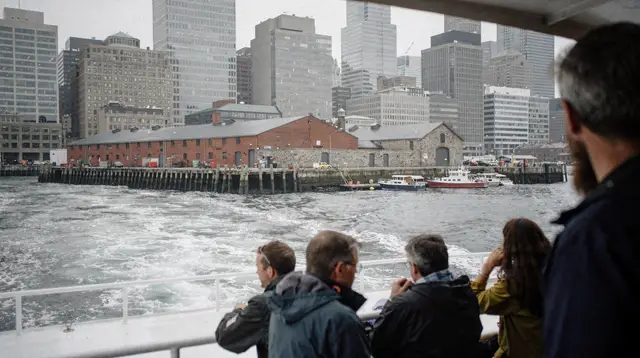
Salem is also reachable by seasonal ferry from Boston in summer, which trades a bit of speed for a harbor view — worth considering if you’re building a trip around Boston Harbor rather than the train.
Getting back works the same way in reverse. Commuter Rail trains run to North Station throughout the day, but service thins out in the evening, so if you’re staying for dinner or an after-dark tour, it’s worth checking the return schedule on mbta.com before you commit to a late departure rather than assuming a train will be waiting whenever you’re ready to leave.
The historic center: Essex Street and on foot
Salem’s walkable core sits along and around Essex Street, a pedestrian stretch lined with shops, cafes, and several of the town’s best-known attractions within a few blocks of each other. This is a compact downtown — most of what draws day-trippers is within a 15-minute walk of the Commuter Rail station, which is part of why Salem works so well without a car.
The atmosphere here is layered. Salem trades heavily on its identity as the site of the 1692 witch trials, and that history shows up in museum signage, shop windows, and walking tour routes throughout the historic district. It’s a real historical event with real consequences for the people involved, and the town’s commercial tone toward it — heavier on Halloween imagery and gift shops some months than others — is worth going in aware of rather than surprised by. The Salem witch trials guide covers the actual 1692 history in more depth, and the Salem Witch Museum and Peabody Essex guide breaks down what each of the major museums covers, since they take different approaches — some historical, some more theatrical.
Beyond the witch trials framing, Essex Street and the surrounding blocks are simply a well-preserved New England downtown with 18th- and 19th-century architecture, independent bookshops, and a food scene that punches above what you’d expect from a town this size. If you want a guided orientation rather than working it out on foot alone, a walking tour is a reasonable way to get context fast — several run daily through the historic district and cover both the history and the town’s later development.
Eating on Essex Street
The food scene along and around Essex Street is one of Salem’s better-kept secrets for a town this size, and it’s easy to fold into a day built around the historic center since almost everything sits within the same walkable core as the museums and shops. Expect a mix of casual lunch spots, coffee shops, and a handful of more ambitious sit-down restaurants, with the density thinning out as you move a few blocks off the main pedestrian stretch toward the waterfront.
If you’re doing a half day, grabbing something quick on Essex Street between the historic center and a museum keeps the day moving without a long sit-down break. On a full day, especially if you’re pairing the waterfront with the historic center, a proper lunch or dinner near Salem Maritime National Historic Site is an easy way to close the loop on foot before heading back to the Commuter Rail station. Note that Massachusetts charges a general sales tax on most retail purchases, with clothing under 175 USD exempt — worth knowing if Essex Street’s shops are part of your day, since Salem is a normal Massachusetts town on that front, not a special case.
The waterfront and Salem Maritime National Historic Site
Salem’s other identity is as a port. The Salem Maritime National Historic Site, managed by the National Park Service, preserves the waterfront where the city’s 18th- and 19th-century shipping wealth was built — wharves, historic buildings, and a reconstructed tall ship are part of the site, and it’s a useful counterweight if you want Salem to be more than one story.
The harbor here is still active in a modest way, with fishing and recreational boats, and the waterfront makes for an easy 20 to 30 minute add-on to a walk through the historic center — the two areas are close enough to combine without much extra planning. For a broader look at how Salem fits alongside the rest of the coast north of Boston, the outdoors and nature category covers Cape Ann’s harbors and trails as well.
How long you actually need
A half day is enough to walk the historic center, browse Essex Street, and go through one museum at an unhurried pace. A full day gives room for a second museum, the waterfront, and a proper sit-down lunch rather than something quick between stops.
Whether you need the full day depends mostly on how many paid attractions interest you and how much you want to linger. If you’re combining Salem with other stops on the same trip — Marblehead’s harbor, for instance, or a longer North Shore loop — a half day in Salem leaves room for that; trying to do all of it in one day tends to feel rushed. The table below gives a rough sense of how the day breaks down at each pace.
| Pace | What it covers | Rough time |
|---|---|---|
| Half day | Historic center walk, Essex Street, one museum | 3–4 hours |
| Full day | Above, plus a second museum and the waterfront | 6–8 hours |
| Evening add-on | Ghost or history walking tour after dinner | 1.5–2 hours |
What the paid attractions cost you in time and money
Salem’s two best-known museums — the Salem Witch Museum and the Peabody Essex Museum — both charge separate admission, and neither ticket is bundled into the Commuter Rail fare, a walking tour, or the Salem Maritime National Historic Site, which the National Park Service runs and doesn’t charge for. That matters for planning: a half day realistically fits one paid museum alongside the free historic center walk, while a full day gives room for both if you want the historical framing of one against the more theatrical approach of the other.
It’s worth deciding before you arrive rather than choosing on the spot, since both museums can have lines in high season and same-day tickets aren’t guaranteed, particularly on October weekends. The Salem Witch Museum and Peabody Essex guide breaks down what each museum actually covers, which helps decide whether one is enough or both earn their place in a single day.
October: the busiest month, by a wide margin
Salem’s popularity spikes hard every October, driven by Haunted Happenings, a monthlong festival built around the town’s witch trials history and Halloween. This isn’t a one-weekend event — it runs the full month, with the heaviest crowds concentrated on weekends and around Halloween itself.
If you’re visiting in October, plan for it rather than hoping to avoid it: streets fill up, popular restaurants have waits, parking gets harder to find, and museum tours can sell out in advance. None of that makes Salem not worth visiting in October — for a lot of travelers, the festival atmosphere is exactly the draw — but it’s a different trip from Salem in June, and it’s worth going in with that expectation set correctly rather than picturing a quiet historic town. If a calmer visit matters more to you than the festival itself, spring, early summer, or November are the more comfortable windows.
For travelers building a broader fall trip around the region, our New England fall foliage guide covers the peak color window separately from Salem’s Halloween season — the two overlap in timing but aren’t the same reason to visit.
Tours that cover Salem from Boston
If you’d rather not manage the train and plan the day yourself, several tours handle the round trip from Boston, and a private option adds flexibility on timing and stops.
A private day trip from Boston to Salem that includes entry to the Witch House covers transport both ways and one of the historic center’s ticketed sites without you needing to plan the Commuter Rail schedule.
For October specifically, a small-group day tour to Salem built for the Halloween season is worth considering, since it’s designed around the crowds and timing that month brings rather than a standard-season itinerary.
If Salem is one stop on a longer North Shore interest, a Rev250 tour of Marblehead, the town that carried the Revolution gives a way to see the neighboring harbor town’s own history without renting a car for the day.
Evening options exist too — several ghost and history walking tours run after dark through the historic district for travelers who want that side of Salem specifically; see our Salem ghost tours guide for how those compare to daytime museum visits.
Staying for the evening
If you’re not rushing back on an early train, Salem after dark is a genuinely different town from Salem at midday — the historic district leans into its history once the shops close, and evening tours are built specifically around that shift. A guided night tour combining Salem’s haunted reputation with its real history is one option built for exactly this window, walking the same streets the daytime crowds cover but with a different framing once it’s dark.
Staying into the evening does mean planning your return more deliberately — Commuter Rail service back to North Station thins out later at night, so it’s worth checking the schedule before committing to a night tour or a late dinner rather than assuming a train will be there when you’re ready.
What Salem is and isn’t
Worth being direct about a few things before you go. Salem is not a single museum or a preserved historic site you walk through once — it’s a working city with a historic core, a harbor, residential neighborhoods, and a downtown that functions year-round, not just for visitors. The witch trials history is real and significant, but it sits alongside maritime history, a genuine food and retail scene, and ordinary town life, and the town’s marketing doesn’t always make that distinction clear.
It’s also not within walking distance of Boston, and it’s not part of Cambridge or any other close-in destination — it’s a separate city in Essex County, reached by a specific train line or a real drive, and it deserves to be planned as its own trip rather than squeezed in as an afterthought to a Boston-only itinerary. For travelers weighing Salem against the rest of the North Shore, the Salem and North Shore day trip itinerary lays out how Salem, Marblehead, and Cape Ann fit together, or don’t, in a single day.
Practical notes for planning the day
Salem sits in the same Eastern time zone as Boston and observes the same daylight saving schedule, so there’s no time-zone adjustment to think about between the two, unlike some day trips further afield. That’s one less thing to plan around compared with a longer New England loop that might cross into a different clock.
If you’re shopping on Essex Street, Massachusetts’ general sales tax applies the same way it does in Boston, with clothing purchases under 175 USD exempt. And if a meal turns into more of a sit-down affair than a quick lunch, restaurant bills in Massachusetts carry a meals tax on top of the menu price, separate from the general sales tax — worth factoring in if you’re budgeting a full day that includes a real dinner before the train back.
Salem day trip: frequently asked questions
How do you get to Salem from Boston without a car?
Take the MBTA Commuter Rail on the Newburyport/Rockport Line from North Station. It runs direct to Salem, with no transfer, and the historic center is a short walk from the station.
Is Salem worth a day trip if you’re not interested in the witch trials?
Yes. The Salem Maritime National Historic Site, the working harbor, and the Peabody Essex Museum’s broader collections give the town a second identity beyond 1692, and Essex Street’s shops and restaurants work as a normal town center.
How long do you need in Salem?
A half day covers the historic center on foot and one museum. A full day allows a second museum, the waterfront, and lunch without rushing. It depends on your pace and whether October crowds slow you down.
Is October a good time to visit Salem?
October is Salem’s busiest month by a wide margin, built around the Haunted Happenings festival that runs the entire month. Expect crowded streets, sold-out tours, and traffic, especially on weekends and around Halloween itself. It’s a real experience, not a quiet one.
Do you need to book museum tickets in advance?
For the Salem Witch Museum, the Peabody Essex Museum, and most walking tours, booking ahead is worth it in high season, particularly October and summer weekends. Outside those windows, same-day entry is usually fine.
Can you combine Salem with other North Shore towns in one day?
It’s possible but tight. Salem alone fills a comfortable day trip. If Marblehead, Gloucester, or Rockport interest you, they’re better as a separate day or a longer loop rather than squeezed after Salem.
Is Salem the same as the Salem witch trials happened right in the historic center?
The trials and the 1692 events are tied to sites across what’s now the historic district, and several attractions interpret that history, but the town itself is a functioning coastal community with a harbor, a downtown, and residential streets, not a preserved single site.
Can you get to Salem from Boston by ferry?
Yes, a seasonal ferry runs from Boston to Salem in summer, trading some speed for a harbor view as an alternative to the Commuter Rail train. It doesn’t run year-round, so check the season before planning a trip around it.
Day trips from Boston to Salem, Plymouth and Cape Cod on GetYourGuide
Verified deep-linked GetYourGuide tours. Book through these links and we earn a small commission at no cost to you.
GetYourGuide does not provide a product photo for this activity — the image shows the meeting point, photographed by us.