A city of its own, not a Boston neighborhood
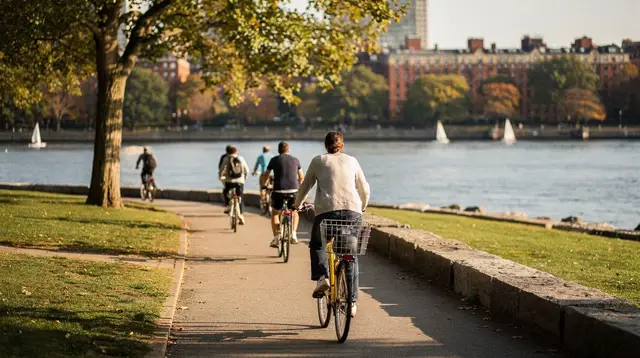
Cambridge sits directly across the Charles River from Boston, and it is worth saying plainly: it is a separate city, with its own mayor, its own police department and its own zip codes, not a district of Boston. The confusion is common because the two are so close together and so easy to combine in a single day, but Harvard University and the Massachusetts Institute of Technology (MIT) are both physically in Cambridge. Neither has ever been located in Boston proper.
Cambridge is also one of dozens of cities and towns that make up the wider Greater Boston metropolitan area, a region with something on the order of 4.8 to 5 million people depending on exactly how the area is drawn. Boston itself, by comparison, has roughly 650,000 to 675,000 residents within its own city limits. Cambridge is small next to either figure, but its location right across the river means it functions as a seamless extension of Boston’s core for most visitors, linked by transit rather than distance.
Getting there does not require a car. The MBTA Red Line runs directly from downtown Boston stations like Park Street and South Station to Harvard, Central and Kendall/MIT in roughly 10 to 15 minutes, and the ride is included in the standard T fare with a CharlieCard. There is no need to drive, and parking near Harvard Square is scarce and expensive, so most visitors leave the car behind entirely. If you’re weighing whether you need one for the rest of the trip, see getting around Boston without a car.
The Red Line is one piece of the T, the transit system run by the MBTA alongside the Green, Orange, Blue and Silver lines; a CharlieCard covers the fare, with transfers folded into a two-hour window. The T does not run around the clock — Red Line service stops late at night and picks up again in the morning, so a late-night crossing back from Cambridge is worth timing around the schedule rather than assuming a train will be waiting. Cambridge itself isn’t served by the separate Commuter Rail network, which handles outlying towns rather than this short, close-in hop, and Bluebikes, the region’s bike-share system, is a distinct service from the T if pedaling between campuses appeals more than the subway.
Harvard Yard and Harvard Square
Harvard University, founded in 1636, is the oldest institution of higher education in the United States, and Harvard Yard is its historic core: a gated green space ringed by brick dormitories and lecture halls, including University Hall and the famous statue commonly (and inaccurately) nicknamed the “statue of three lies.” The Yard is open to the public to walk through during the day, and it costs nothing to do so.
Just outside the Yard’s gates, Harvard Square is the commercial heart of the area: a dense knot of bookshops (the Harvard Coop and several independent stores among them), cafes, and student-oriented restaurants that stays busy well into the evening. It is genuinely a student neighborhood, not a manufactured tourist strip, which is part of the appeal — and part of why it is quieter in midsummer, when undergraduates are away and the academic calendar empties out.
Harvard itself runs official student-led walking tours of the campus, departing from the Smith Campus Center; check current days and times directly with Harvard, since they change with the academic calendar and this guide won’t guess at a fixed schedule. If you’d rather book ahead and skip the coordination, a guided option covers the same ground:
Cambridge: Harvard University Student LED Campus TourFor a broader introduction that pairs Harvard with a look at MIT on the same outing, there’s also:
Boston: Harvard and MIT Guided TourFor background on what the Yard actually contains and how to see it well, the dedicated Harvard Yard student-guided tour guide and the wider Cambridge and Harvard Square neighborhood guide go further than this overview can.
MIT: a different kind of campus
A short walk or one Red Line stop from Harvard, MIT occupies a long stretch of riverfront between Kendall Square and the Charles River, and it looks nothing like Harvard’s brick quadrangles. The architecture here is deliberately modern and often strange: the Stata Center, designed by Frank Gehry, is the best-known example, with its tilted walls and irregular angles that draw as many photographs as complaints from people trying to find a specific room inside it.
MIT’s campus is open and walkable, and like Harvard it costs nothing to wander through on your own. The MIT Museum, relocated to a building in Kendall Square, covers the institute’s research and engineering history and is a reasonable stop if you have an extra hour — see the MIT Museum guide for what’s inside; this guide won’t quote a ticket price here since it’s the kind of figure that changes without much notice, so check mit.edu or the museum’s own site for the current one. A dedicated sightseeing option exists if you’d rather have context built in:
MIT Sightseeing Tour
Kendall Square itself, the neighborhood around the Kendall/MIT T stop, has grown into one of the most concentrated biotech and tech hubs in the country, with the office towers to match. It is not a scenic destination in the way Harvard Square is, but it’s worth knowing the two areas feel quite different even though they’re a five-minute walk apart.
Beyond Harvard and MIT: Central Square and Porter Square
Cambridge is bigger than the two campuses most visitors come for. Central Square, one Red Line stop toward Boston from Harvard, has a grittier, more local feel than Harvard Square, with a live-music and bar scene that leans toward Cambridge residents rather than sightseers. Porter Square, one stop in the other direction, is quieter still, known for a cluster of Japanese restaurants and a small shopping center built into the T station itself. Neither is a must-see on a first pass through Cambridge, but both are easy to fold into a longer stay if you’re overnighting in the city rather than day-tripping from Boston, and both sit on the same Red Line fare as Harvard and Kendall/MIT.
Museums on both campuses
Beyond the MIT Museum, Harvard runs the Harvard Art Museums (which combine three collections under one roof near the Yard) and the Harvard Museum of Natural History, known for its glass flowers collection and dinosaur skeletons. Both are legitimate half-day stops in their own right if museums are your thing, and both charge admission — this guide won’t put a number on it since museum pricing shifts year to year; check harvardartmuseums.org and hmnh.harvard.edu directly. For a fuller rundown of what’s on offer across the two campuses, see the Harvard museums guide.
None of this compares in scale to Boston’s big-ticket museums like the Museum of Fine Arts or the Museum of Science, and it shouldn’t be expected to. Cambridge’s museums are smaller, more specialized, and best treated as an add-on to a campus walk rather than a full day’s plan on their own.
Food and a lighter side of the Square
Harvard Square has a dense concentration of cafes and casual restaurants aimed at a student budget, which in practice means reasonably priced food compared with downtown Boston. If you want something less academic and more indulgent, a donut-focused outing is a genuinely popular way to see the Square from a different angle:
Cambridge: Discover Harvard Square’s Most Delicious Donuts
Massachusetts charges a meals tax of roughly 7% on restaurant food — the state’s 6.25% general sales tax plus a 0.75% local option — which is separate from the general sales tax applied to retail purchases. That distinction matters in Harvard Square, where a day can easily mix the two: books and most other goods fall under the 6.25% general rate, clothing under $175 is exempt from it entirely, and anything you sit down and eat carries the higher meals-tax rate instead.
Cyclists have another option for covering more ground: a guided bike route that starts in Boston and crosses into Cambridge, useful if you’d rather ride than walk between the two campuses and the river.
From Boston Cambridge Guided Bike TourHow much time to give it
| Plan | What it covers | Time needed |
|---|---|---|
| Harvard Yard and Square only | Walk the Yard, browse bookshops, coffee stop | 2-3 hours |
| Harvard plus MIT | Both campuses, Kendall Square, Stata Center | Half a day |
| Full Cambridge day | Both campuses, one museum, lunch and dinner in the Square | Full day |
A realistic daily budget runs $40-90 per person if you’re not paying for museum admission, and higher if you add the Harvard Art Museums or the MIT Museum on top. This is noticeably cheaper than a museum-heavy day in Boston itself, mostly because the main draw here — walking the campuses — is free.
Volume of bookable activities
Cambridge has a much smaller roster of bookable tours and activities than Boston proper — a handful of options rather than hundreds. That’s not a gap in this guide; it reflects what actually exists to book here. Most visitors see Cambridge by walking the two campuses on their own and picking a guided option only if they want the historical or architectural context filled in, or if efficient use of a single day matters more than wandering.
When to go
Cambridge works as a destination in any season, which sets it apart from some of the more seasonal stops covered elsewhere on this site, like Salem in October or the Cape Cod and islands region. That said, the character of the place shifts with the academic calendar: Harvard Square and the MIT campus are noticeably livelier during the school year, from September through May, when the streets and cafes fill with students between classes. Summer is quieter and a bit more relaxed, with more room to actually see Harvard Yard without a crowd of orientation groups, but also a flatter, less “college town” atmosphere than in term time.
Winter brings the same cold as the rest of Boston — daytime temperatures typically sitting around 0-4°C — but the indoor draws (museums, bookshops, cafes) hold up fine when it’s too cold to linger outside.
Patriots’ Day, the third Monday in April, is another date worth flagging even though Cambridge isn’t on the Boston Marathon course itself: the race draws crowds and transit disruptions across the wider metro area that day, and Red Line service patterns can shift as a result, so it’s worth checking MBTA alerts before planning a Cambridge visit around marathon Monday.
Getting there and moving on
From downtown Boston, take the Red Line toward Alewife and get off at Harvard for the Yard and the Square, or continue one or two stops further to Central or Kendall/MIT for MIT’s campus. The trip takes about 10 to 15 minutes and costs the standard T fare with transfers included in the usual two-hour window — see the MBTA guide for current pricing, since it changes from year to year.
Cambridge pairs naturally with a short crossing back into Fenway, reachable on the Green Line without going all the way back through downtown, if you want to combine a campus morning with Fenway Park or the Museum of Fine Arts in the afternoon. For a wider view of how Cambridge fits into a first visit, start with the Boston hub page and the first-time Boston guide, and for a packaged single day that puts both campuses on one itinerary, the Cambridge campuses one day plan lays out a realistic order of stops.
If a wider tour of the city interests you alongside Cambridge, a private option covers both sides of the river in one outing:
Boston: Ma Private City Tour of Boston CambridgeCambridge, Harvard and MIT: frequently asked questions
Is Cambridge in Boston?
No. Cambridge is an independent city in Middlesex County, across the Charles River from Boston. Harvard University and MIT are both located in Cambridge, never in Boston itself, though the two cities are only a short Red Line ride apart.
How do I get from Boston to Cambridge?
Take the MBTA Red Line from any downtown Boston station (Park Street, Downtown Crossing, South Station) toward Alewife. Harvard, Central and Kendall/MIT stations serve the main sights, and the ride takes about 10 to 15 minutes at the standard T fare.
Do I need a car to visit Harvard and MIT?
No. Both campuses sit directly on the Red Line and are walkable once you arrive. Harvard and MIT are in Cambridge, across the Charles River from Boston, and parking near Harvard Square is limited and expensive, so most visitors leave the car at their Boston hotel or skip renting one altogether.
Can I walk around Harvard Yard and MIT for free?
Yes. Both campuses are open to the public to walk through at no cost. Museums on either campus, such as the Harvard Art Museums or the MIT Museum, charge separate admission.
Are there official guided tours of Harvard?
Harvard runs its own student-led campus tours, typically departing from the Smith Campus Center, though exact days and times follow the academic calendar and should be confirmed directly with Harvard. Guided options booked in advance are also available if you’d rather not coordinate around a set schedule.
What’s the best time of year to visit Cambridge?
Any season works. The area feels most like a college town during the academic year, September through May, when students fill the Square and both campuses. Summer is quieter, with fewer people around but also less of that student-town energy.
How much time should I set aside for Cambridge?
Half a day covers Harvard Yard and Harvard Square at an easy pace. A full day lets you add MIT’s campus, the Stata Center, and one museum without rushing.
Is Cambridge worth visiting if I only have a few days in Boston?
It’s a reasonable half-day add-on rather than a must-do, especially on a short trip. If you have three days or more, see the three days first visit itinerary for where a Cambridge stop fits without crowding out Boston’s own highlights.