Best time to visit Boston
When is the best time to visit Boston?
There isn't a single best season, only trade-offs. Spring brings blossoms and the Boston Marathon, summer opens up the harbor and the islands, fall draws crowds inland for foliage and to Salem, and winter is colder and quieter with museums carrying the load. Each has a distinct upside and a distinct cost.
Four seasons, four different Bostons
Boston doesn’t have a wrong time to visit, but it does have four genuinely different versions of itself, and each one asks something different of a traveler. This page is a starting point, not the last word: it lays out what changes season to season in general terms, without pinning down exact weeks or exact temperatures, and points to the dedicated guides — New England fall foliage, Boston in winter, and the Boston Marathon and spring — for the detail that actually helps with booking.
The short version: spring brings the city back to life and culminates in the Boston Marathon, summer opens the harbor and the islands, fall pulls visitors inland and toward Salem for the change of color, and winter is colder, calmer, and more indoor. None of the four is strictly better than the others — each one trades something for something else, and the right one depends on what you actually want out of the trip.
Spring: the city reopening, and a marathon at the center of it
Spring in Boston is a gradual thaw rather than a switch flipped overnight. Trees and gardens around the Public Garden and the Emerald Necklace start flowering, outdoor seating reappears along Newbury Street and in the North End, and the city’s parks fill back up after a quiet winter. It’s a season of contrast — some weeks feel like a preview of summer, others swing back toward raw and windy, and neither extreme lasts long.
The defining event of the season is Patriots’ Day, the third Monday in April, when the Boston Marathon runs its course from Hopkinton into the city. It’s one of the few days a year when Boston’s identity as a runner’s city and a Revolutionary city overlap: the same holiday also marks the anniversary of the battles at Lexington and Concord, and both threads show up in how the city marks the day. If your visit lines up with it, expect a packed, energetic city along the course and around Copley Square, along with road closures that are worth checking against your own plans in advance.
Spring is also a reasonable window for walking-heavy sightseeing before the summer heat and crowds set in fully. A guided route along the Freedom Trail or a broader loop through downtown works well once the worst of the cold has passed, and hotel rates in the earlier part of the season tend to sit below summer peaks. For a first structured look at the city that doesn’t require deciding on a single neighborhood, a guide-led option like the Best of Boston Walking Tour covers a broad sweep of downtown in one outing.
Summer: harbor, beaches, and the islands come into play
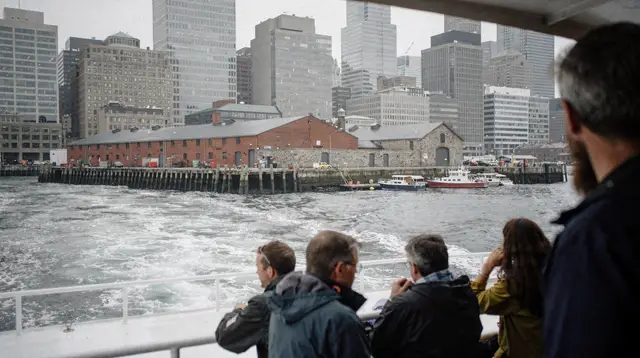
Summer is when Boston’s relationship with the water is most fully on offer. Harbor cruises run their fullest schedules, whale-watching trips head out toward Stellwagen Bank on a regular timetable, and the ferries that reach Martha’s Vineyard and Nantucket from Woods Hole and Hyannis are at their most frequent. If a day on the water, a trip to the islands, or a beach day on the Cape Cod National Seashore is central to your plans, summer is the season built for it — outside these months, several of these options thin out or stop altogether.
It’s also warm and humid, which shapes how the day goes: mornings and evenings are the more comfortable windows for walking tours, and shaded or waterfront routes hold up better than long stretches on open pavement. The Charlestown Navy Yard and the harbor islands both benefit from the breeze off the water, while inland neighborhoods can feel considerably warmer by mid-afternoon.
Summer is also peak season in the most literal sense — the highest hotel rates, the fullest restaurants, the busiest Freedom Trail, and the longest lines at paid attractions like the Museum of Science and Fenway Park tours. None of that makes it a bad time to go; it makes it the season where booking ahead matters most, particularly for anything involving a boat or a ferry to the islands. A cruise built into a land tour, such as the Best of Boston Walking Tour with Boat Cruise pairs the two halves of a summer visit — the historic streets and the harbor — into a single day.
Fall: color inland, and a specific kind of crowd
Fall is the season most guidebooks single out, and for a real reason: the change of color across New England is genuinely distinctive, and it draws a wave of visitors who come inland from Boston specifically to see it, often on day trips toward western Massachusetts, Vermont, and New Hampshire. Within the city itself, the change happens later and more subtly than it does further inland, so Boston functions as much as a base for foliage day trips as a foliage destination in its own right.
The clearest local case of a seasonal surge is Salem, which runs its Haunted Happenings program across the length of the month and becomes, by a wide margin, the busiest place on the North Shore during that stretch. That’s worth being direct about: this is not a quiet month to see Salem’s witch trial history at a relaxed pace — it’s closer to a citywide festival, with the heaviest crowds concentrated on weekends and around the end of the month. If a low-key visit to Salem’s historic sites is the goal, another season serves that better; if the festival atmosphere is the draw, fall is exactly the point.
Fall is a strong season for walking tours generally — cooler air, changing light, and a Freedom Trail that’s noticeably less crowded than in midsummer. It’s also, along with spring, a natural window for excursions that combine history with the season’s scenery, such as a route through Lexington and Concord along the Battle Road Trail. A private full-day option like the Best of Boston Full Day Private Tour gives more flexibility to work around whichever neighborhoods or day-trip stops fit a fall itinerary.
Winter: colder, quieter, and more indoor
Winter is Boston’s off-season in the plainest sense of the term: colder, shorter days, and a noticeably thinner outdoor and harbor offering. Whale-watching stops entirely, most harbor cruises pause or run a reduced schedule, and the island ferries to Martha’s Vineyard and Nantucket taper down to their lightest frequencies of the year, in some cases becoming impractical for a same-day round trip. Anyone building a winter visit around the water needs to check current schedules directly with operators rather than assuming a summer routine still applies.
What doesn’t slow down is Boston’s indoor side. The Museum of Fine Arts, the Isabella Stewart Gardner Museum, the Freedom Trail’s indoor stops, the North End’s restaurants, and the city’s theater district all run their normal calendars through winter, and a guided visit to a site like the USS Constitution is unaffected by cold weather since boarding the ship is a short, sheltered stop. Crowds thin out across the board, and some hotel rates ease from their summer and fall peaks, which makes winter a reasonable choice for a traveler prioritizing museums, food, and a quieter version of the same neighborhoods that get crowded in warmer months. For details on what specifically stays open and what specifically doesn’t, Boston in winter covers the season in full.
Winter still works for walking history — the Freedom Trail’s red line is there in every season — though shorter daylight and cold mean routes tend to run tighter and pack in less ground per outing. A food-focused stop built around Fenway, which leans indoor regardless of season, is one way to structure a winter day around neighborhood character rather than weather:
Guided Pre Game Food Tour to Fenway Park
Comparing the seasons at a glance
| Season | What’s strongest | What’s reduced | Who it suits |
|---|---|---|---|
| Spring | Reopening gardens, the Boston Marathon, moderate crowds early on | Weather can still swing cold | Travelers who want energy and a marathon-adjacent visit |
| Summer | Harbor cruises, whale watching, island ferries, beaches | Comfort in midday heat and humidity, availability at peak prices | Travelers centered on the water and the islands |
| Fall | Foliage inland, Salem’s Haunted Happenings, cooler walking weather | Calm — Salem and inland day trips get crowded | Travelers prioritizing color and don’t mind crowds on specific day trips |
| Winter | Museums, theater, indoor dining, thinner crowds, softer rates | Harbor cruises, whale watching, island ferry frequency | Travelers focused on indoor Boston over the harbor |
The trade-off, not the ranking
It’s tempting to ask which season is “best,” but the honest answer is that each one swaps one advantage for another. Summer buys full access to the harbor and the islands at the cost of the year’s biggest crowds and highest prices. Fall buys foliage and cooler walking weather at the cost of a packed Salem and busy inland roads. Spring buys a reawakening city and the marathon at the cost of unpredictable weather. Winter buys quiet and value at the cost of a shorter list of things actually running on the water. None of these is a wrong choice — they’re different trips wearing the same city.
If a single visit needs to hit more than one of these threads — say, walking history plus a taste of the harbor — a guide who can shape the day around the season in front of them, rather than a fixed script, tends to handle that better than a set itinerary. A private option such as Boston: Private Custom Tour with a Local Guide can be built around whichever season you land in, whether that means prioritizing shade and the waterfront in summer or indoor stops in winter.
For the next step, the three linked guides go deeper than this page does by design: New England fall foliage covers what actually changes color and where to see it beyond the city, Boston in winter lays out exactly what stays open and what doesn’t, and the Boston Marathon and spring covers the course, the closures, and what spring in the city actually looks like week to week. This page is the summary; those three carry the specifics.
Frequently asked questions about Boston’s seasons
Is there one best month to visit Boston?
No single month suits every traveler. Summer maximizes outdoor and harbor options, fall offers foliage but heavier crowds inland and in Salem, spring adds the energy of the marathon, and winter offers lower prices and thinner crowds at the cost of reduced outdoor programming.
Does Boston have a rainy season?
Precipitation falls fairly evenly across the year rather than concentrating in one wet season, so rain and snow are both possibilities in any given month depending on the season. Check a short-range forecast rather than planning around a seasonal average.
Is fall really the most crowded season in Boston?
Fall pulls a specific kind of crowd toward inland New England for foliage and toward Salem in particular, which fills up through its month-long Haunted Happenings program. Boston itself sees strong but not exceptional numbers; the pressure concentrates on specific day trips.
Do harbor cruises and island ferries run year-round?
No. Whale-watching trips, many sightseeing cruises, and the ferries to Martha’s Vineyard and Nantucket scale back sharply or stop outside the warmer months. Always check the operator’s current schedule before building a day around one.
Is winter a bad time to visit Boston?
Winter is colder and the outdoor and harbor offering thins out, but museums, theaters, and indoor food and drink stay fully active, and both crowds and some prices tend to ease. It suits a traveler more interested in indoor Boston than in the harbor or the islands.
When is the Boston Marathon, and does it affect visits?
The Boston Marathon runs on Patriots’ Day, the third Monday in April, and draws a spring crowd along with road closures on the course through the city and western suburbs. It’s worth checking the date against your trip if you want to watch, or want to avoid the closures.
Is October a good time to visit Salem specifically?
October is Salem’s busiest month by a wide margin, driven by its Haunted Happenings program running the length of the month. It’s a legitimate reason to go if that’s the draw, but it is the opposite of a quiet visit.
Seasonal tours and activities on GetYourGuide
Verified deep-linked GetYourGuide tours. Book through these links and we earn a small commission at no cost to you.
GetYourGuide does not provide a product photo for this activity — the image shows the meeting point, photographed by us.