Boston in winter: what's open, what slows down, and how to plan around it
Is Boston worth visiting in winter?
Yes, with adjustments. Museums, the Boston Public Library, covered markets, and neighborhood life in Beacon Hill and the North End run at full capacity year-round. Water-based activity — harbor cruises, whale watching (seasonal, April through October), some island ferries — slows or pauses, and the Freedom Trail's brick and cobblestone sections get slippery when snow or ice is on the ground.
What actually changes when the temperature drops
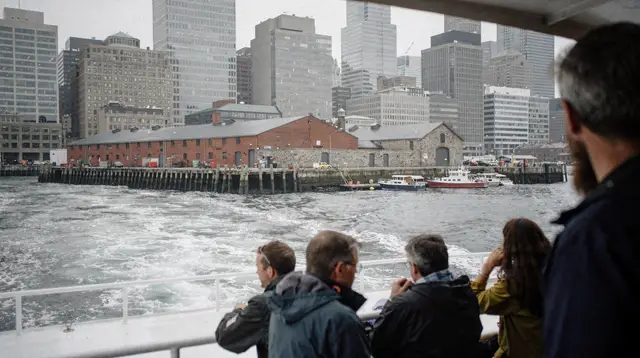
Boston does not close for winter. What changes is the balance between water and land. From roughly December through February, anything built around the harbor and the open ocean — sightseeing cruises, whale watching trips to Stellwagen Bank, some ferry routes to the islands — either cuts back its schedule sharply or stops running until spring. Meanwhile the city’s indoor institutions, from the Museum of Fine Arts to the Boston Public Library to the covered halls at Quincy Market, keep the same hours they run the rest of the year. For a first-time visitor trying to plan around this, the practical rule is simple: lean toward what’s indoors, and treat anything on the water as something to confirm before you count on it.
This isn’t a weather bulletin. It’s a planning guide for a city that, in winter, quietly redistributes its appeal from the harbor to the neighborhoods.
What slows down or stops
Winter is the off-season for anything tied to open water. Whale watching out to Stellwagen Bank is seasonal by nature — it typically runs from around April into October — so it is largely unavailable in the coldest months, and operators that do offer occasional winter trips are the exception, not the rule. Standard harbor cruises, sunset cruises, and dinner cruises reduce their calendars significantly; some pause entirely until the weather turns. If a cruise is central to your plan, check the specific operator’s current schedule rather than assuming it runs the way it does in July.
Ferries to Martha’s Vineyard and Nantucket from Woods Hole and Hyannis also thin out. Winter schedules exist on both the Steamship Authority and Hy-Line Cruises, but with far fewer daily departures than in summer, and travelers who show up expecting a peak-season timetable are routinely caught out. The Boston Harbor Islands ferry service reduces similarly. None of this means these things are impossible in winter — it means they require a phone call or a website check first, not an assumption.
What stays fully open
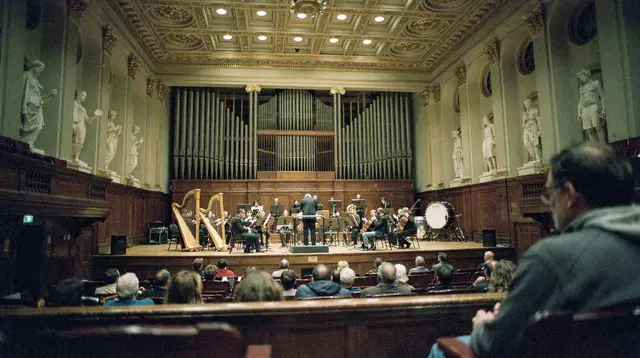
This is the half of the story winter visitors sometimes miss. Boston’s museum sector doesn’t take a season off. The Museum of Fine Arts, the Isabella Stewart Gardner Museum, and the Museum of Science run their normal hours and normal admission through the coldest months. Across the river in Cambridge, Harvard’s and MIT’s museums do the same, and a day spent moving between Harvard Yard, the Harvard Museum of Natural History, and the MIT Museum works just as well in January as in June — arguably better, with fewer people in the galleries.
Covered markets and food halls around Quincy Market and Faneuil Hall stay busy and warm, and they’re a reasonable answer to “what do we do for two hours in the cold.” Neighborhood life doesn’t pause either: Beacon Hill’s brick sidewalks and gas lamps look, if anything, more atmospheric under a light snow, and the North End’s bakeries and restaurants run their full winter hours, cannoli included. If a day trip appeals more than a cruise, Salem and the Freedom Trail itself are both fully walkable in winter — see the footing note below before you go.
Footing on the Freedom Trail
One honest caution: several stretches of the Freedom Trail run over brick sidewalks and sections of cobblestone, particularly around Beacon Hill and parts of the North End. Brick and cobblestone hold snow and ice longer than ordinary pavement, and they don’t clear as evenly after a storm. This doesn’t make the trail impassable — the red line on the ground is there in every season, and thousands of people walk it in winter without incident — but it does mean footwear matters more here than almost anywhere else on a winter trip. Waterproof boots with real tread outperform sneakers or dress shoes by a wide margin. For readers traveling with mobility considerations, the same brick and cobblestone sections are worth reviewing in more detail in the Freedom Trail accessibility guide, which covers uneven surfaces year-round, not just in winter.
Beyond footwear, the practical advice is short and doesn’t need to become a weather forecast: New England winters bring real cold and the possibility of snow, so plan layers and a genuine winter coat rather than what worked for a fall trip.
Getting around Boston in winter
Boston’s public transit system, the T, is run by the MBTA and covers five lines — Red, Orange, Green, Blue, and Silver — reaching most of what a winter itinerary needs: downtown, Back Bay, Cambridge, and the airport. A CharlieCard keeps the fare around $2.40 per ride as of 2026, with transfers folded into a two-hour window (check mbta.com directly, since fares change). What matters more in winter than in July is that the T does not run 24 hours a day — service stops overnight and resumes in the morning — so a late dinner in the North End or a night out downtown means checking the last train rather than assuming one will show up. For a fuller rundown of how the system fits together, including the Commuter Rail day trips that reach Salem and Concord without a car, and for a more general primer, see getting around Boston without a car.
The Commuter Rail is worth calling out on its own: it is a separate network from the T, with its own ticket, and it is the practical way to reach several of the day trips in this guide when winter weather makes driving less appealing — Salem in particular sits on a direct line from North Station. Bluebikes, the city’s bike-share system, has no relationship to the T or the Commuter Rail; it keeps running in winter but is a colder, less obvious choice than in warmer months.
Arriving through Logan International Airport stays simple regardless of season: the Silver Line SL1 runs free from the airport into downtown (the return trip is paid), and the Blue Line is reachable via a free Massport shuttle to the Airport station. Neither route changes for winter, which makes the airport-to-hotel leg one of the more predictable parts of a cold-weather trip.
Salem and the North Shore in the off-season
Salem is worth a specific mention here because its winter character is close to the opposite of its October one. The Haunted Happenings crowds that fill the town for the entire month of October are gone by December, leaving the Witch Trials sites, the working waterfront, and the historic streets considerably quieter. The trade-off is that some seasonal attractions scale back their hours along with everything else on the water, so a winter Salem day trip rewards visitors who want the history without the crowds more than it rewards anyone chasing an October atmosphere out of season. The same logic applies further inland: a Lexington and Concord day trip along the Battle Road doesn’t depend on water or foliage, and holds up as well in January as in any other month, weather and footing permitting.
The upside: fewer people, more room
Winter is Boston’s quietest tourist season. That translates into real, if unglamorous, advantages: shorter lines at museum admission desks, easier restaurant reservations, and more available hotel inventory than during fall foliage season or the summer months when the islands are at their busiest. None of this is a guarantee of lower prices on any specific night — hotel rates respond to citywide events and conventions regardless of season — but the general pattern favors a visitor who wants to move through the city without competing for space. For readers weighing whether the trade-off is worth it, the best time to visit Boston guide lays out how winter compares to the other three seasons directly.
A one-day indoor-leaning plan
| Time | Activity | Area |
|---|---|---|
| Morning | Museum of Fine Arts or Isabella Stewart Gardner Museum | Back Bay / Fenway |
| Midday | Lunch at Quincy Market or the North End | Downtown Boston |
| Early afternoon | Freedom Trail walk (weather permitting, with proper footwear) | Downtown Boston |
| Late afternoon | Harvard Yard and a Cambridge museum | Cambridge |
| Evening | Beacon Hill walk past the gas lamps, dinner in the South End | Beacon Hill / South End |
This is one way to structure a winter day, not a fixed itinerary — swap the Cambridge stop for the Museum of Science, or trade the Freedom Trail segment for more time indoors if the forecast calls for heavy snow.
Booking a guide instead of going it alone
Some visitors prefer a structured, guided option in winter rather than navigating icy sidewalks and reduced ferry schedules solo. A guided walk through Harvard, MIT, and Cambridge’s historic sites keeps the day mostly on paved campus paths rather than open cobblestone. Closer to downtown, a guided chocolate and art gallery walk through Back Bay is entirely indoor-adjacent, which suits a cold or unpredictable afternoon. For a trip built entirely around winter and shoulder-season activity, there’s also a seasonal fall/winter sports tour of Boston designed around what’s actually running this time of year. And for travelers who’d rather set their own pace with a guide handling logistics, a private custom tour with a local guide can be built around indoor stops if the weather turns.
Visiting with kids in winter
Families weighing a winter trip have a genuine advantage: Boston’s kid-friendly attractions skew heavily indoor. The Museum of Science and the best museums and aquariums for kids run full schedules regardless of the forecast, which removes a lot of the weather risk that comes with a warm-season trip built around outdoor parks and harbor tours. Pairing a museum morning with an afternoon in a warm market hall is a reliable way to structure a family day when temperatures are working against you.
Money matters in a winter trip
Massachusetts charges a general sales tax of 6.25%, with clothing under $175 exempt — relevant for anyone picking up a warmer coat or boots mid-trip. Restaurant meals are taxed separately, at roughly 7% (the 6.25% state rate plus a 0.75% local option in Boston), so a dinner bill and a retail receipt won’t show the same percentage. Hotel stays carry their own tax on top of that, combining state, city, and convention-center funding into a rate in the neighborhood of 14 to 15% in Boston — worth building into a winter budget, since lower off-season room rates don’t include tax and fees. Rates move, so boston.gov is the place to confirm the current hotel tax before booking. For a broader look at what a trip costs outside peak season, the Boston on a budget guide covers more ground.
Practical notes before you go
A few things worth confirming close to your travel dates rather than assuming from this guide: exact ferry schedules to the islands (steamshipauthority.com, hylinecruises.com), whether any harbor cruise operators are running reduced winter service, and current T conditions if snow is forecast, since surface sections of the Green Line in particular can see delays during storms. None of this should discourage a winter visit — it’s simply the seasonal fine print that separates a smooth trip from a frustrating one.
Winter in Boston: frequently asked questions
Is Boston worth visiting in winter?
Yes, with adjustments. Museums, the Boston Public Library, covered markets, and neighborhood life in Beacon Hill and the North End run at full capacity year-round. Water-based activity — harbor cruises, whale watching (seasonal, April through October), some island ferries — slows or pauses, and the Freedom Trail’s brick and cobblestone sections get slippery when snow or ice is on the ground.
Do harbor cruises and whale watching run in winter?
Whale watching to Stellwagen Bank is a seasonal activity, generally running from around April to October, so it is largely off the table in winter. Harbor cruises reduce their schedules significantly, and some operators pause entirely until spring; check with the operator directly for the dates they actually run.
Can I still walk the Freedom Trail in winter?
Yes, the trail stays open and the red line on the sidewalk is unaffected by weather. What changes is footing: several stretches use brick sidewalks and cobblestone, which hold ice and packed snow longer than plain pavement. Waterproof shoes with real tread matter more here than in any other season.
Are museums open in winter in Boston?
Yes. The Museum of Fine Arts, the Isabella Stewart Gardner Museum, the Museum of Science, and Harvard’s and MIT’s museums in Cambridge keep their regular schedules through winter, with the same admission fees as the rest of the year. Indoor attractions are, if anything, the strongest argument for a winter visit.
Is winter a cheaper or less crowded time to visit Boston?
Winter is generally the lowest tourist season of the year in Boston, which tends to mean better availability for hotel rooms, restaurant tables, and timed-entry museum slots than summer or fall foliage season. It is not a guarantee of lower prices on any given night, but the general pattern favors visitors who want more room to move.
What should I pack for Boston in winter?
Layers, a genuinely warm coat, waterproof boots with grip, and gloves and a hat you will actually use. New England winters bring real cold and the possibility of snow, and the closer you plan to walk the Freedom Trail or spend time outdoors, the more that footwear choice matters.
Does the T run normally in winter?
Yes, the T operates on its regular schedule through winter, though heavy snow can cause delays on any line, particularly the Green Line’s surface sections. It does not run 24 hours a day in any season — check mbta.com for the last trains if you are out late.
Are the island ferries running in winter?
Ferries to Martha’s Vineyard and Nantucket from Woods Hole and Hyannis reduce sharply in winter, and some routes suspend for the season entirely depending on the operator. If a ferry day trip is part of the plan, confirm the specific route and date on steamshipauthority.com or hylinecruises.com before committing to it.
Seasonal tours and activities on GetYourGuide
Verified deep-linked GetYourGuide tours. Book through these links and we earn a small commission at no cost to you.
GetYourGuide does not provide a product photo for this activity — the image shows the meeting point, photographed by us.