Three days in Boston: a first-time itinerary
Three days, three very different Bostons
Three days is enough to walk the historic core, cross the Charles River into a separate city, and stand on the harbor that started most of the trouble in 1773. It’s not enough to also fit in Salem, Cambridge in depth, and the islands — trying to do all of it in 72 hours usually means doing none of it well. This plan sticks to the center, Cambridge and the waterfront, and treats everything else (Salem, the Cape, Newport) as a separate trip, not an afternoon add-on.
None of these three days requires a car. Day 1 is entirely on foot. Day 2 uses the T once each way. Day 3 mixes walking with a harbor cruise whose schedule depends on the season — more on that below.
Day 1: Beacon Hill, the Freedom Trail, Charlestown
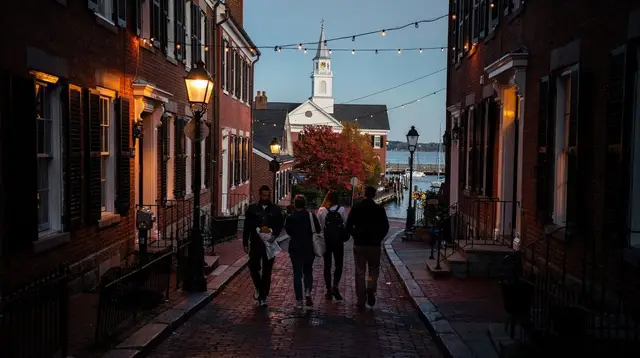
Morning (9am-12pm). Start on Beacon Hill, the brick rowhouse neighborhood just north of Boston Common. Walk the Acorn Street cobblestones — one block, famously photographed, easy to miss if you’re not looking for it — then continue past the gold-domed Massachusetts State House. From there, pick up the Freedom Trail’s red line at Boston Common and follow it downtown. The trail itself is a walking route, not a single site: it links 16 stops over about 2.5 miles (4 km), and following the painted or brick line on the sidewalk costs nothing. A few of the stops along this stretch, including the Old South Meeting House and the Old State House, sell their own admission ticket; others are free to walk past. Check thefreedomtrail.org for which is which before you commit to going inside any one of them. This first stretch ends at Faneuil Hall, where the trail meets the marketplace.
If you’d rather have someone narrate the history instead of reading plaques, a guided walk covering this same ground exists as a booked option: a guided walk through Boston’s Freedom Trail sites into Beacon Hill. It won’t change the route above, just who’s explaining it.
Midday. Quincy Market, next to Faneuil Hall, is a food hall with dozens of counters — lobster rolls, chowder, and everything else, at a range of prices and quality. It’s crowded and touristy, and also genuinely the most efficient lunch stop on this stretch of the trail.
Afternoon (2pm-5pm). Pick the Freedom Trail back up and continue into the North End, Boston’s Italian neighborhood, passing the Paul Revere House and the Old North Church along the way. From the North End, cross the Charlestown Bridge on foot to reach Charlestown — count on 20-25 minutes of walking from the North End to the Charlestown Navy Yard. A seasonal ferry between the two also exists as an alternative if you’d rather not walk it twice in one day. In the Navy Yard, boarding the USS Constitution itself is free (bring ID, expect a security check); the adjacent USS Constitution Museum runs on a suggested donation rather than a fixed ticket. From there it’s a short walk up to the Bunker Hill Monument, worth the stair climb for the view back over the harbor and downtown.
Evening. Head back into the North End for dinner — this is the neighborhood’s strongest case for itself, and no itinerary through Boston’s Italian food scene skips it entirely. Cannoli afterward is close to mandatory; expect a line at the well-known bakeries.
Day 2: Cambridge, Harvard and MIT
Cambridge is not a Boston neighborhood — it’s a separate city on the other side of the Charles River, reached by crossing the water rather than walking across town. The easiest way in is the T’s Red Line, roughly 15-20 minutes from Park Street to Harvard Square, or a similar ride if you’re starting from elsewhere downtown. Add this transit time to your day; it’s not a five-minute hop.
Morning. Walk through Harvard Yard, the oldest part of Harvard University’s campus, dating to the college’s founding in 1636. Harvard Square itself is worth slow browsing — independent bookstores, coffee shops, and the general feel of a university town that predates the rest of Boston’s Revolutionary history by more than a century. A guided option covering the Yard exists if you’d rather have a current student explain what you’re looking at: a student-led walking tour of Harvard Yard.
Midday. Lunch in Harvard Square has options at every price point, from grab-and-go sandwich counters to sit-down restaurants around the square itself.
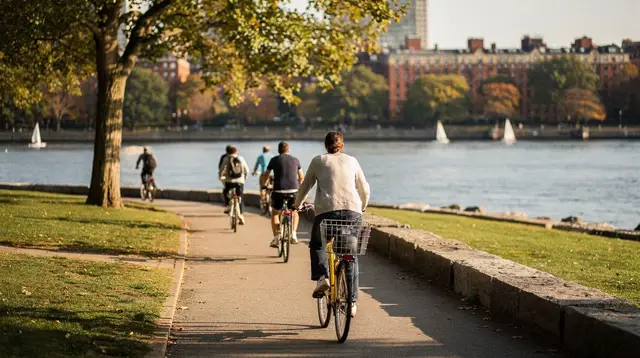
Afternoon. From Harvard Square, either walk or take the Red Line one stop toward Kendall/MIT for the MIT Museum, which leans harder into science and engineering than Harvard’s museums do. If the weather is good, skip the museum and walk the Charles River esplanade instead — the river itself is one of the better views in either city, with Boston’s skyline across the water and Cambridge’s academic buildings behind you.
Evening. Head back to Boston on the Red Line. Cambridge adds a real transit commitment on top of Boston’s own walkable core — factor another 20-30 minutes each way into any day that includes it, on top of whatever you spend once you’re there.
Day 3: Boston Harbor and the Seaport
Morning. Walk down to Long Wharf on Boston Harbor, the departure point for most harbor cruises. Boat frequency varies by season and by operator — more boats and later departures in summer, fewer and earlier in the shoulder months — so check current schedules rather than assuming a fixed departure time. A harbor cruise from here works well as this morning’s centerpiece; two options worth knowing are a shorter afternoon or evening sail such as a Boston sunset cruise on the harbor, or a harbor islands ferry if you’d rather land on one of the islands than just circle the water: a ferry out to the Boston Harbor Islands. Either shifts easily to later in the day if it suits your schedule better than a morning departure.
Midday. Walk south along the water into the Seaport District, a newer, glassier part of the city than anything you’ve seen the previous two days — restaurants, converted warehouses, and the Boston Tea Party Ships & Museum if the history from Day 1 left you wanting more (this one is a paid, ticketed museum, unlike the free USS Constitution).
Afternoon. The Institute of Contemporary Art sits right on the Seaport waterfront and is worth an hour if contemporary art interests you; otherwise, the Harborwalk itself — a public path that runs along much of the downtown waterfront — makes for a good unstructured close to the trip, with benches, harbor views, and none of the crowd density of the Freedom Trail.
Evening. Left open deliberately. Three days of walking, a river crossing, and a harbor cruise is enough ground covered; use the last evening for whatever the trip so far made you want to go back and see again, whether that’s a return to the North End or just resting before travel home.
Planning notes for this itinerary
| Day | Focus | Transit needed |
|---|---|---|
| Day 1 | Beacon Hill, Freedom Trail, North End, Charlestown | On foot; optional short ferry to Charlestown |
| Day 2 | Cambridge: Harvard, MIT, the Charles River | T Red Line, about 15-20 min each way, plus local walking |
| Day 3 | Boston Harbor, Seaport, Harborwalk | On foot from downtown; harbor cruise by boat |
A few things worth knowing before you build this into a full schedule:
- No car is used or needed anywhere in this plan. Downtown Boston, Charlestown and the Seaport are all walkable from each other; Cambridge is a T ride, not a drive.
- Cambridge and Charlestown both add real transit time. Budget 20-30 minutes each way beyond downtown Boston’s own walking distances — this is the most common way first-time visitors overrun a tightly packed day.
- The Freedom Trail is a route, not a single admission. Some of its 16 stops charge for entry; following the line itself never does.
- Harbor cruise schedules shift by season. Treat the morning-of-Day-3 boat as flexible rather than fixed, and check the operator’s current timetable before you plan around it.
FAQ: three days in Boston for first-time visitors
Is three days enough time to see Boston?
Three days covers downtown Boston, Cambridge and the harbor well, but it doesn’t leave room for Salem, the Cape, or day trips outside the city. For a first visit focused on Boston and Cambridge themselves, three days is a reasonable, unrushed amount of time.
Do I need a car for this itinerary?
No. All three days are built around walking and the T’s Red Line. A car adds parking costs and complexity without shortening any of these routes.
How do I get from Boston to Cambridge?
Cambridge is a separate city across the Charles River, not a Boston neighborhood. The T’s Red Line connects them directly — roughly 15-20 minutes from downtown stations like Park Street to Harvard Square.
Is the Freedom Trail free?
Following the trail’s marked route on the ground is free from end to end. Several of the 16 sites it connects, including some historic buildings along the way, charge their own separate admission.
How far is Charlestown from the North End?
About 20-25 minutes on foot across the Charlestown Bridge. A seasonal ferry between the two neighborhoods is also an option if you’d rather not walk it both ways.
Is the USS Constitution free to visit?
Boarding the ship itself is free, with ID required for adults and a security check at the gate. The separate USS Constitution Museum next door runs on a suggested donation rather than a required ticket.
What time does the harbor cruise leave on Day 3?
It depends on the season and the operator — schedules run more frequently in summer and thin out in the shoulder months. Check current departure times before planning the rest of the day around a specific slot.
Can this itinerary be extended to include Salem or Cambridge in more depth?
Yes. Salem works well as a fourth day by Commuter Rail, and Cambridge easily absorbs a full day of its own if you want more time at its museums than this plan allows.
tours.3 days
Verified deep-linked GetYourGuide tours. Book through these links and we earn a small commission at no cost to you.
GetYourGuide does not provide a product photo for this activity — the image shows the meeting point, photographed by us.