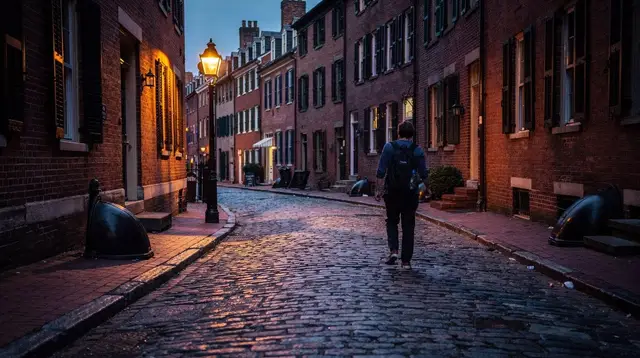
Cambridge and Harvard Square: a neighborhood guide
Is Harvard Square worth visiting beyond the Harvard Yard tour?
Yes. Harvard Square is a full neighborhood — bookstores, cafes, street performers, and a mix of students and residents — not just the university's front gate. It sits a few minutes' walk from the Charles River, and the Red Line's Harvard station drops you in the middle of it.
Cambridge is a city, not a Boston neighborhood
Cambridge sits directly across the Charles River from Boston, and it’s a separate city in its own right, with its own city hall, its own police department, and its own zip codes — not a district of Boston. Harvard University and MIT both sit inside Cambridge’s borders, which surprises visitors who assume “Boston’s universities” means Boston proper. If you’ve already read our Harvard Yard guide, which focuses specifically on the walk through the university’s historic core, this page steps back to cover the neighborhood around it: the square itself, the riverbank, and what changes depending on when you show up. If you’re weighing how a Cambridge stop fits into a wider trip, our first-time Boston guide covers where the city’s universities sit relative to Boston proper’s own landmarks, like the Freedom Trail.
Getting there is straightforward. The MBTA’s Red Line runs straight from downtown Boston to Harvard station, and the ride from a stop like Park Street or South Station takes roughly 15 to 20 minutes. Harvard station opens directly into the middle of the square, so there’s no long walk from the T to the action — you surface and you’re already there. For the wider transit picture, including how the Red Line connects to the rest of the system, see our guide to the T and our notes on getting around Boston without a car.
What Harvard Square actually is
It’s easy to think of Harvard Square as an extension of the university’s front lawn, but the square predates a lot of what people associate with modern Harvard and functions as a genuine commercial and civic center. Streets radiate out from the T station in several directions, lined with a dense mix of independent bookstores, cafes, and small shops that cater as much to Cambridge residents as to students or visitors. Street musicians and performers are a fixture here, particularly on weekend afternoons, and there’s usually a steady flow of people just sitting on the steps near the station entrance, watching the crowd.
We’re deliberately not naming specific bookstores or cafes here — the point of this page is the shape of the neighborhood, not a list of individual businesses that open, close, and change hands. What matters for planning is the pattern: Harvard Square rewards wandering more than it rewards a checklist. Expect a mix of old-money academic atmosphere and a younger, scruffier student energy layered on top, sometimes in the same block.
If you’d rather have someone walk you through the university side of things directly — the gates, the statue, the history baked into specific buildings — that’s the territory of our dedicated Harvard Yard student-guided tour guide, which we don’t duplicate here. And if the goal is a specific photo rather than a full walk-through, our Harvard Yard photoshoot guide covers the angles and timing that work best around the Yard’s gates and older buildings.
Harvard’s museums, beyond the Yard
Harvard’s campus holds several museums that most first-time visitors don’t know exist until they’re already standing in the Yard. Between the natural history collections, the art museums, and the smaller specialty collections tucked into individual buildings, there’s enough here to fill a rainy afternoon on its own — and unlike wandering the square, these are indoor, ticketed stops with their own hours. Our guide to Harvard’s museums breaks down which ones are worth the detour depending on what you’re actually interested in, whether that’s dinosaur skeletons, glass flowers, or European painting.
MIT runs its own museum as well, distinct from anything on the Harvard side of the square, and it’s covered separately in our MIT museum guide rather than folded in here — the two campuses have different collections and different visiting logistics, and treating them as interchangeable does a disservice to both.
The academic calendar changes the mood
Cambridge runs on a rhythm set by the university calendar, and it’s worth planning around loosely rather than expecting the same experience every time you visit. When classes are in session, the square is dense: full cafes, busy sidewalks, a general hum of student activity that spills out from the campus into the surrounding streets. During university breaks — winter break, spring break, and especially over the summer months — the crowd thins out noticeably. The square is still open and still functioning, since it’s a real neighborhood with year-round residents, but it loses some of that packed, energetic feel that comes with a full academic term underway.
We’re intentionally not pinning this to exact dates here, since academic calendars shift slightly year to year and between Harvard and MIT. If your visit lands during a break period, expect an easier time finding a table and a noticeably calmer atmosphere — a trade-off some travelers actually prefer.
MIT, downriver, in brief
MIT’s campus sits along the Charles River downstream from Harvard Square, roughly around the Kendall Square area, and it’s close enough that some travelers try to fold both into a single afternoon. We’re not developing MIT’s campus in detail on this page — its own layout, museum, and visitor logistics deserve dedicated treatment, and mixing the two together in one walk tends to shortchange both. If MIT is a specific priority, our MIT museum guide covers that campus on its own terms.
The practical note worth knowing here: MIT connects to Harvard Square by one stop on the Red Line, to Kendall/MIT station, which is a far more reliable way to get there than walking the full distance along busy streets. It’s a real walk, not a quick stroll between two ends of the same campus.
Covering both campuses in one day
If you want to see Harvard and MIT properly rather than just passing through Harvard Square, it helps to plan the day rather than improvise it — the two campuses are close on a map but far enough apart on foot that rushing between them shortchanges both. Our Cambridge campuses in one day itinerary lays out a sequence that covers Harvard Yard, the square, and MIT’s Kendall Square campus without the backtracking that comes from winging it.
A bike is the other practical way to cover the distance between the two campuses and the riverbank without burning the whole day on walking. Our Cambridge electric bike tour guide covers that option in more detail, including how it compares to walking or taking the Red Line between stops.
The Charles River
One of the most underused parts of a Cambridge visit is simply the riverbank itself. Public paths run along the Cambridge side of the Charles, a short walk from Harvard Square, and they’re free and open at any time — no ticket, no gate, no seasonal closure. It’s a genuinely pleasant stretch for a walk or a run, with views back across the water toward Boston’s skyline, and it’s usually far less crowded than the square itself.
The river also has a working, active side to it. Sailing clubs and rowing crews use this stretch regularly, particularly in the warmer months, and it’s part of the same waterway that hosts the Head of the Charles regatta each October — a rowing event, distinct from the Boston Marathon, which runs in spring on Patriots’ Day. If you want to get onto the water rather than just look at it, paddling is an option worth considering; see our guide to kayaking the Charles River for that angle specifically.
For a different vantage point on the same river, a guided option puts you on the water without any planning on your end: a sunset cruise on the Charles that takes in both the Cambridge and Boston skylines from the water. For the broader landscape of river and harbor cruise options around Boston, including how a Charles River sail compares to a harbor tour, see our Charles River cruise guide and our general sunset cruise guide.
Guided options, if you’d rather not go it alone
Harvard Square rewards independent wandering, but a guide can be useful if you want the historical context that isn’t obvious just from walking past a building. A few options worth knowing about, all built around Cambridge and its two universities:
| Option | What it covers | Best for |
|---|---|---|
| Harvard and MIT guided tour | Both campuses in one outing | Travelers with limited time who want the highlights of each |
| Student-led Harvard campus tour | Harvard Yard specifically, led by a current student | First-time visitors wanting an insider’s take |
| MIT walking tour with student guide | MIT’s campus, led by a current student | Visitors prioritizing MIT over Harvard |
| Guided bike tour from Boston | Wider loop covering Cambridge and the riverbank | Travelers who want to cover more ground than walking allows |
a guided walk that covers both Harvard and MIT in a single outing, run through a current-student-led tour of Harvard’s campus, or, for something with a lighter touch and a food angle, a guided stop at a handful of the square’s donut spots.
If two feet feels too slow for the amount of ground between Cambridge and Boston, a bike option covers the same river corridor with less effort — a route a guided bike tour from Boston into Cambridge follows along the Charles.
None of these are required. Harvard Square is fully walkable on your own, free, and doesn’t need a booked slot to enjoy — the guided options above are for travelers who specifically want the historical narration or don’t want to plan a route themselves.
Planning the visit
Budget at least half a day for Cambridge if you want to see both the square and the riverbank without rushing — longer if MIT or the museums are also on the list, and a full day if you’re following the two-campus itinerary above. Pair it naturally with a broader look at how walking fits into a Boston itinerary; our general guide to walking tours in Boston covers pacing and route-planning principles that apply here too, even though Cambridge itself sits outside Boston’s city limits.
Because Harvard Square functions as a real commercial district and not a tourist enclave, prices for food and coffee tend to run close to what you’d pay in central Boston — no built-in discount for being near a university, and no particular markup either. Bring a layer regardless of season; the riverbank tends to be windier than the sheltered streets around the T station.
If Cambridge is one stop among several on a longer Boston trip, our how many days in Boston guide helps size the overall trip so a Cambridge half-day doesn’t crowd out downtown Boston’s own sites, and our first-time Boston guide is a useful starting point if this is your first pass through the region. Getting back downtown afterward is the same Red Line ride in reverse — see our T guide if you need a refresher on the line’s other stops, or our notes on getting around Boston without a car for the wider transit picture beyond just the Red Line.
Cambridge and Harvard Square: frequently asked questions
How do I get to Harvard Square from Boston?
Take the MBTA Red Line to Harvard station. It runs directly from downtown Boston stops including Park Street and South Station, and the ride from central Boston takes roughly 15 to 20 minutes depending on where you board.
Is Cambridge part of Boston?
No. Cambridge is its own city in Middlesex County, separated from Boston by the Charles River. Harvard University and MIT are both in Cambridge, not Boston, even though they’re commonly grouped into Boston itineraries.
Can I walk from Harvard Square to MIT?
Yes, though it’s a real walk rather than a quick stroll — MIT’s campus sits downriver along the Charles, roughly in the Kendall Square area. Most visitors take the Red Line one stop from Harvard to Kendall/MIT instead of walking the full distance.
Is Harvard Square busy year-round?
The atmosphere shifts with the academic calendar. When classes are in session, the square feels dense with student foot traffic, street musicians, and long cafe lines. During university breaks and over the summer, it’s noticeably quieter, though still active since it’s a real commercial center, not just a campus extension.
Do I need a ticket to walk around Harvard Square?
No. Walking the square, browsing its bookstores, and sitting along the Charles River is free. Ticketed options exist only for specific add-ons, such as guided campus tours or river cruises.
What’s the difference between Harvard Yard and Harvard Square?
Harvard Yard is the enclosed, historic core of Harvard’s campus — gates, lawns, the statue, the older academic buildings. Harvard Square is the surrounding commercial and civic district around the T station, with the shops, cafes, and street life that exist independently of the university.
Is there a fee to walk along the Charles River in Cambridge?
No. The riverside paths on the Cambridge side of the Charles are public and free to use at any time, for walking, running, or simply sitting by the water.
Neighborhood tours of the North End, Beacon Hill and Cambridge on GetYourGuide
Verified deep-linked GetYourGuide tours. Book through these links and we earn a small commission at no cost to you.
GetYourGuide does not provide a product photo for this activity — the image shows the meeting point, photographed by us.