A car-free day at Harvard and MIT, Cambridge
Cambridge sits on the other side of the Charles River from Boston, and it’s a separate city — not a Boston neighborhood — with its own two big draws: Harvard University and MIT. Both campuses, plus the riverfront between them, fit comfortably into a single car-free day out of Boston. The Red Line handles all the connections, and most of the day is spent walking.
Getting to Cambridge
The MBTA Red Line is the only transport you need. From downtown Boston, ride the Red Line to Harvard Square station to start at Harvard, or to Kendall/MIT station to start at MIT and work backward through this itinerary. Either direction works; this guide starts at Harvard because its campus opens the morning naturally and its museums keep earlier hours than most Cambridge attractions.
For the mechanics of the T itself — fares, CharlieCard, how transfers work — see The MBTA and the T: a guide to Boston’s subway and, for getting around Boston in general without renting a car, Getting around Boston without a car.
Morning: Harvard Square and Harvard Yard
Start at Harvard Square, the commercial heart of Cambridge and the closest thing the city has to a downtown. Bookstores, cafés and student foot traffic fill the streets around the T station, and it’s worth 15 to 20 minutes on its own before heading into campus. For an overview of what the square and the surrounding neighborhood offer, see Cambridge and Harvard Square.
From the square, it’s a short walk into Harvard Yard, the historic core of Harvard University, founded in 1636. The Yard itself — brick dormitories, the statue of John Harvard, Memorial Church — is open to the public and free to walk through. If lectures or public talks happen to be open that day, they’re usually posted on Harvard’s own event calendar; don’t count on being able to sit in on a class without checking first, since access varies by course and semester.
A guided walk of the campus, often led by current Harvard students, adds context that’s easy to miss on your own — admissions trivia, building history, the odd bit of student folklore. A guided Harvard Yard tour or a student-led walk of the Yard both run at set times and are worth booking ahead in peak season. For a self-directed version with the same ground covered, Harvard Yard student-led tours lays out the route.
If science and natural history collections interest you, this is the time to fold them in. The Harvard Museums of Natural History and the Peabody Museum sit next to each other just north of the Yard and share a combined ticket in most years — check current pricing on Harvard’s own site before you go, since it changes. Between the two, plan on an hour and a half to two hours if you’re going in with any real interest in the collections; less if you’re just passing through. Details on both are in Harvard’s museums in Cambridge.
Skipping the museums shortens the morning to about two hours total for the Yard and the square; adding them pushes the morning block closer to three and a half.
Midday: lunch in Harvard Square
Harvard Square has one of the highest concentrations of casual, student-priced food in Cambridge — cheap eats, coffee shops, and a handful of sit-down places, all within a five-minute walk of the T station. Budget USD 12 to 20 for a casual lunch, more for a full sit-down meal. It’s also, unusually, one of the better spots in the area for something sweet: a guided tasting of Harvard Square’s best donut shops works as a light, walkable alternative to a sit-down lunch, or as a follow-up if you eat light at midday.
Afternoon: Kendall Square and MIT
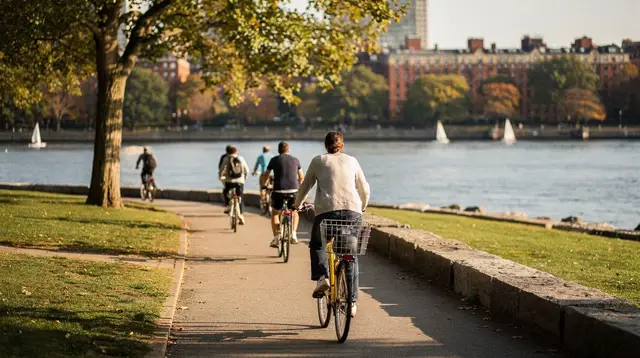
From Harvard Square, there are two ways to reach MIT: walk along the Charles River, or take the Red Line two stops to Kendall/MIT. The walk runs along Memorial Drive on the Cambridge side of the river and takes roughly 20 to 25 minutes at a normal pace — flat, scenic, and a reasonable way to see the river before the Esplanade stop later in the day. If you spent extra time in the museums that morning, take the T instead; it’s a five-minute ride and keeps the afternoon on schedule.
MIT’s campus around Kendall Square is a different register entirely from Harvard’s brick quadrangles: glass, steel and deliberately unconventional architecture, including buildings by Frank Gehry and I.M. Pei. Walking through campus on your own is free, and MIT’s public art and building lobbies (the Great Dome, the Infinite Corridor) are generally open to visitors during the day.
The MIT Museum, relocated to Kendall Square in recent years, covers robotics, artificial intelligence and MIT’s engineering history with a hands-on bent — it’s a different kind of museum experience from Harvard’s natural history collections, and pairs well with them if you’re comparing the two schools’ cultures rather than just their buildings. Admission is charged; check current hours and pricing on the museum’s own site, since both shift periodically. See MIT Museum, Cambridge for what’s inside.
A guided tour that covers both campuses in sequence saves the walking calculation entirely: a combined Harvard and MIT guided tour moves between the two on a fixed schedule, useful if you’d rather not plan the connection yourself. For a self-powered alternative that covers the same stretch of Cambridge by bike, a guided bike tour from Boston through Cambridge compresses the whole day’s walking into a couple of hours.
Budget an hour and a half to two hours for the MIT Museum and a campus walk together, less if you skip the museum.
Late afternoon: the Charles River Esplanade
Head back toward the river for the end of the day. The Charles River Esplanade, technically on the Boston side but visible and walkable from the Cambridge bank as well, offers one of the better skyline views in the region — Back Bay’s brownstones and the Prudential Tower across the water, with sailboats and rowing shells on the river itself in good weather. Late afternoon, roughly 4:30 to 5:30pm, tends to catch the light well and gives sailing and rowing clubs time to be out on the water.
Rowing especially is a Cambridge and Boston institution — the Charles hosts the Head of the Charles Regatta every October, and on any clear afternoon between spring and fall it’s common to see eights and singles on the water. If the river itself appeals more than watching it from the bank, Kayaking and paddleboarding the Charles River covers self-paddle and guided options, and Boston’s public green space along the water more broadly is covered in Public Garden, Boston Common and the Emerald Necklace.
For something more structured to close the day, a river cruise reframes the same skyline from the water rather than the bank: a sunset cocktail cruise on the Charles River departs from the Boston side and covers roughly the same stretch of river you’ll have been walking along.
Evening: getting back to Boston
Two straightforward options close the loop. Walk across the Harvard Bridge — despite the name, it lands you at MIT, not Harvard, and connects Kendall Square to Back Bay in about 15 to 20 minutes on foot. Or take the Red Line from Kendall/MIT or Central Square back into downtown Boston; either gets you to South Station or Park Street in under 15 minutes.
If the day has run long and the full Harvard-to-MIT riverside walk earlier felt like a lot, the T is the simpler choice for the return leg too — no need to walk both directions along the water in one day unless the scenery is the point.
What this day skips
A single day at Harvard and MIT necessarily leaves out the rest of Cambridge — Central Square’s music venues, the Somerville border, and any of Boston’s own neighborhoods on the same day. If Cambridge is one stop on a longer Boston visit, see Two days in Boston or Three days in Boston for how this day fits into a broader trip. For more on the neighborhood itself outside this specific itinerary, Things to do in Cambridge rounds up activities by category, and Harvard Square after the bookstores closed is worth reading if you remember the square from a decade or two ago and want to know what’s changed.
More broadly on the two destinations covered here: Cambridge: Harvard, MIT and Harvard Square and Boston.
Questions about a day trip to Harvard and MIT
Is Cambridge part of Boston?
No. Cambridge is its own city in Middlesex County, on the opposite bank of the Charles River from Boston. Harvard University and MIT are both in Cambridge, not in Boston proper.
How do you get from Boston to Harvard Square or MIT?
The MBTA Red Line runs directly from downtown Boston to Harvard Square and to Kendall/MIT station, with no transfer needed. A standard T fare applies each way; buy a CharlieCard or use contactless payment at the fare gate.
How long does it take to walk from Harvard to MIT?
Walking along the Charles River from Harvard Square to MIT’s main campus takes roughly 20 to 25 minutes at a steady pace. It’s a flat, pleasant route, but if time is tight, two Red Line stops cover the same distance in a few minutes.
Can you visit Harvard’s campus without a guide?
Yes. Harvard Yard and the surrounding streets are open to the public and free to walk through on your own. Guided campus walks, often led by current students, add context on admissions, history and student life for a fee.
Are the Harvard and MIT museums free?
No, both charge general admission. Check current pricing and hours directly on the Harvard Museums of Natural History, Peabody Museum and MIT Museum websites before you go, since rates and opening days change.
Is one day enough for Cambridge?
One day covers the highlights on foot: Harvard Yard, Harvard Square, one or two museums, MIT’s campus and the Charles River Esplanade. Spending a full day here means skipping something else in Boston that day, since the two aren’t the same city.
What’s the best way to end the day and get back to Boston?
Either walk back over the Harvard Bridge (the MIT end of the river) into Back Bay, which takes about 15 to 20 minutes, or take the Red Line from Kendall/MIT or Central back toward downtown Boston.
tours.1 days
Verified deep-linked GetYourGuide tours. Book through these links and we earn a small commission at no cost to you.
GetYourGuide does not provide a product photo for this activity — the image shows the meeting point, photographed by us.