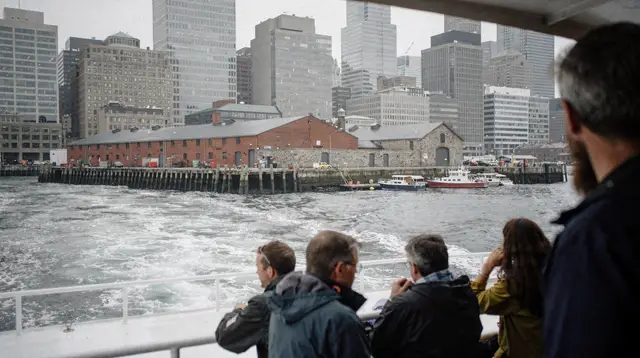
Speedboat and jet ski rides on Boston Harbor
What is a Boston Harbor speedboat or jet ski ride actually like?
It is a short, high-speed run out into Boston Harbor, usually passing close to the Harbor Islands with views back at the downtown skyline and the working port. It runs only in warmer months, with exact dates set by each operator.
What a high-speed harbor ride actually involves
Boston has a handful of operators running fast boats and guided jet skis out of the harbor, and they are a different product from the sightseeing cruises that dominate the waterfront. Instead of a slow loop past the Boston Harbor Islands with narration, the point here is speed: sharp turns, spray over the bow, and a short, adrenaline-focused run rather than a leisurely tour. Some operators run enclosed thrill boats that bounce and spin through the harbor chop; others run guided jet ski convoys that head out toward open water in a group, following a lead boat or guide.
Both versions cover similar geography. You leave the inner harbor, pass close to some of the Harbor Islands, and get a view of the downtown skyline from the water that’s hard to match from land. Because Boston Harbor is a working port as well as a tourist waterway, routes often run near the shipping channel, giving a closer look at the container terminals and tanker traffic that most visitors never see. None of this is guaranteed on any given trip — routes shift with weather, tide, and traffic in the harbor, and operators adjust on the day.
What ties these rides together is that they’re built around the sensation of speed and spray, not narration or photography stops. If you want commentary on the USS Constitution or the Charlestown Navy Yard, or a slower pass close to the Boston Harbor Islands for photos, a standard cruise or the Harbor Islands ferry is the better match.
Where these rides leave from
Departure points are generally downtown waterfront docks or piers in the Seaport district, both within easy reach of the MBTA. From South Station, it’s a short walk to several Seaport piers, and the Silver Line SL1/SL2 buses run directly through the district. The Red Line to South Station or Downtown Crossing also puts you within walking distance of downtown docks. Because operators sometimes run from more than one location depending on the season or the specific product, always use the exact pier address on your confirmation rather than assuming it matches a dock you’ve seen mentioned elsewhere.
If you’re coming from Logan International Airport, the Silver Line SL1 runs directly from the airport to South Station and is free in that direction, making it a practical way to get to a Seaport departure point without a taxi.
If you’re connecting from elsewhere on the T, a CharlieCard covers the fare on both the Silver Line and Red Line — around $2.40 a ride in 2026, with transfers folded into a two-hour window, though it’s worth checking mbta.com since fares move over time. One thing worth planning around: the T doesn’t run around the clock. Lines stop overnight and start up again in the morning, so a late-afternoon or evening booking near closing time is worth double-checking against the current schedule rather than assuming a train or bus will be running when you’re ready to head back.
Season: this only runs when the water is warm enough
This is a strictly seasonal activity. Boston Harbor is cold enough outside the warmer months that speedboat and jet ski operators suspend service entirely — there is no winter version of this ride the way there is a winter version of a museum visit. The operating window generally runs from spring into early fall, roughly overlapping with Boston’s summer season, but the exact start and end dates shift year to year and operator to operator depending on water temperature, insurance requirements, and demand. If you’re planning a trip specifically around this activity, check the operator’s current schedule before booking anything else, rather than assuming a date on the calendar will work.
Within the season, expect more sailings and more availability in peak summer (June through August) than in the shoulder weeks of spring or early fall. Weather cancellations are also more common for these rides than for a standard sightseeing cruise, since wind and chop affect both comfort and safety at speed — operators typically hold the right to cancel or modify a route on short notice.
| Factor | What to expect |
|---|---|
| Season | Spring through early fall; suspended in winter |
| Peak availability | June to August |
| Departure area | Downtown waterfront or Seaport docks |
| Getting there | Silver Line, Red Line, or on foot from Downtown |
| Ride format | Enclosed thrill boat or guided jet ski convoy |
| Duration | Short compared to a standard harbor cruise |
Who these rides are for — and who they aren’t for
These are not gentle activities. Thrill boats are built to bounce, turn sharply, and throw spray; jet ski tours involve operating or riding a personal watercraft at speed in open water, usually as part of a guided group. Operators generally set a minimum age and some baseline physical expectations for participants, since the ride involves sudden motion and exposure to cold spray even in summer. Exact requirements — minimum age, weight limits, pregnancy restrictions, prior experience for jet skis — vary by company and are not standardized across the harbor, so check the specific operator’s listing rather than assuming one company’s rules apply to another.
If you’re traveling with young children, or if anyone in your group has back or neck issues, motion sensitivity, or a preference for a calmer pace, a standard harbor cruise or the Harbor Islands ferry covers similar water and skyline views without the speed. Families looking for something between the two extremes might also consider a Charles River cruise, which stays on calmer inland water.
Guided jet ski tours are generally designed for people without prior jet ski experience — the point is a guide leading a group, not solo open-water riding — but you should still expect a safety briefing and basic handling instruction before departure, and some operators may require a driver’s license or ID.
What to wear and bring
Expect to get wet. Spray off the bow or off a jet ski is part of the experience, not a rare mishap, and even a warm July day feels cooler once you’re moving at speed on open water. Quick-dry clothing works better than cotton, and a strap or clip for sunglasses is worth having since loose items go overboard easily. Some operators provide gear such as splash jackets or life vests as standard; others treat it as optional or extra. Ask what’s included when you book rather than assuming.
Leave anything you can’t afford to lose — phones without a waterproof case, loose jewelry, non-strapped hats — secured or at your accommodation. A few operators offer waterproof phone pouches or GoPro rentals for people who want photos without the risk.
Combining a harbor ride with the rest of downtown Boston
A speedboat or jet ski run is short by design, which leaves most of a day free either side of it. Departures near downtown and the Seaport put you within walking distance of the Freedom Trail and the North End, so a common pattern is to book the ride for late morning or early afternoon and walk over for dinner afterward — the North End concentrates the bulk of Boston’s Italian restaurants in a compact grid of streets a short walk from the waterfront. If you’d rather sit down for a guided meal instead of picking a restaurant cold, the North End Italian food tour covers several stops in one outing.
Travelers stacking several harbor activities into one trip sometimes ask whether a city-wide sightseeing pass is worth adding on top of a booked speedboat ride. It depends on how much else is on the itinerary: passes bundle admission to multiple attractions and can pay off over several days of museum-going and city-wide sightseeing, but a single thrill-boat ride is usually booked and paid for separately regardless. The guide to whether Boston passes are worth it walks through the math in more detail. For a gentler, slower-paced look at the city from the water on the same day, the Boston duck tours cover both land and harbor in one amphibious vehicle, which is a reasonable pairing for a group split between wanting speed and wanting narration.
Booking notes
Boston’s Codzilla high-speed thrill boat is the best-known enclosed thrill-boat option, running out of the downtown waterfront with a route built around sharp turns and spray rather than narration. It’s a different pace entirely from a standard sightseeing cruise, so read the description carefully before booking if you’re expecting commentary on harbor history.
For a calmer but still narrated option covering similar water, the architecture-focused harbor and Charles River cruise with a guide stays at a conventional cruising speed and adds context on the skyline and waterfront buildings you pass. If your group is split between wanting speed and wanting a relaxed ride, it’s worth checking both before deciding.
If none of the fast-boat operators are running on your dates — which happens outside peak summer — the Harbor Islands ferry reaches the same general area at a scheduled, passenger-ferry pace, with the option to get off and explore an island rather than just passing it.
For a completely different angle on the same skyline and harbor, an aerial option like the Boston helicopter skyline tour gives a from-above view of the same waterfront and Harbor Islands that a speedboat covers from the water — see the helicopter and scenic flight guide for how the two compare.
None of these prices are fixed here on purpose — speedboat, jet ski, and helicopter pricing changes by season and by operator, so check current rates before booking.
If you’d rather stay on land — or head south to the water
Not everyone visiting Boston wants a high-speed boat ride, and that’s a reasonable call: a harbor cruise, a walk along the waterfront, or time in the Seaport district covers the same general area at a slower pace. A whale-watching trip or a Harbor Islands ferry ride both put you on the same water at a pace that suits a wider range of travelers, including anyone who decided the spray and speed weren’t for them after reading this far. For visitors who want speed and open water but have more time, the Cape Cod day trip covers beach and water activities on the Cape itself, a different kind of coastal experience from a short harbor run — see the Cape Cod destination guide for the wider area. Cape Cod is roughly a two-hour drive from Boston and is its own distinct destination, not a Boston neighborhood or an extension of the harbor.
If timing doesn’t work out for a speedboat or jet ski ride — whether because of season, weather, or group composition — the Harbor Islands guide and the whale-watching guide both cover other ways to get out on Boston Harbor, at a different pace and on a different schedule.
Speedboat and jet ski rides on Boston Harbor: frequently asked questions
When do speedboat and jet ski rides run on Boston Harbor?
These are warm-weather operations, generally spring through early fall. Boston Harbor gets cold enough in winter that operators suspend service entirely; always confirm the current season and schedule directly with the operator before planning around one.
Where do these rides leave from?
Departures are typically from docks in downtown Boston or the Seaport, both a short walk from South Station or reachable by the Silver Line and Red Line. Check the confirmation email for the exact pier, since operators sometimes use more than one location.
Is there a minimum age or health requirement?
Most operators set a minimum age and some physical requirements, since these rides involve speed, spray, and sudden movement. Requirements vary by company and by whether you are riding as a passenger or driving a jet ski, so check the operator’s own listing for specifics rather than assuming.
What will I actually see on the water?
The route generally runs out past the Harbor Islands with the downtown skyline behind you, and often close enough to the shipping channel to get a look at the working port. Exact routes vary by operator and by conditions on the day.
Do I need experience to ride a jet ski here?
Guided jet ski tours are designed for people without prior experience and typically include a briefing before departure. If you are looking for something calmer, a standard harbor cruise covers similar scenery at a slower pace.
What should I wear?
Expect to get wet from spray, and expect wind chill even on a warm day once the boat is moving. Quick-dry clothing and a way to secure eyewear are worth planning for; ask the operator what they provide.
Can the ride be canceled for weather?
Yes. High-speed harbor rides are more weather-sensitive than a standard sightseeing cruise, since wind and chop affect both comfort and safety. Operators typically have their own rebooking or refund policy for weather cancellations.
What’s the alternative if I want harbor views without the speed?
A standard Harbor Islands ferry or sightseeing cruise covers similar water and skyline views at a much gentler pace, and runs on a more predictable schedule.
Speedboat and thrill rides on Boston Harbor on GetYourGuide
Verified deep-linked GetYourGuide tours. Book through these links and we earn a small commission at no cost to you.
GetYourGuide does not provide a product photo for this activity — the image shows the meeting point, photographed by us.