Boston duck tours: what the amphibious ride actually covers
What is a Boston Duck Tour and when does it run?
It's a tour on a reconditioned amphibious vehicle (a WWII-style 'duck boat') that drives through historic streets near downtown Boston, then enters the Charles River for a stretch on the water. It's seasonal, generally spring through fall, and closed in winter — confirm exact dates with the operator.
What a Duck Tour actually is
A Boston Duck Tour is a ride on a reconditioned amphibious vehicle — a boxy craft built on the pattern of a WWII-era DUKW — that drives through a stretch of historic streets near downtown Boston, then rolls straight into the Charles River and continues as a boat. Nothing else on the things to do list in this city does both halves of that trip on the same vehicle. It’s the single detail that makes the format worth describing on its own, separate from a standard hop-on hop-off route or a classic city trolley.
The vehicle itself is loud, open-sided or open-top depending on the model, and driven by a guide who narrates in character for most of the ride — part historical commentary, part comedy routine aimed squarely at families. That tone is deliberate. If you want a dense, fact-heavy walk through the Revolution, this is not that tour; the Freedom Trail on foot, guided or self-guided, does that job better.
The Original World Famous Boston Duck Tour is the version most visitors book, and it sets the pattern the rest of this guide describes.
Season: it does not run year-round
This is the first thing to get right before booking around a Duck Tour: it’s a seasonal operation, generally running from spring into fall, and it closes for winter. The amphibious vehicles come out of the Charles River for the cold months, and the exact opening and closing dates move from year to year depending on river conditions, ice, and demand. There’s no fixed calendar date to plan against — check the operator’s own site for the current season before you build a day around one, especially if you’re visiting in late fall, winter, or very early spring, when the tour may not be running at all.
If your trip falls outside the season, the water half of this experience isn’t available on any substitute vehicle, but the historic-streets half has plenty of land-based equivalents: a trolley tour, a walking tour of Beacon Hill, or a private guide covering the same ground at your own pace.
Where it starts and where it goes
Departure points sit near the Museum of Science or in the Prudential Center area of Back Bay, depending on the specific route and time slot — check your confirmation for the exact meeting point rather than assuming, since operators run multiple departure locations and shift them across the day.
From there, the route combines two very different environments in one trip:
- The street portion. The vehicle drives through a slice of Boston’s historic core, typically touching areas around Beacon Hill and the North End — narrow, brick-lined streets that were never built with a vehicle this size in mind, which is part of the novelty. The guide narrates landmarks along the way in the tour’s signature half-comic style, rather than the dense, stop-by-stop detail you’d get walking the Freedom Trail itself.
- The water portion. The vehicle enters the Charles River and becomes, for a stretch, an actual boat. From the water, you get a view back toward the Cambridge shoreline — Harvard and MIT sit on the opposite bank — and toward the Esplanade, the riverside park that runs along the Boston side. It’s a short, contained stretch of open water, not a harbor cruise or a trip out toward the islands; for that kind of longer water time, a dedicated Charles River cruise or a harbor cruise covers more distance.
This guide won’t pin down a mile-by-mile route or promise a specific sequence of streets, because operators adjust the exact path with traffic, construction, and river access — a detail worth confirming with the operator rather than trusting a fixed itinerary written here or anywhere else.
Why families gravitate toward this format
The Duck Tour’s core appeal is structural, not just thematic: it’s a vehicle that visibly does something unusual — it leaves the road and floats — and that single fact tends to hold a child’s attention in a way that a standard narrated bus route doesn’t. Guides also lean into audience participation (kids are often handed a duck-call noisemaker and encouraged to use it), which keeps the format interactive rather than purely observational.
That’s a genuine point of difference from a classic trolley tour, which is built around frequent stops and denser historical commentary aimed at adults who want to get on and off at specific sites. Neither format is better across the board — they’re built for different trips. A trolley or hop-on hop-off bus suits a visitor who wants to reach several things to do at their own pace across a day; a Duck Tour suits a family with younger children who want one contained, entertaining hour rather than a flexible multi-stop pass. If you’re weighing the two formats directly, the comparison in trolley vs. self-guided walking covers the trade-offs for the land-only options.
Booking in high season
Boston’s Duck Tours are popular enough, especially in summer and during fall foliage season, that departures can sell out. Walk-up availability is unreliable on weekends and around holidays, and the most convenient time slots — mid-morning and early afternoon — tend to go first. If a specific date matters (a single free afternoon in a short trip, a birthday, a visit timed around foliage), book ahead rather than counting on same-day tickets. This guide won’t quote a price, since fares and season-specific promotions change; check current rates directly through the operator or the booking link above.
What to expect on board
The vehicles are open-sided or open-top on most models, which means weather is part of the experience whether you plan for it or not — a sunny afternoon feels great from an open deck moving through the North End’s narrow streets, but a cold or rainy day is a different ride entirely. Dress for the outdoors rather than assuming a fully enclosed bus. The engine and drivetrain of a converted amphibious vehicle are louder than a standard tour bus too, which is part of why guides lean on a microphone and a broad, comic delivery rather than a quiet, conversational narration style — it has to carry over the noise.
Seating is fixed for the ride: unlike a hop-on hop-off pass, there’s no getting off partway through to explore a stop and catching a later vehicle. That trade-off is worth weighing against a city pass built for flexibility — the Boston CityPASS and Go City comparison covers how those broader passes work, and are Boston passes worth it digs into whether bundling several paid attractions actually saves money for a given trip length.
Other ways to see the city from above street level
A Duck Tour is one of several formats built around covering ground rather than walking it. A scenic helicopter flight shows the same waterfront and skyline from a completely different vantage point, at a different price and pace, for visitors who want the aerial view rather than a street-and-river ride. None of these formats replace each other — they answer different questions about how much of the city you want to cover, on foot, on water, on wheels, or from the air, in a limited amount of time.
If you’re arriving from Logan Airport and building a first day around a Duck Tour, note that both common departure areas — near the Museum of Science and around the Prudential Center — sit within a reasonable transfer from the airport, so it’s realistic to land, check in, and still make an afternoon departure, provided the season is right and you’ve booked ahead.
What it isn’t
A Duck Tour is not a substitute for the Freedom Trail itself. The trail is a 2.5-mile (4 km) walking route connecting 16 historic sites from Boston Common to Bunker Hill, and following its red line on foot is free; a Duck Tour drives past a portion of the same historic district but doesn’t stop at those sites individually, and it’s a paid ride rather than a self-directed walk. It’s also not a harbor cruise — the water segment stays on the Charles River, not Boston Harbor, so if you specifically want to see the harbor islands, a harbor islands ferry or whale watching trip is the right booking instead.
It’s worth being direct about one more thing: this guide describes the format and what to expect from it, not which specific amphibious-vehicle operator is “best.” There’s a long-running Boston tradition around this kind of vehicle, and this page sticks to what the ride actually involves rather than ranking competing operators against each other.
Pairing it with the rest of the day
Because the street portion touches Beacon Hill, it’s an easy half-day to pair with a slower look at that neighborhood afterward — the brick sidewalks and gas lamps around Acorn Street photograph well outside of tour-bus hours, and the Beacon Hill photoshoot guide covers timing and light for that specific stretch. If the river view from the Duck Tour leaves you wanting more time on the water’s edge, the path along the Esplanade is walkable and bikeable in both directions, and the Boston bike tours guide covers renting a bike and riding that riverside route at your own pace, well beyond what the ride’s few minutes on the water can show.
For a family day that also crosses into Cambridge, pairing this with a look at Harvard Yard rounds things out — Cambridge is a separate city from Boston, on the opposite bank of the Charles, reached by the Red Line or a short trip across one of the river’s bridges. Boston: Cambridge City Tour covers that side of the river directly, including the university grounds the Duck Tour only shows from a distance on the water.
If your group is split — some want the Duck Tour’s family-friendly format, others want a denser historical narrative — a classic trolley remains the closest land-only alternative for that second group, with more stops and more time to get off and explore. Old Town Trolley Tour of Boston is the standard version of that format in the city.
And for a visit where nobody wants to share a vehicle with strangers, or where the day needs to bend around nap times, meals, or a specific pace, a private guide covers the same historic ground on your own schedule. Boston: Private Custom Tour with a Local Guide is worth comparing against the fixed-departure formats above if flexibility matters more than the novelty of the splash into the river.
Since the street portion passes through the North End, it’s also an easy tour to bookend with a meal on foot afterward once the vehicle has moved on — the neighborhood’s narrow blocks reward slower exploring than a moving vehicle allows, and the North End neighborhood guide covers what to look for once you’re back on your own two feet. If the departure point lands you near Back Bay instead, the brownstone streets are worth the same treatment — the Back Bay brownstones walking tour covers that side of the route in the kind of detail a moving vehicle simply can’t.
Planning notes
| What | Detail |
|---|---|
| Format | Amphibious vehicle: historic streets, then the Charles River |
| Season | Spring through fall, generally; closed in winter — confirm with operator |
| Typical departure areas | Near the Museum of Science, or the Prudential Center in Back Bay |
| Duration | A little over an hour, combining street and water segments |
| Best suited to | Families with younger children, first-time visitors wanting a quick overview |
| Less suited to | Visitors who want dense historical detail or a full harbor cruise |
| Booking | Advance booking recommended in summer and fall; walk-up is unreliable |
None of the figures above are fixed for every date — departure points, exact duration, and season dates all shift by operator and by year. Treat this table as a planning starting point, and confirm specifics when you book.
Frequently asked questions about Boston’s Duck Tours
Do Boston Duck Tours run in winter?
No. The amphibious vehicles come out of the water for the cold months, and the season generally runs from spring into fall. Exact dates shift year to year with river conditions and demand — check the operator’s site before planning around one, particularly for a trip in late fall or early spring.
Where do Boston Duck Tours depart from?
Departures cluster near the Museum of Science or in the Prudential Center area of Back Bay, depending on the specific tour and time slot. Check your booking confirmation for the exact meeting point, since it can differ by departure time even on the same day.
Is a Duck Tour better than a trolley tour for kids?
For families with younger children, the format tends to hold attention better than a stop-heavy trolley route, mostly because the vehicle visibly leaves the road and floats. A classic trolley still covers more historic detail and more stops for visitors who want that instead.
Do you need to book Boston Duck Tours in advance?
In summer and fall, yes. Departures can sell out on weekends and around foliage season, and walk-up tickets are unreliable. Booking ahead of time is the safer approach if a specific date matters to your trip.
What do you see on the water part of the tour?
The vehicle enters the Charles River and gives a view back toward the Cambridge shoreline and the Esplanade on the Boston side. It’s a short stretch of open water, not a full harbor cruise out toward the islands.
Are Boston Duck Tours accessible for wheelchair users?
Accessibility depends on the specific vehicle and on individual mobility needs, since boarding an amphibious vehicle differs from boarding a standard tour bus. Contact the operator directly before booking if this matters for your trip.
How long does a Duck Tour last?
Tours generally run a little over an hour, combining the street segment and the time on the river. Confirm the exact duration for your specific departure when you book, since operators do adjust routes.
Hop-on hop-off bus tours of Boston on GetYourGuide
Verified deep-linked GetYourGuide tours. Book through these links and we earn a small commission at no cost to you.
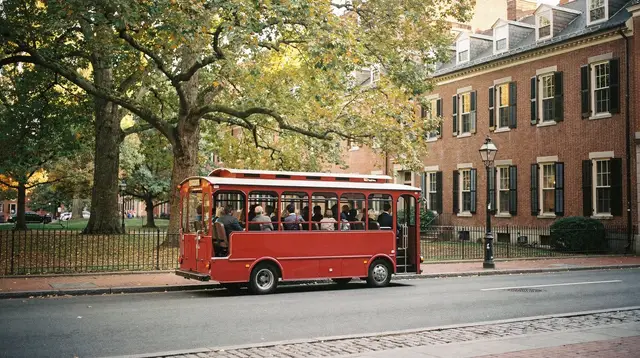
GetYourGuide does not provide a product photo for this activity — the image shows the meeting point, photographed by us.