Boston to Cambridge by electric bike: crossing the Charles to Harvard and MIT
Is an electric bike a good way to get from Boston to Cambridge?
Yes. The Charles River crossing and the streets on both banks are flat to gently rolling, and electric assist removes the fatigue of urban stop-and-go riding, so you can combine Boston, a pedestrian or cyclist bridge, and a stop at Harvard Yard or MIT in one outing without arriving worn out.
Why an e-bike makes sense for this particular crossing
Boston and Cambridge sit on opposite banks of the Charles River, and that single fact shapes almost every decision on this ride. Cambridge is not a Boston neighborhood — it’s its own city in Middlesex County, reached by crossing the water on a bridge, by the T, or on foot. The distance between downtown Boston and Harvard Square is modest, somewhere in the range of 3 to 4 miles depending on your starting point and which bridge you take, which is short enough to walk in an hour or two but long enough that doing it twice in a day, plus wandering a university campus in between, adds up to real mileage.
That’s the gap an electric bike closes. The terrain itself isn’t the problem: the riverside paths on both banks are close to flat, and the bridges rise only gently. The fatigue comes from repeated starts and stops at intersections, from riding against a headwind on an exposed bridge deck, and from covering the return trip after you’ve already spent a few hours walking around Harvard Yard or the MIT campus. Pedal assist takes the edge off all three without turning the ride into something that requires cycling fitness. You still pedal, you still choose your route, but the motor absorbs the parts of an urban ride that otherwise wear people down — which is the honest case for e-bikes here, not speed for its own sake.
The route: Boston, the river, Cambridge
Most riders start somewhere along the Boston side of the Charles River, often near the Esplanade, and pick up one of the several pedestrian and cyclist bridges that cross into Cambridge — the exact bridge varies by starting point and by which tour operator you’re with, since a few options exist along this stretch of river. The crossing itself is short, usually just a few minutes, but it’s the most exposed part of the ride: open to wind, no buildings for shelter, and shared with pedestrians and joggers, so expect to slow down rather than treat it as a sprint.
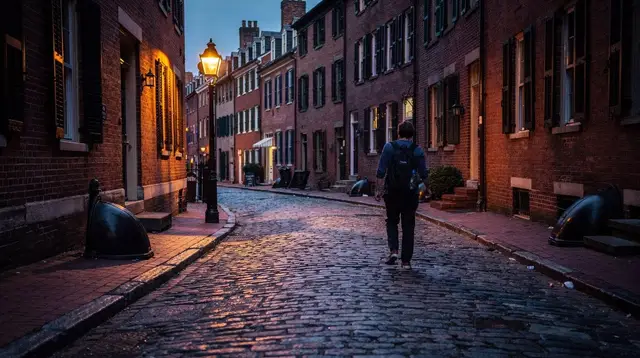
Once across, the character of the ride changes. Cambridge’s riverside paths and side streets near the water are calmer than central Boston traffic, and the route typically works its way toward Harvard Yard first — Harvard University’s original campus, founded in 1636, with its cluster of brick buildings and open lawns that has functioned as the symbolic center of the university for centuries. From the Yard, it’s a short ride or walk into Harvard Square, the commercial hub around the Harvard T station, known for its density of bookstores, cafés, and street performers, though it has thinned out over the past decade as national chains have replaced some of the independent shops that gave the square its reputation.
MIT’s main campus sits closer to the river crossing than Harvard does, clustered around Kendall Square, and some riders stop there instead of, or in addition to, Harvard. A single outing covering both campuses is possible but makes for a fuller afternoon rather than a quick loop — worth planning for if you want to see both, rather than assuming you’ll fit it in as an afterthought.
Why electric assist over a regular bike, specifically here
Boston and Cambridge are both bikeable cities, and plenty of visitors do this same route on a standard rental bike without any trouble. The case for electric assist is about combining distances and destinations in one outing rather than about the terrain being difficult. A regular bike handles the flat riverside paths fine. Where assist earns its cost is in the accumulated total: the ride out, time spent walking Harvard Yard or MIT’s campus (bikes generally aren’t ridden through the Yard itself), possibly a stop at a café in Harvard Square, and then the ride back — all in the same afternoon, without the return leg feeling like a chore because you’re tired.
It also matters for riders who aren’t confident merging with Boston traffic on the approach to a bridge. Being able to accelerate cleanly at an intersection, rather than laboring to get up to speed, reduces the amount of time spent exposed in a traffic lane. That’s a safety consideration as much as a comfort one.
The MBTA alternative: what the Red Line actually offers
The most direct comparison isn’t another bike route — it’s the T. The Red Line, one of the MBTA’s five color lines, runs straight from downtown Boston through Kendall/MIT and on to Harvard station, and it’s the fastest way to get from one to the other in raw travel time: a matter of minutes underground versus perhaps 20 to 30 minutes of riding, depending on pace and stops. If your only goal is to reach Harvard Square or the MIT campus as efficiently as possible, the Red Line does that better than any bike.
What the T doesn’t give you is the crossing itself. Riding or walking over the Charles River on a bridge, with the Boston skyline behind you and Cambridge ahead, is a different experience than watching tunnel walls go by, and it’s part of why people choose the bike route in the first place — not because it’s faster, but because the river crossing is the point, not an obstacle to get past. The T also requires a CharlieCard, CharlieTicket, or contactless payment, at a standard fare in the range of 2.40 USD per ride as of 2026 with transfers included in a two-hour window — check mbta.com, since this fare changes periodically — and it doesn’t run 24 hours a day, so late-evening options are more limited than on a bike. Neither mode is objectively better; they suit different priorities, and plenty of visitors do the ride one way and take the Red Line back.
Seasonality: when this ride actually works
Late spring through fall — roughly May to late October — is the comfortable window for this route. Temperatures are manageable, daylight lasts into the evening, and the riverside paths are at their most pleasant, especially once New England’s fall foliage starts turning in late September. Summer works too, though the exposed bridge crossings can feel hot and humid at midday, with little shade to retreat to.
Winter is the honest weak point. The bridges over the Charles River catch a cold, steady wind with nothing to block it, and that wind is noticeably harsher than conditions on either bank. Riders who do this route in December through February should expect the crossing itself to be the most uncomfortable few minutes of the outing, regardless of how mild the rest of the day feels. It’s not that the ride becomes impossible — some operators run outings year-round — but comfort drops considerably, and it’s fair to say most visitors who want a relaxed version of this trip should aim for the warmer half of the year instead.
What to expect from a guided outing versus riding independently
Guided e-bike tours in this category typically supply the bike, a helmet, and a route that’s been worked out in advance to avoid Boston’s more chaotic traffic segments, along with some campus context once you reach Harvard Yard or MIT — useful if you don’t already know which buildings matter or why. That guidance is worth something if you’re unfamiliar with the city, uncertain about which bridge to take, or simply want the planning done for you.
a Boston-to-Cambridge guided e-bike tour that crosses the Charles River and stops in Harvard Yard is the most direct match for the route described here.
If your interest leans more toward the campuses themselves than the ride, a walking-focused option covers the ground differently: a guided walking tour that takes in both Harvard and MIT in one outing, without the bike component, works well for visitors who’d rather concentrate on the buildings and history than on covering distance. There’s also a student-led walking tour of the MIT campus for anyone who wants an insider’s read on the institute specifically, separate from Harvard.
Riding independently, on a rented or bike-share bike, costs less and gives you full control of pace and stops, but it puts the route-finding and traffic judgment on you. Either approach is reasonable; the choice comes down to how much you value local knowledge versus flexibility and price.
Practical notes before you go
Bring layers even in the warmer months — the bridge crossing is windier than the streets on either side, and temperature can drop noticeably once you’re over open water. A light jacket that packs down easily is more useful than it sounds. Check the specific bridge and route with whichever operator or rental service you’re using, since a few crossing points exist along this stretch of the Charles River and the preferred one can shift with construction or seasonal path closures.
Bikes generally aren’t ridden through Harvard Yard itself — expect to park or walk your bike once you’re inside the historic core, since it functions as a pedestrian space. The same is broadly true of the more crowded parts of Harvard Square. Budget time for this on-foot portion separately from the riding time, rather than assuming the whole outing is spent in the saddle.
If you’d rather document the crossing and the campus stop than just ride through it, a guide to Harvard Yard and Cambridge photo spots covers where the light and the architecture work best, largely on foot rather than from a bike. And for a broader view of cycling options around the city before you commit to this specific crossing, the Boston bike tours guide lays out how this route compares to other city-side options, including the Cape Cod Rail Trail cycling guide for a very different, car-free ride outside the city entirely.
Getting oriented in Cambridge once you arrive
Cambridge rewards a little context before you start riding around it. The Cambridge and Harvard Square neighborhood guide covers the layout around Harvard Square in more depth, including which streets are worth a slow ride versus which are better walked. For a first-time visitor trying to decide how much of Cambridge to prioritize inside a short Boston trip, the Harvard and MIT campuses in one day itinerary gives a fuller sense of what a full day on both campuses looks like, with or without a bike.
If your Cambridge stop is part of a longer Boston visit, it’s worth checking it against the broader shape of your trip — the two-day Boston highlights itinerary and the three-day first-visit Boston itinerary both note where a Cambridge afternoon fits without crowding out the Freedom Trail or Back Bay on the Boston side. For getting around Boston itself without relying on a car, the guide to getting around Boston without a car puts the T, walking, and cycling options side by side.
Who this ride suits, and who might prefer another option
This route suits visitors who want to see both Boston and Cambridge in a single outing, who don’t mind moderate physical activity, and who are comfortable riding a bike on city streets and shared paths, even with electric assist smoothing out the harder parts. It’s less suited to anyone uneasy about cycling in traffic at all, in which case comparing the Red Line and walking or trolley options makes more sense than forcing a bike route that won’t feel relaxed.
For a small group that wants the history and architecture explained without managing bikes at all, a private guided option is worth considering instead — the Boston private guided tour guide covers how small-group, custom-paced tours work in and around the city, including options that extend into Cambridge. There’s also a student-led walking tour focused specifically on Harvard’s campus for visitors who want the Harvard side covered in more depth than a combined Harvard-and-MIT outing allows.
Whichever way you choose to cross the Charles River, the two things worth remembering are that Cambridge is genuinely a separate city, not a Boston district, and that the bridge crossing is the part of the trip most affected by weather and wind — plan the rest of the day around that, not the other way around.
Bike, Segway and pedicab tours around Boston on GetYourGuide
Verified deep-linked GetYourGuide tours. Book through these links and we earn a small commission at no cost to you.
GetYourGuide does not provide a product photo for this activity — the image shows the meeting point, photographed by us.