Kayaking and paddleboarding the Charles River
Can you kayak or paddleboard the Charles River in Boston?
Yes. Rental operators run along the Esplanade on the Boston side and near the MIT and Harvard campuses on the Cambridge side, generally from April or May through October. It's the easiest outdoor break in the city — a short walk from downtown, no car and no full day required.
Why this is the easiest outdoor break in Boston
Most of the nature breaks on a Boston itinerary ask for a real commitment: a ferry to the Boston Harbor Islands, a half-day boat out to watch for whales, a Commuter Rail ticket to the Cape Cod coast. The Charles River asks for none of that. Launch points sit a short walk from downtown on the Boston side and from Harvard Square and MIT on the Cambridge side, no car, no transfer, no full day carved out of the trip. Paddle for an hour, dry off, and you’re back on the Freedom Trail or in a museum by early afternoon.
That’s the case for including it here: not that it’s the most dramatic activity in the guide, but that it’s the one with the lowest cost in time. If a rainy forecast or a packed schedule has already ruled out the harbor islands or whale watching, the river is what’s left standing.
The Charles separates Boston from Cambridge, curling for about 80 miles from Hopkinton to Boston Harbor, though the stretch that matters for paddling is the calm basin between the Museum of Science dam and the Boston University Bridge — flat water, no current to fight, bordered on both sides by parkland.
That flatness is the point. The dam near the Museum of Science separates the river’s freshwater basin from the tidal water of Boston Harbor downstream, which is why paddlers on this stretch never deal with tidal pull or harbor chop — the basin behaves more like a long, narrow lake than a river in the usual sense. It’s a different kind of water experience from a harbor cruise or a whale-watching trip out to open water: slower, quieter, and contained within a couple of miles of shoreline that you can see from end to end.
Boston side or Cambridge side: it changes the view
The river has two effective launch zones, and which one you pick changes what’s in front of you more than it changes the paddling itself.
The Esplanade, Boston side. Rental points along this stretch put you paddling with the Back Bay skyline as a backdrop — the brownstone rooflines give way to the taller towers further along Storrow Drive. This is the side most visitors default to, since it’s closest to Back Bay and the Public Garden, and it puts you near Community Boating’s docks, where the sailboats that share this stretch of river are based.
Near MIT and Harvard, Cambridge side. Launch points closer to the university campuses put the MIT dome in view instead, along with the newer riverside buildings on that bank. It’s a different frame entirely — less skyline, more campus — and it’s the more convenient pick if you’re already spending the day in Cambridge around Harvard Yard or Kendall Square.
Neither side requires a car to reach. Both are within walking distance of a Red Line stop or the downtown core, and both put you on the same open stretch of water — paddlers from either bank end up sharing the same basin.
| Launch side | What’s in view | Nearest landmarks |
|---|---|---|
| Boston (Esplanade) | Back Bay skyline, Storrow Drive tree line | Public Garden, Community Boating docks |
| Cambridge (MIT/Harvard) | MIT dome, campus riverfront | Kendall Square, Harvard Square |
For canoe and pedal boat rentals specifically, a canoe rental point on the Charles River in Newton sits further upstream from the city basin, in quieter, more wooded surroundings — worth knowing about if the downtown stretch sounds too busy. The same operator also runs pedal boat rentals on the same stretch of the Charles for a lower-effort option than paddling.
Getting there without a car
Both launch zones sit close enough to the MBTA’s T that a car is never the practical choice. The Cambridge side is a short walk from the Red Line’s Kendall/MIT or Harvard Square stations, depending on which campus you’re launching near. The Boston side is reachable on foot from the Green Line’s Arlington or Copley stops, or from anywhere in Back Bay, since the Esplanade runs the length of the neighborhood’s river-facing edge.
A single T ride currently runs in the range of 2.40 USD on a CharlieCard, with transfers included inside a two-hour window — worth checking against current MBTA fares before you go, since pricing changes. Anyone spending more than a day or two in the city is better off reading the guide to getting around Boston without a car first, since the T, the Commuter Rail, and Bluebikes bike share cover most of what a rental car would otherwise be needed for.
Season: spring through fall, not a winter activity
This is the fact worth repeating clearly, because it’s the one detail most likely to cause disappointment: the Charles River paddling season is strictly seasonal, generally running from April or May through October, and it depends on the weather each year rather than a fixed calendar date. Outside that window, rental operators close for the season and there is no cold-weather paddling option on this stretch of river.
If your trip falls in November through March, cross this off the list entirely and look instead at the Museum of Science or a walk along the Esplanade, both of which work in any season. Trying to plan a river paddle around a winter visit to Boston will only end in a closed rental kiosk.
Within the season, early and late months (April-May, September-October) tend to be quieter than peak summer, though water and air temperature are milder in midsummer. None of the operators publish a single fixed opening or closing date — always check with the specific rental point before building a day around it.
The late-September and October window overlaps with the region’s fall foliage season, when the trees lining both banks of the basin turn before the leaves peak further out in New England — a paddle on the river during that stretch pairs the color change with a view most visitors only see from the Esplanade path on foot. If your trip lands on Patriots’ Day, the third Monday in April, keep in mind that it also happens to be Boston Marathon day, which affects road closures and crowds across the city even though it doesn’t close the river itself.
How long it actually takes
Sessions are typically sold by the hour, with some operators offering multi-hour blocks or half-day rentals. This guide won’t put a specific price or exact duration on it, because both vary by outfitter and change through the season — confirm directly with whichever rental point you choose. What matters for planning purposes is the order of magnitude: this is an hour-to-a-few-hours activity, not a half-day or full-day one, which is exactly what makes it easy to slot into a morning or afternoon without restructuring the rest of the day.
For a different way to see the same river without paddling it yourself, a sightseeing cruise on the Charles River covers similar water from a boat, and a guided architecture cruise covering the harbor and the Charles River pairs the same stretch of water with commentary on the skyline you’d otherwise be paddling past.
What to bring and what to expect
What you need on the day depends on the outfitter, since equipment, requirements, and any age or weight restrictions vary by rental point — the specific operator’s site is the source to check before you go, not a general rule. As a starting point, plan to get wet: paddling and boarding both come with some splash, so clothes that can handle water and shoes that can get wet are a safer bet than anything you’d mind ruining. Sun exposure on open water is stronger than it feels on land, even on a mild day, so sun protection is worth packing regardless of season.
Weather is the other variable. Because the season already runs on a loose, weather-dependent calendar, a single rainy or high-wind day can also close an individual rental point even in the middle of summer — this is common enough with any outdoor water activity that it’s worth having a backup plan for the day, such as the Museum of Science a few minutes’ walk away, rather than treating a paddle as guaranteed until you’re standing at the dock.
Sharing the water: sailboats, not danger
The Charles is a working recreational river, not an empty basin. Community Boating, based on the Boston side near the Esplanade, rents sailboats on the same stretch of water, and rowing shells from university and club boathouses use it too, particularly in the early morning and late afternoon. None of this makes the river dangerous — it’s flat, sheltered water, not open ocean — but it calls for the same basic awareness any shared waterway requires: watch for sailboats changing direction, since they have less maneuverability than a kayak or paddleboard, and give rowing shells a wide berth, since rowers face backward and can’t always see what’s ahead of them.
Ask your rental operator about conditions and any restrictions on the day — some stretches near bridges or boathouses may have local rules that aren’t obvious from the bank.
Pairing it with the rest of the day
Because the whole activity takes an hour or two rather than a full day, it pairs naturally with things already on a downtown itinerary rather than requiring its own dedicated day.
With the Museum of Science. The museum sits right at the river’s edge near the Charles River Dam, an easy walk or short T ride from either the Boston or Cambridge launch points. Paddle in the morning, dry off, and walk straight into the exhibits — see the Museum of Science guide for tickets and hours, which are payable and worth checking in advance since pricing and planetarium showtimes change.
With the Esplanade and Public Garden. If paddling is the whole plan for the day, follow it with a walk along the Esplanade itself — the same green space that lines the Boston-side launch points continues toward the Public Garden and Boston Common, both free to enter. The Public Garden and Emerald Necklace guide covers that walking route in more detail.
With Cambridge. Launching from the MIT or Harvard side makes it easy to continue straight into an afternoon around Harvard Square — bookstores, the Harvard Museum of Natural History, or simply walking through Harvard Yard, none of which requires backtracking across the river.
With downtown and the Freedom Trail. From the Boston-side launch points, it’s a walkable continuation into Beacon Hill and the start of the Freedom Trail, which begins nearby at Boston Common. It’s a natural half-day combination for a first visit: water in the morning, history on foot in the afternoon, without a T ride or transfer in between.
Other ways to see the water
Paddling is only one way to spend time on or near Boston’s water, and it’s worth knowing where it fits next to the others. A Boston Duck Tour covers both land and the harbor from an amphibious vehicle, which is a different kind of water access entirely — sightseeing rather than paddling, and it doesn’t touch the Charles basin the way this guide describes. A hop-on-hop-off trolley or a general harbor cruise covers the harbor itself rather than the calmer river basin, and trades the physical activity of paddling for a seat and a guide’s narration. None of these substitute for actually being on the water yourself, but they’re worth comparing against if the point of the day is seeing Boston from the water rather than getting some exercise on it.
What this activity is not
To be clear about what the Charles River does and doesn’t offer: it is not a wilderness experience, not a substitute for the Boston Harbor Islands (which involve open water, a ferry, and a different scale of scenery), and not comparable to whale watching, which requires a boat trip out to Stellwagen Bank and a multi-hour time commitment. The Charles is an urban river running through a dense city — the value here is convenience and a change of pace, not remoteness. Visitors expecting a quiet nature escape away from the city should look further afield; visitors who want fresh air and a different view of Boston without giving up a day will find exactly that.
Charles River kayaking and paddleboarding: FAQ
Whale watching and outdoor tours around Boston on GetYourGuide
Verified deep-linked GetYourGuide tours. Book through these links and we earn a small commission at no cost to you.
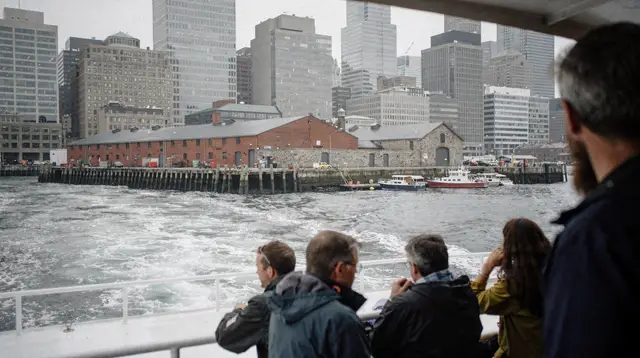
GetYourGuide does not provide a product photo for this activity — the image shows the meeting point, photographed by us.