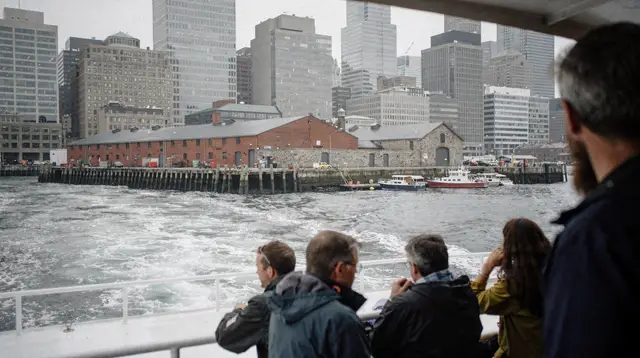
Harbor cruise or whale watching: which one fits your day
Should I book a harbor cruise or a whale watching trip from Boston?
A harbor cruise stays inside Boston Harbor, runs shorter and calmer, and suits most schedules and stomachs. A whale watch heads well offshore into open water for several hours and involves real swell, with no guarantee of seeing whales on a given day.
Two very different boats
Both trips leave from the same stretch of waterfront, and both put you on a boat looking at water, but that’s roughly where the similarity ends. A harbor cruise stays inside Boston Harbor, a sheltered body of water dotted with the Boston Harbor Islands, working piers and a skyline that looks different from the water than it does from the Freedom Trail. A whale watch is a different kind of trip entirely: it’s built to reach open-ocean feeding grounds well off the Massachusetts coast, which means a longer run in open water before the boat even gets near where whales are typically found.
Neither trip is objectively better. They answer different questions. A harbor cruise answers “I have a couple of hours and want to see the city and the water.” A whale watch answers “I want a shot at seeing wild whales, and I’m willing to spend a longer day on open water for the chance.” This guide is about matching the trip to your time, your tolerance for motion, and what you actually want out of the afternoon — not about ranking one as more worthwhile than the other.
If you’re weighing time on the water against everything else Boston has to offer, how many days in Boston and Boston Harbor Islands are useful companion reads before you commit an afternoon to either option.
Where each trip actually goes
A harbor cruise operates within Boston Harbor itself. Depending on the specific sailing, that can mean a loop past the Charlestown Navy Yard and the USS Constitution, a pass by the working Seaport, or views of a few of the harbor islands from the water. The harbor is naturally more protected than the open Atlantic, so the ride tends to be steadier, and the scenery stays close — the city skyline is rarely far from view.
A whale watch is a transit trip first and a wildlife trip second. The boat has to cover real distance to reach the offshore banks where whales feed, most commonly discussed in connection with Stellwagen Bank, a National Marine Sanctuary off the Massachusetts coast. That means a meaningful stretch of the trip is simply getting out and back, with the actual watching happening once the boat is well beyond the harbor and into open water. If you’re expecting something close to a harbor loop with whales added on, it helps to reset that expectation before you book.
For a boat-based route through Boston that stays closer to downtown scenery, the Charles River cruise and sunset cruise options sit at the calmer end of the spectrum, similar in character to a standard harbor cruise.
Motion, swell and who should think twice
This is the practical crux of the comparison, and it’s worth being direct about it. Boston Harbor is sheltered by its geography — the islands, the inner harbor’s shape and its distance from the open Atlantic all reduce swell. A harbor cruise moves through water that’s generally calm by comparison, though wind and weather can still make any day choppier than another.
A whale watch is a different physical experience. Once the boat leaves the harbor and heads into open water, real ocean swell becomes a normal part of the trip, not a rare exception. That swell is exactly what makes the trip work — those offshore waters are where whales actually feed — but it also means motion sickness is a legitimate concern for a meaningful share of passengers, especially those without much boating experience. If you know you’re sensitive to motion, that’s a real factor to weigh, not something to dismiss.
Neither trip is inherently the “safe” choice and the other the “risky” one; they’re simply built around different amounts of open water time. A short harbor loop and a multi-hour offshore run are not interchangeable in how they feel on the body, and it’s worth being honest with yourself about which one fits before you buy a ticket.
| Harbor cruise | Whale watch | |
|---|---|---|
| Waters covered | Boston Harbor (sheltered) | Harbor plus open ocean feeding grounds |
| Typical motion | Calmer, harbor conditions | Real open-water swell is normal |
| Wildlife | Not the focus | Possible, never guaranteed |
| Seasonal window | Wider, still weather-dependent | Narrower, tied to whale presence |
| Good fit for | First-timers, families with young kids, motion-sensitive travelers | Travelers comfortable with longer open-water time |
Seasonality: two different kinds of “it depends”
Both activities are weather-dependent, but they depend on the weather — and on nature — in different ways.
A harbor cruise is a fair-weather activity that generally runs across a wider seasonal window than whale watching, since it doesn’t depend on animals being present, only on conditions being suitable for a boat to operate comfortably on the harbor. That said, it’s still an outdoor, weather-sensitive trip: expect some sailings to pause or shift in the coldest stretches of winter or during storms, and always confirm current schedules with the operator rather than assuming year-round service.
Whale watching depends on something a schedule can’t control: where the whales actually are. Sightings near the Massachusetts coast are commonly reported from spring through fall, broadly speaking, but that’s a pattern of animal behavior, not a guarantee tied to any specific date. Operators set their sailing calendar around when whales are typically present, and even within that window, individual trips vary — some days bring closer or more frequent sightings than others, and some don’t. No responsible operator, and no honest guide, will promise you’ll see a whale. What a whale watch guarantees is the trip out to where whales are known to feed; what happens once you’re there is genuinely out of anyone’s hands.
If you’re timing a visit around New England’s better-known seasonal draws, best time to visit Boston and fall foliage cover the broader seasonal picture beyond the water.
Time on the water
A harbor cruise is generally the shorter commitment of the two, which makes it easier to slot into a half-day that also includes the Freedom Trail or a walk through the North End. A whale watch takes a bigger bite out of your day, since a meaningful share of the trip is transit time to and from the feeding grounds, on top of the time actually spent looking for whales once there. If you’re building a tight itinerary and only have a couple of free hours, that alone may settle the choice — check current sailing times directly with the operator before planning the rest of your day around either option.
Building either trip into a longer day
Because a harbor cruise is the shorter of the two, it slots more easily into a packed day that also covers land-based sights. Pair it with a Freedom Trail walk in the morning and dinner in the North End, and you’ve covered water, history and food without the day feeling rushed. A whale watch asks for more give in the schedule — plan it as the anchor activity for that day rather than one stop among several, since the transit time out to the feeding grounds and back eats into whatever else you had planned.
If you’re mapping out a full visit rather than a single afternoon, two days in Boston and three days for a first visit both show where a boat trip fits relative to the rest of a typical stay, including how much time realistically remains for a longer offshore excursion versus a shorter harbor loop.
Other ways to spend time on Boston Harbor
Neither a harbor cruise nor a whale watch is the only way to get out on the water. The Boston Harbor Islands ferry is a practical middle ground: it’s a working ferry rather than a narrated cruise, it’s seasonal, and it actually lands you on an island instead of just passing views of one from the deck. Travelers building a full day around the islands can look at the Boston Harbor Islands day itinerary for how that fits together.
If what you actually want is a general overview of the city rather than time specifically on the water, a duck tour covers both land and harbor in one trip, and a hop-on hop-off trolley or trolley-vs-walking comparison are worth a look if the water itself isn’t the main draw. None of these replace a harbor cruise or a whale watch directly, but they’re useful to rule out before committing an afternoon to either one.
Who each trip suits
A harbor cruise tends to work well for first-time visitors who want a low-commitment look at the city from the water, for families with younger children who won’t sit still through a long offshore run, and for anyone who gets queasy on boats but still wants time on the harbor. It’s also a reasonable pick if you’re short on time and want to fold a boat trip into a half-day that includes other sights.
A whale watch suits travelers who specifically want a shot at seeing wild whales and are comfortable trading a longer day and real open-water motion for that chance. It rewards patience and a realistic mindset — you’re heading out to where whales are known to be, not to a guaranteed show.
Families should also see family outdoor activities in Boston for a broader set of options sorted by how physically demanding or predictable they are, which is useful context beyond just these two boat trips. Travelers navigating either trip with mobility needs should check accessible tours and cruises in Boston before booking, since boarding procedures, deck access and seating vary by boat and by trip length — a longer offshore whale watch with swell is a harder environment to navigate than a shorter harbor loop, so it’s worth confirming specifics directly with the operator.
Booking either option
Several harbor cruise formats operate out of Boston, from scenic daytime sailings to evening options. If you want a classic offshore search, the Boston whale watching cruise covers the standard format described above. For a calmer evening option that stays on the harbor, the sunset yacht cruise on Boston Harbor and the downtown harbor sailing cruise both keep you within the sheltered inner harbor rather than heading offshore. Travelers who’d rather see the skyline after dark can look at the Boston Harbor moonlight cruise, another inner-harbor sailing with calmer conditions than an open-water trip.
Whale watches also depart from outside the city — the Plymouth day trip guide covers an alternative departure point some travelers use instead of a Boston-based sailing, which can mean a shorter run out to the feeding grounds depending on conditions that day.
A short note on honesty
It’s tempting for any guide to oversell a wildlife trip, but that’s not useful to you. Nobody can promise a whale sighting, and no legitimate operator will claim otherwise — what they sell is a trip to where whales are known to feed, at a time of year when they’re commonly present, run by a crew that knows the waters. That’s a meaningfully different promise than “you will see a whale,” and it’s worth going in with that distinction clear. The same honesty applies to comfort: if you’re prone to seasickness, a multi-hour open-water trip is a real physical experience, not a minor detail, and it deserves an honest answer before you book rather than after you’re an hour offshore.
Harbor cruise vs whale watching: frequently asked questions
Is a whale watching trip rougher than a harbor cruise?
Generally yes. A harbor cruise stays in the relatively protected waters of Boston Harbor. A whale watch travels out to open-ocean feeding grounds, where swell is a normal part of the trip, not an exception.
Will I definitely see whales?
No operator can promise that. Whales are wild animals following food, not a schedule, so sightings vary by day even within the season when they’re commonly present.
When is whale watching season near Boston?
Whale activity off the Massachusetts coast is typically reported from spring through fall, with animal presence driving the actual schedule rather than a fixed calendar. Check the operator’s current sailing dates before planning around it.
Can I do a harbor cruise in winter?
Some harbor cruises run on a wider seasonal window than whale watching, but it’s still a fair-weather activity, and outdoor or scenic sailings are more likely to pause in the coldest months. Confirm current schedules before booking.
I get seasick easily. Which should I choose?
A harbor cruise is the lower-risk choice: shorter time on the water and calmer, more sheltered conditions. If you still want to try whale watching, consider common seasickness precautions and sit toward the center of the boat, where motion is usually felt less.
Are the Boston Harbor Islands part of either trip?
Some harbor cruises pass near or include views of the Boston Harbor Islands as part of a scenic route. A whale watch is a separate, purpose-built trip out to feeding grounds and isn’t built around the islands.
Which is better for young kids?
A harbor cruise is usually the easier fit for young children, thanks to the shorter time on the water and calmer conditions. A longer offshore whale watch with real swell is harder for younger kids and for anyone prone to motion sickness.
Do I need mobility considerations for either trip?
Both involve boarding a boat and moving around on deck, which can be harder for reduced-mobility travelers, especially on a longer offshore trip with swell. Check accessibility details directly with the operator before booking.
Boston tours worth comparing on GetYourGuide
Verified deep-linked GetYourGuide tours. Book through these links and we earn a small commission at no cost to you.
GetYourGuide does not provide a product photo for this activity — the image shows the meeting point, photographed by us.