A neighborhood people actually live in
Beacon Hill is one of the few parts of Boston that looks the way postcards suggest it should: narrow brick sidewalks, gas-style lamps, bowfront townhouses from the 1800s, and a gold dome visible from most of the hill. It sits directly north of Boston Common, the oldest public park in the country, and slopes down on its western side toward the Charles River Esplanade. It is compact enough to see on foot in an hour, and most people combine it with a longer walk along the Freedom Trail, since the Massachusetts State House is one of the trail’s 16 official stops.
The one thing worth saying plainly before anything else: Beacon Hill is residential. The brick rowhouses on Acorn Street, Chestnut Street, and Mount Vernon Street are private homes, several of them worth seven figures, and their owners deal with a steady stream of visitors on their doorstep every day. Keep voices down, don’t block doorways for photos, and treat the private lanes with the same manners you’d want on your own street. None of this costs anything or requires a ticket — it’s simply the price of a neighborhood that has kept its 19th-century character instead of turning into a themed district.
Acorn Street
Acorn Street is a single block of cobblestones lined with small brick rowhouses, built in the early 1800s originally for coachmen working for the wealthier households on the hill. It’s frequently cited as one of the most photographed streets in the United States, and on a weekend afternoon it can feel that way — a line of people waiting to take the same photo other people are taking. It is a public street with no admission fee and no gate; nobody sells tickets to walk it, and any claim otherwise is wrong.
A few practical notes that make the visit better:
- Go early. Before 9 a.m. the street is close to empty, and the light comes in low along the brick.
- Mind the cobblestones. They’re uneven and become genuinely slippery with ice or wet leaves — this is the one real seasonal hazard on the hill.
- Stay off the front steps. Residents’ stoops aren’t photo props.
- Fall and spring give the best light and the fewest crowds outside of the early-morning window; summer weekends are the busiest.
For a longer photography circuit that pairs Acorn Street with the hill’s other photogenic corners, see the Acorn Street and Beacon Hill photoshoot guide.
The Massachusetts State House
The gold dome that anchors views of Beacon Hill belongs to the Massachusetts State House, completed in 1798 and still the seat of the state’s government. The dome itself was originally wood shingle, later copper, and has been gilded in gold leaf since the 1870s. The building is a stop on the Freedom Trail — following the trail’s red line here costs nothing, and free guided tours of the State House interior are offered on a set schedule on weekdays, subject to legislative business and security screening. Check the State House’s own site before visiting, since hours shift around the legislative calendar.
The State House sits at the top of Beacon Street, facing Boston Common, and is the natural point to orient yourself before walking downhill into the residential blocks. For the fuller context of where it fits among the trail’s 16 stops, see the Freedom Trail guide; a walking tour that folds the State House and Beacon Hill together into one route is covered separately below.
a guided walk that connects the Freedom Trail sites to Beacon Hill’s residential streetsBeacon Hill’s Black history: the Underground Railroad and the African Meeting House
Beacon Hill’s north slope was, through much of the 19th century, home to Boston’s largest free Black community, and it played an active role in the Underground Railroad and the abolitionist movement. The African Meeting House, built in 1806 and the oldest Black church building still standing in the United States, anchors this history, along with the Abiel Smith School next door — together the core of the Museum of African American History. This side of the hill is covered by the Black Heritage Trail, a walking route distinct from the Freedom Trail, and it’s one of the most substantive things to do on Beacon Hill if you want history beyond the architecture.
a guided tour focused on the Underground Railroad sites of Beacon Hill’s north slopeFor self-directed background before or after the tour, the Black Heritage Trail guide lays out the full route and its stops.
Boston Common and the Charles River Esplanade
Beacon Hill is bordered on two sides by open, free public space, and both are worth building into the same visit.
Boston Common, established in 1634, is the oldest public park in the United States and completely free to enter, any day of the year. It sits directly south of the State House and is the obvious starting or ending point for a Beacon Hill walk. In fall its trees turn along with the rest of New England; in winter it’s one of the better places in the city to watch snow settle on old ironwork and brick.
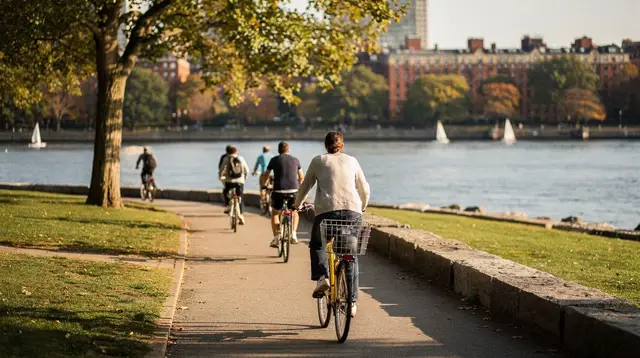
The Charles River Esplanade runs along the hill’s western edge, a paved path used for running, cycling, and simply sitting by the water with the Cambridge skyline opposite. It connects north toward the river’s Cambridge side and south toward Back Bay, and it’s a pleasant, flat way to walk between neighborhoods without doubling back through traffic. For the fuller picture of how the park system ties together, see the Public Garden and Emerald Necklace guide.
Getting to and around Beacon Hill
Beacon Hill has no dedicated T station on the hill itself, but two stations sit right at its edges:
| Station | Lines | Where it lands you |
|---|---|---|
| Park Street | Red, Green | Foot of the hill, across from Boston Common and near the State House |
| Charles/MGH | Red | Western edge of the hill, near the Esplanade and Charles Street |
Both stations use the standard T fare — around $2.40 in 2026 with a CharlieCard, transfers included in a two-hour window, though this changes periodically and is worth checking on mbta.com before you travel. Beacon Hill itself is walked, not ridden: the streets are narrow, several are one-way or closed to through traffic, and the whole neighborhood covers only a few blocks in any direction. If you’re arriving from elsewhere in the city, the guide to getting around Boston without a car and the MBTA and the T guide cover the wider transit picture.
What it costs
| Activity | Typical cost |
|---|---|
| Walking Acorn Street, Chestnut Street, Mount Vernon Street | Free |
| Following the Freedom Trail’s red line through the hill | Free |
| Massachusetts State House guided tour | Free (schedule varies; check ahead) |
| Boston Common and the Charles River Esplanade | Free |
| Guided neighborhood or history walking tour | Roughly $25–50 per person |
| Museum of African American History / African Meeting House | Ticketed; check the museum’s site for current pricing |
Nothing about walking Beacon Hill requires a ticket. Where a cost appears, it’s for a guided tour or a specific museum, never for the streets themselves.
Where Beacon Hill fits with the rest of downtown Boston
Beacon Hill is one piece of the compact core covered on this site under downtown Boston, alongside the Freedom Trail, the North End, and Boston’s harbor. It’s an easy add-on to a Freedom Trail day — the State House is one of the trail’s 16 stops, not a separate errand — and it connects on foot to Back Bay via Boston Common and the Esplanade, without needing the T. Cambridge, across the Charles River, is a short T ride from Charles/MGH rather than a walk, and it’s a different city, not a neighborhood of Boston.
If you’re building a first visit around these pieces, the two-day Boston highlights itinerary and the Freedom Trail one-day walking itinerary both route through Beacon Hill directly. For the sites that flank it on the trail itself, see Old North Church and Paul Revere and Faneuil Hall and the Granary Burying Ground.
An evening angle: Beacon Hill after dark
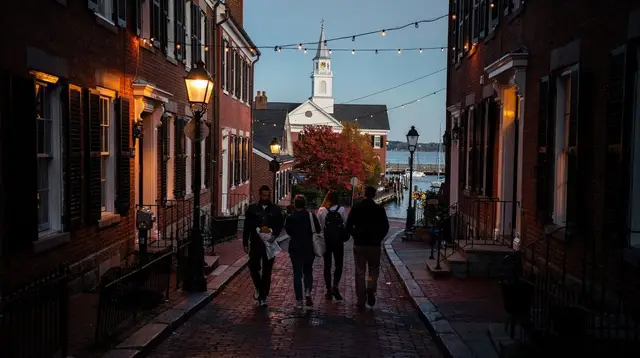
The gas-style lamps and narrow streets give Beacon Hill a different character after sunset, and it shows up on more than one ghost-themed walking tour that uses the neighborhood’s older buildings and burial-ground proximity as a backdrop.
an evening walking tour that covers Beacon Hill’s older, darker corners after darkIf you’re also headed to Cambridge
Beacon Hill sits closest to Cambridge of any Boston neighborhood on this side of the river, with Charles/MGH station putting Harvard Square roughly 15–20 minutes away by T. It’s a natural pairing for a single day: State House and Acorn Street in the morning, Harvard Yard and the Cambridge campuses in the afternoon.
a guided walking tour of Harvard’s campus in Cambridge, easily combined with a Beacon Hill morningFor the fuller version of that pairing, see the Cambridge campuses one-day itinerary and the Harvard Yard student-guided tour.
Beacon Hill in each season
Beacon Hill doesn’t have the sharp seasonal swings that hit Salem in October or the Cape’s ferry towns in winter, but weather still changes the experience:
- Fall (late September–late October): the best-looking season, with foliage across Boston Common and mild walking weather. Also the most crowded window for Acorn Street photos.
- Winter (December–February): cold, and the cobblestones on Acorn Street and Chestnut Street get genuinely slick with ice — worth solid footwear and a slower pace.
- Spring: changeable weather but good light and thinner crowds than fall.
- Summer: warm and humid, busiest on weekends, especially midday at Acorn Street.
Beacon Hill FAQ
Is Acorn Street free to visit, or do you need a ticket?
Acorn Street is a public city street with no admission fee, no gate, and no ticket of any kind. Anyone claiming otherwise is mistaken; the only cost involved is if you book a paid guided tour that happens to include it.
Is Beacon Hill part of the Freedom Trail?
Partly. The Massachusetts State House, on the edge of Beacon Hill facing Boston Common, is one of the trail’s 16 official stops. The rest of the hill — Acorn Street, Chestnut Street, the African Meeting House — sits just off the trail’s route and is usually added as a short detour.
Can you walk from Beacon Hill to Back Bay?
Yes. Boston Common and the Charles River Esplanade connect the two neighborhoods on foot, without needing the T. It’s a flat, pleasant walk of roughly 20–25 minutes depending on your route.
Is Beacon Hill close to Cambridge or Harvard?
No — Cambridge, including Harvard and MIT, is a separate city across the Charles River, not a Boston neighborhood. From Beacon Hill’s Charles/MGH T station, it’s a short Red Line ride to Harvard Square, generally under 20 minutes door to door.
What T stations serve Beacon Hill?
Park Street (Red and Green Lines) at the foot of the hill near Boston Common, and Charles/MGH (Red Line) on the hill’s western edge near the Esplanade. There’s no station on the hill itself; the neighborhood is small enough to walk end to end.
Is Beacon Hill safe and easy to walk for a couple of hours?
Yes, it’s a quiet, well-kept residential neighborhood with no unusual safety concerns beyond ordinary city awareness. The main practical issue is footing: narrow brick sidewalks and cobblestones can be uneven, and they get slippery with ice or wet leaves.
Do people actually live on Acorn Street and Chestnut Street?
Yes, these are private homes, not museum properties or reconstructions. Visitors are welcome on the public street and sidewalk; front steps, gardens, and windows are private property, and keeping noise down is expected, especially early morning and evening.
Is there a best time of day to photograph Acorn Street?
Early morning, generally before 9 a.m., when both the crowds and the harsh midday light are at their lowest. Overcast days also soften the light on the brick facades and reduce glare.