North End Italian cooking classes in Boston
What happens in a North End Italian cooking class?
Small groups cook classics such as fresh pasta, traditional sauces, or cannoli-style pastries in a restaurant kitchen or a dedicated space in the North End, usually with a local chef or longtime resident. Sessions typically run 2 to 3 hours and end with the group eating what it made — confirm exact timing and inclusions with the operator before booking.
What a North End cooking class actually is
The North End is Boston’s Italian neighborhood, dense with bakeries, small trattorias, and family-run shops along Salem Street and Hanover Street. Alongside the restaurants, a handful of operators run hands-on cooking classes out of restaurant kitchens or small dedicated spaces in the neighborhood, usually led by a chef or a longtime North End resident. These are not culinary school enrollments. They are single sessions, generally built around one theme — fresh pasta, a traditional sauce, or a cannoli-style pastry — followed by eating what the group made.
If you are looking for a walking food tour instead of hands-on cooking, that is a different product: a tour moves you between multiple restaurants and bakeries for tastings, while a cooking class keeps the group in one kitchen for the whole session. Both work in the North End, and they answer different questions — do you want to taste a lot of places, or do you want to learn to make one or two dishes yourself.
What gets cooked
Class themes vary by operator and sometimes by day, but three categories come up repeatedly in the North End:
| Theme | What it typically covers |
|---|---|
| Fresh pasta | Making dough by hand, rolling and cutting a shape (often tagliatelle or a filled pasta), then cooking and dressing it |
| Traditional sauces | A slow-built marinara, a ragu, or a similar sauce cooked from base ingredients, paired with pasta made in the same session |
| Cannoli and pastry | Shell and filling technique for cannoli, or another North End pastry staple, built around the neighborhood’s bakery tradition |
Some sessions combine two of these — pasta plus a sauce, for instance — into a single class. None of this is a fixed national curriculum; what a specific class covers depends entirely on the operator, so read the listing description rather than assuming.
Format: small group, real kitchen
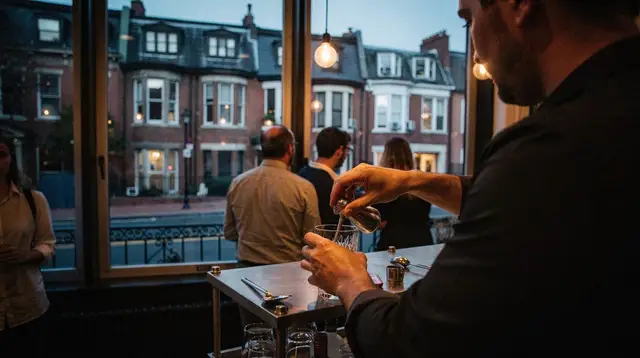
Expect a small group, generally cooking together in a restaurant kitchen, a converted back room, or a space set up specifically for classes rather than dinner service. This is part of the appeal — you are in a working North End kitchen, not a demonstration theater — but it also means capacity is limited. A class with eight or ten spots fills differently than a museum tour with fifty.
Instruction is hands-on: the chef demonstrates a step, then the group works through it, usually at a shared table or station. Expect some waiting between steps (dough resting, sauce simmering), which is often when the chef talks about the neighborhood, the dish’s history, or Italian-American cooking in Boston specifically. The session typically ends with everyone sitting down to eat what was made, sometimes with wine included, sometimes not — check the listing.
Duration and booking
Typical duration runs in the range of 2 to 3 hours, but this is an estimate to verify with the specific operator you book — some run shorter tasting-focused sessions, others run longer with a full meal at the end. The same goes for booking: because group sizes are small and kitchen space is fixed, popular classes can fill up, and booking ahead is generally the safer approach rather than trying to walk in. Exactly how far in advance to book depends on the season and the operator; during peak tourist months (summer, and October during Salem’s Haunted Happenings crowds spilling into Boston weekends), earlier is better.
This guide does not name a specific cooking school or list a price, since both change and vary by operator — check the current listing for what is included (ingredients, wine, take-home items) and what it costs before booking.
Getting there: Haymarket and the T
The North End sits close to downtown, and the most direct MBTA access is the Haymarket station, served by both the Orange Line and the Green Line. From Haymarket, it is typically a 5 to 10 minute walk into the neighborhood, depending on exactly where the class is held — Salem Street and Hanover Street are the two main commercial streets and most classes sit within a few blocks of one or the other.
If you are coming from elsewhere in Boston, the T is generally the simplest option, with a standard fare and transfers included in a two-hour window. If you are not planning to drive at all during your stay, see the general guide to getting around Boston without a car for the wider picture. Parking directly in the North End is limited and often expensive; most visitors arrive by T, on foot from downtown, or by rideshare.
Arriving from outside Boston
Most visitors taking a North End cooking class are already staying somewhere in the city, but if you are coming straight from Logan International Airport, the neighborhood is unusually close by Boston standards. The Silver Line SL1 runs free from the airport toward downtown, and the Blue Line, reached via a free Massport shuttle to the Airport station, is another option; from either, a short connection gets you within walking distance of Haymarket and the North End. See the Logan Airport to Boston transfer guide for the full breakdown of routes and stations. If you are timing a cooking class around a flight, build in extra margin — airport transfers are usually straightforward, but a class that runs long, plus a walk back to the T, can eat into a tight connection.
For anyone renting a car for the wider trip — day trips to Salem, Cape Cod, or Lexington and Concord, for instance — the North End itself is not the place to use it. Streets are narrow and largely residential, on-street parking is scarce, and garages nearby charge downtown rates. It generally makes more sense to keep the car parked (or not pick it up yet) for a cooking class and rely on the T or a short walk from a downtown hotel.
Fitting a cooking class around a harbor cruise
The North End sits at the edge of Boston’s downtown waterfront, within walking distance of the piers where most of the city’s harbor cruises depart. If you are already planning a Boston harbor cruise or a walk along Boston Harbor, a North End cooking class pairs naturally with either half of that day — cruise in the morning, cook in the afternoon, or the reverse, with the Freedom Trail filling any gap in between since it runs directly through the neighborhood.
This kind of pairing works because none of the three activities eats a full day on its own. A harbor cruise typically runs an hour or two, the Freedom Trail can be walked in sections rather than start to finish, and the cooking class itself runs in the 2-to-3-hour range noted above. Stacking two of the three, rather than trying to fit all three into one day alongside travel time, tends to make for a less rushed visit.
The Salem Street and Hanover Street connection
Some North End cooking classes build in a short stop before the cooking begins — a walk down Salem Street or Hanover Street to pick up an ingredient, visit a butcher or cheese shop, or simply get oriented in the neighborhood before heading into the kitchen. This is not universal; plenty of classes go straight into the kitchen with ingredients already prepped. If a pre-class shopping stop matters to you, check the listing description rather than assuming it is included.
Either way, the North End itself rewards a slow walk before or after class. It is a compact, walkable neighborhood, and pairing a cooking class with time spent on Salem Street and Hanover Street — bakeries, small grocers, the neighborhood’s older storefronts — fills out a half day without much planning. For a broader sense of the neighborhood beyond food, the North End neighborhood guide covers its history and layout.
How this compares to a food tour
A cooking class and a walking food tour solve different problems, and North End operators run both:
| Cooking class | Food tour | |
|---|---|---|
| What you do | Cook in one kitchen for the whole session | Walk between several stops, tasting at each |
| Group movement | Stationary | Moving through the neighborhood |
| Typical length | 2 to 3 hours (verify with operator) | Varies, often similar in total time |
| What you leave with | A dish you made yourself, and technique | A sense of multiple restaurants and shops |
| Best for | Wanting hands-on skill and a sit-down meal | Wanting variety and neighborhood context in one outing |
If you are unsure which fits your trip, the North End Italian food tour guide breaks down the walking-tour side in detail. Some visitors on a longer stay do both — a food tour early in the trip for orientation, a cooking class later for something more hands-on.
Other hands-on classes if the North End is booked out
Cooking and craft workshops in Boston are not limited to the North End. If a North End Italian class is full for your dates, or you simply want to try something different, a few other hands-on options exist around the city, including a ramen class and a Chinese hand-pulled noodle class:
a hands-on ramen cooking class led by a local chef, or, for a different noodle technique entirely, a class focused on hand-pulling Chinese noodles from scratch.
For seafood rather than pasta, Boston’s other signature cooking-class theme is New England chowder and lobster — see the separate lobster and chowder cooking class guide for that side of the city’s food scene, distinct from anything Italian in the North End.
There are also non-Italian options for a group that wants variety across a trip: a sushi-making class with a local chef, and, across the river in Beacon Hill, a bagel-baking class with a Michelin-trained chef. None of these substitute for a North End Italian class specifically, but they round out a food-focused itinerary if you are spending several days in the city.
Planning a day around it
A North End cooking class works well as an anchor for a half day rather than a full day on its own, given its 2-to-3-hour typical length. Consider pairing it with:
- A walk down the Freedom Trail, which passes directly through the North End on its way to the Old North Church and Bunker Hill
- Time in Boston Common and the Public Garden, both free and a manageable walk from Haymarket
- A broader Boston walking tour if you want context on the city before narrowing in on the North End specifically
- If you’re building a full first visit, the two-day Boston highlights itinerary gives a sense of how a cooking class slots into a short trip
For families weighing whether a cooking class works with kids along, the general guide to family cooking and craft workshops in Boston covers age suitability and what to expect, since not every North End class is set up for younger children.
Who a North End cooking class suits
A cooking class works differently for different kinds of travelers. Solo visitors often find it an easy way to meet people and spend an evening with company rather than eating alone, since the format is built around a shared table from the start. Couples get a low-key, hands-on activity that is less passive than a typical dinner reservation. Larger groups — a small circle of friends, a work trip, a family gathering — should check the class’s maximum size before booking, since North End kitchens are generally small by design, and a group of six or eight may need to confirm availability further ahead than a couple booking for two.
For visitors deciding where to base themselves for a first trip to Boston, the best neighborhood to stay guide and the broader first-time Boston guide both cover how downtown neighborhoods like the North End compare to Back Bay, Beacon Hill, or Cambridge for a home base. Staying within walking distance of the North End makes an evening cooking class easier logistically, since you are not relying on the T’s more limited late-evening schedule to get back afterward.
What to bring and wear
Cooking classes are casual by nature, but a few practical notes apply regardless of which North End operator you book. Closed-toe shoes are generally sensible in a working kitchen, and clothing you don’t mind getting a little flour or sauce on is worth choosing over anything you’d be upset to stain — most operators provide an apron, but sleeves and hemlines are on you. If you wear your hair long, expect to tie it back for at least part of the hands-on portion.
Beyond that, there is little to prepare. Ingredients, equipment, and instruction are provided as part of the class; you are not expected to arrive with any cooking knowledge, and most listings are explicit that beginners are welcome. If you have a photo you want of the finished dish or the group at the table, ask before assuming — some kitchens are tight on space and timing, and a chef mid-demonstration may prefer photos wait until the eating portion of the class.
Seasonal timing
Boston’s tourist calendar affects the North End along with the rest of downtown. Fall — roughly late September through late October, when New England’s foliage draws visitors well beyond the White Mountains and into the city itself — is one of the busier stretches for anything requiring a reservation, cooking classes included. Summer carries its own crowds, driven by warm weather and the general volume of visitors passing through downtown and the waterfront.
Patriots’ Day, the third Monday in April and the day of the Boston Marathon, brings a different kind of crowd surge concentrated closer to the marathon route itself, but it still affects downtown logistics generally — worth factoring in if your visit lands on or near that date. Winter, by contrast, tends to be the easiest season for booking a class on short notice, though a smaller subset of operators may run reduced schedules; see the general guide to Boston in winter for what else changes about visiting the city in the colder months.
Booking notes
A few honest points worth flagging before you book:
- No fixed price here. Cooking class pricing varies by operator, group size, and what is included (ingredients only, versus ingredients plus wine and a full sit-down meal). Check the specific listing.
- No school name endorsed here. Several operators run classes in the North End; this guide describes the format rather than pointing to one business, since offerings and quality change.
- Confirm dietary accommodations directly with the operator. Small-kitchen classes built around a set menu (fresh pasta with a specific sauce, for example) may have limited flexibility for allergies or dietary restrictions — ask before booking rather than assuming.
- October and summer weekends book up fastest. The North End is one of Boston’s most visited neighborhoods regardless of the season, and class capacity is small by design.
None of this requires expert-level cooking experience. Most North End classes are designed for visitors who want a genuine, hands-on couple of hours in a working Italian kitchen, with a finished dish to sit down and eat at the end — not a professional-track lesson.
Cooking classes and food workshops in Boston on GetYourGuide
Verified deep-linked GetYourGuide tours. Book through these links and we earn a small commission at no cost to you.
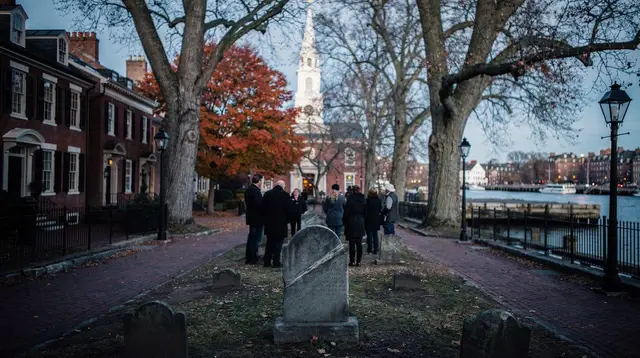
GetYourGuide does not provide a product photo for this activity — the image shows the meeting point, photographed by us.